
Pruning
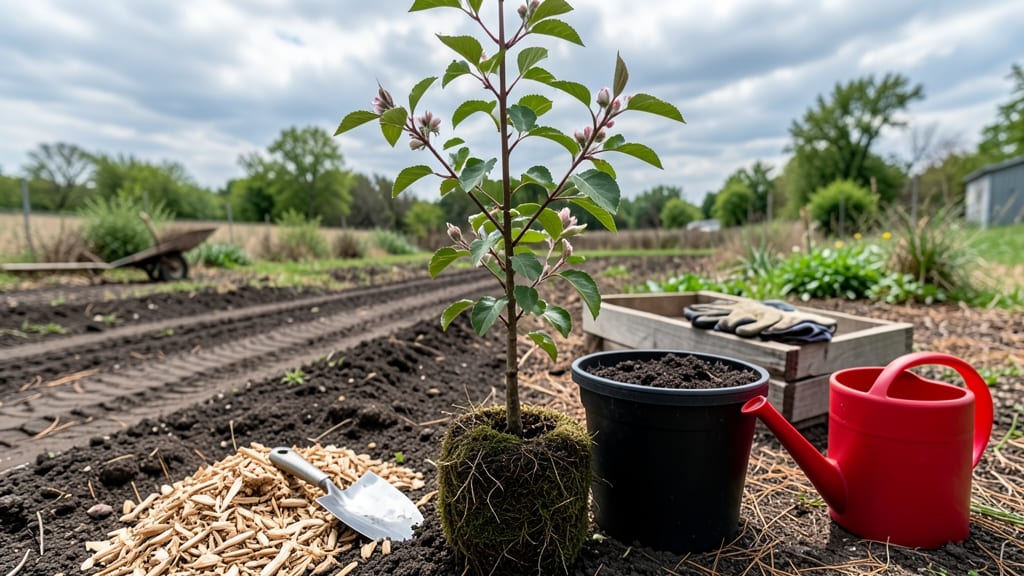
Caring for apple tree seedlings transforms a $5 sapling into a future orchard centerpiece—if you nail the first year. 🌱 The secret isn't fancy tools but consistent soil moisture, strategic pruning, and pest prevention before problems start.
My first seedling nearly died from overwatering, but I learned the right balance turns fragile starts into sturdy trees. You'll need well-draining soil, a sunny spot with at least 6 hours of light, and a watering can (not a hose).
The key moves are weekly deep watering, monthly feeding with balanced fertilizer, and pruning to shape the tree early. Most failures happen in the first 12 months, so these habits prevent costly mistakes. By summer's end, you'll see 3-4 foot growth with strong branches ready for fruit buds.
The tree will reward you with blossoms in 3-5 years—if you protect it from deer, rabbits, and fungal diseases now. That first harvest feels like magic when you've nurtured it from day one. This works for Malling 9 rootstock (dwarf varieties) or standard seedlings.
Just adjust spacing: 12-15 feet apart for full-size trees, 8-10 feet for dwarfs. Let's get those roots growing strong!
📚 In This Guide
- What you need
- Instructions
- Tips and common mistakes
- Wrapping up and next steps
What you need
- ● Apple tree seedling: A healthy 1–2-year-old seedling (ensure it’s disease-free and well-rooted).
- ● Well-draining soil: A mix of 60% topsoil, 30% compost, and 10% perlite or sand (or pre-mixed fruit tree soil).
- ● Garden space: Full sun (6–8+ hours daily).
- ● Spacious area (minimum 10–12 feet in diameter for mature growth).
- ● Sheltered spot (protection from strong winds).
- ● Watering supplies: Hose with adjustable nozzle or watering can (1–2 gallons capacity).
- ○ Drip irrigation system (optional but ideal for consistent moisture).
- ● Fertilizer: Balanced 10-10-10 fertilizer or organic options like composted manure or worm castings.
- ● Slow-release granular fertilizer (apply in early spring).
- ● Pruning tools: Bypass pruners (sharp, clean, and sanitized with rubbing alcohol).
- ● Loppers (for thicker branches, if needed).
- ● Hand saw (for stubborn growth).
- ● Mulch: Organic mulch (wood chips, straw, or shredded bark) to retain moisture and suppress weeds.
- ● Support stakes: 4–6 ft wooden or metal stakes + garden twine (for young seedlings in windy areas).
- ● Pest control: Neem oil or insecticidal soap (for aphids, mites).
- ○ Row covers (optional, for early spring frost protection).
- ● Soil pH tester (ideal range: 6.0–6.5; adjust with lime or sulfur if needed).
- ● Tree collar protector (to prevent damage from mowers/lawn tools).
- ● Tree guard (plastic spiral wrap to deter pests and sunburn).
- ● Garden journal (to track growth, pruning dates, and fertilizer applications).
- ● Compost bin (for long-term soil enrichment).
Step-by-Step instructions for cultivating healthy apple tree seedlings
Here’s how I’ve nurtured strong, disease-resistant apple seedlings ready for long-term growth.
🌱 Step 1: Plant Seedlings at the Right Depth and Spacing
Dig a hole twice as wide as the seedling’s root ball but no deeper than the container’s depth—this prevents suffocating roots. Loosen the soil at the bottom to encourage root spread. Gently remove the seedling from its container, keeping the root ball intact. Place it in the hole so the top of the root ball sits 1-2 inches above soil level—this prevents waterlogging at the base.
Fill the hole with native soil, pressing lightly around the edges to eliminate air pockets. Space seedlings 20-25 feet apart for mature trees, but 12-15 feet apart if you plan to prune heavily for smaller growth. Water immediately after planting to settle the soil and remove any air gaps around roots.
☀️ Step 2: Provide Optimal Sunlight and Watering Routines
Apple seedlings thrive in full sun (6-8 hours daily), so choose a location with minimal shade. In their first year, young trees need consistent moisture—water deeply once a week during dry spells, ensuring the soil stays 3-4 inches deep and damp but not soggy. Mulch around the base with 2-3 inches of organic mulch (like wood chips) to retain moisture and suppress weeds.
Here’s the thing—overwatering is worse than underwatering. You’ll know it’s time to water when the top inch of soil feels dry to the touch. Avoid wetting the leaves to prevent fungal diseases like apple scab, which thrives in damp foliage.
✂️ Step 3: Prune for Structure and Disease Prevention
Prune in late winter or early spring before new growth begins. Remove any dead, diseased, or crossing branches first—these are the weak points that invite pests. Next, shape the tree by cutting back 1/3 of the new growth from the previous season. This encourages a strong, open canopy and reduces the risk of overcrowded branches.
Use clean, sharp pruners to make cuts at a 45-degree angle, about 1/4 inch above a bud. Sterilize your tools with rubbing alcohol between cuts to prevent spreading disease. Don’t prune more than 25% of the tree’s foliage in one session—this stresses young seedlings.
🌿 Step 4: Fertilize and Monitor for Pests
Apply a balanced 10-10-10 fertilizer in early spring, spreading it evenly over the root zone but keeping it 6 inches away from the trunk. Water the area thoroughly after applying to help nutrients penetrate the soil. Repeat in mid-summer if the tree shows signs of nutrient deficiency, like yellowing leaves or stunted growth.
Watch for common pests like aphids, mites, or borers. Inspect leaves regularly for holes, webbing, or sticky residue (honeydew). If you spot pests, use a strong spray of water first—often, this dislodges them. For persistent infestations, apply neem oil or insecticidal soap as a natural remedy.
⏰ Step 5: Prepare for Winter Dormancy
As temperatures drop below 40°F, reduce watering to once every 2-3 weeks, unless the ground is frozen. Wrap the trunk with tree wrap or burlap to protect it from sunscald and rodent damage. Mulch heavily around the base—4-6 inches deep—to insulate roots from freezing temperatures.
Prune any dead or weak branches before winter sets in, but avoid heavy pruning. This ensures the tree enters dormancy with minimal stress. In early spring, remove the winter wrap and mulch to allow the tree to warm up gradually as new growth begins.
Tips & tricks for perfect apple tree seedling cultivation
These growth hacks will help you nurture resilient apple seedlings that thrive year after year.
Soil Preparation: Before planting, amend your native soil with compost to improve drainage and nutrient availability. The extra organic matter helps young roots establish faster in Step 1. I mix in about 10% compost by volume—just enough to loosen the soil without overwhelming the delicate root system. This prevents suffocation while providing essential nutrients right from the start.
Sunlight Optimization: While 6-8 hours of sunlight is ideal, young seedlings can handle partial shade during their first summer. If planting in late spring, provide afternoon shade with temporary shade cloth until roots establish. This prevents sunburn on tender new growth while still encouraging photosynthesis. Monitor leaf color—pale green means more light is needed, while yellowing indicates too much sun.
Pruning Technique: When shaping your tree in Step 3, focus on creating an open vase shape rather than a dense canopy. This allows sunlight and air to circulate through the center, preventing fungal diseases. I always make my cuts just outside the branch collar—the swollen area where the branch meets the trunk—rather than flush against it. This promotes faster healing and reduces the risk of infection.
Winter Protection: For the first two winters, consider adding extra insulation around the trunk during extreme cold snaps. Wrap the tree wrap tightly and add a layer of straw mulch (4-6 inches) around the base. This creates a thermal barrier that protects against temperature fluctuations. In Step 5, remember to remove the wrap in early spring before buds begin to swell—this prevents sunscald when the sun returns.
Pro Tips for Apple Tree Seedling Care
- These growth hacks will help you nurture resilient apple seedlings that thrive year after year.
- Soil Preparation: Before planting, amend your native soil with compost to improve drainage and nutrient availability.
- Sunlight Optimization: While 6-8 hours of sunlight is ideal, young seedlings can handle partial shade during their first summer.
Frequently asked questions
Got questions about nurturing your apple tree seedling?
You’re not alone! Here are answers to the most common concerns—from timing to troubleshooting—to keep your young tree on the path to fruiting success.
How long does it take for an apple tree seedling to bear fruit?
Patience is key! Most apple tree seedlings grown from seeds (not grafts) take 5–10 years to bear fruit—if they ever do. For faster results, consider grafting a known variety onto your seedling’s rootstock. Even then, expect 3–5 years before harvest.
When is the best time to plant an apple tree seedling?
Plant your seedling in early spring (after the last frost) or early fall (4–6 weeks before the first frost). Avoid planting in extreme heat or cold. If you’re in a warm climate, fall planting works best to establish roots before summer stress. Pro tip: Water deeply 2–3 times a week for the first month!
Why are the leaves on my apple tree seedling turning yellow?
Yellowing leaves (chlorosis) usually signal nutrient deficiency (like iron or nitrogen), overwatering, or poor drainage. Check the soil pH (ideal: 6.0–7.0) and amend with compost or a balanced fertilizer. If roots are waterlogged, improve drainage with organic matter. Don’t panic—fix the issue, and new growth should return!
Can I grow an apple tree from a store-bought apple seed?
Yes, but with a catch! Seeds from grocery-store apples may not produce fruit true to the parent tree (think wild, unpredictable varieties). For reliable fruit, buy seeds from orchard-grown apples or graft a named cultivar onto your seedling. If you’re experimenting, enjoy the adventure—your seedling might surprise you with unique traits!
Should I prune my apple tree seedling in the first year?
Light pruning is highly recommended to shape the tree and encourage strong branching. Focus on removing dead, crossing, or weak growth in late winter or early spring. Keep it simple: Cut just above a bud or branch collar (never leave stubs). Avoid heavy pruning—your seedling’s energy should go into root development first!
What pests should I watch for on young apple tree seedlings?
Common culprits include aphids, spider mites, and borers. Monitor for sticky residue (honeydew), chewed leaves, or sawdust-like frass. Treat mild infestations with neem oil or insecticidal soap. For borers, apply beneficial nematodes to the soil. Prevention is easier than cure—keep your tree healthy with proper water and nutrients!
Wrapping up and next steps
Caring for an apple tree seedling is a rewarding journey that blends patience, knowledge, and a little green thumb magic! 🌱 With the right soil prep, pruning techniques, and seasonal attention, your young tree will grow into a fruitful powerhouse.
Remember, consistency is key—whether it’s watering, fertilizing, or protecting against pests, small efforts today lead to big harvests tomorrow.
Now that you’re armed with expert tips, roll up your sleeves and give your seedling the love it deserves. Ready for the next step? Mark your calendar for your first pruning session this fall—your future apple orchard awaits! 🍏✨