
Trees
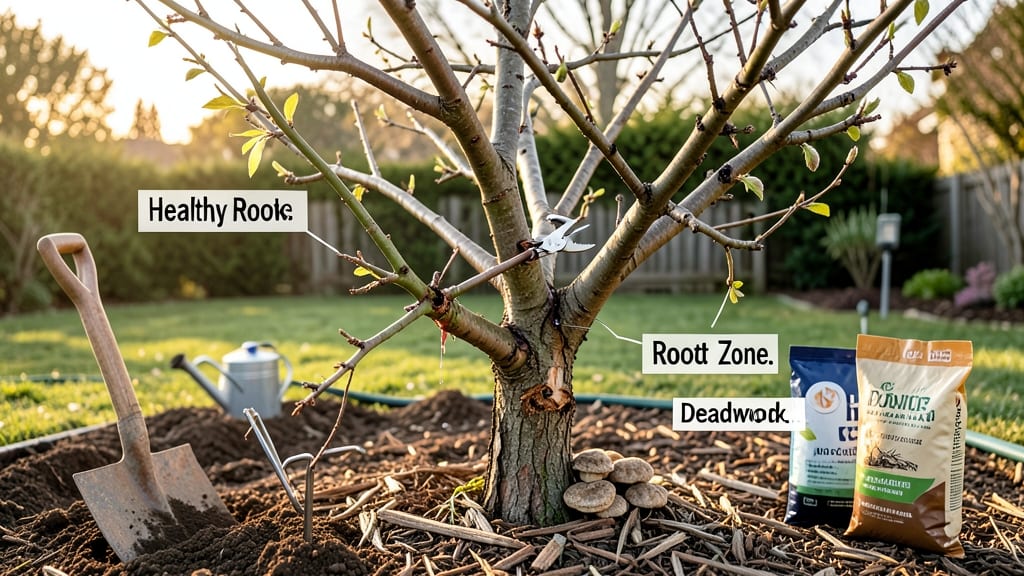
You can bring a dead tree back to life if it’s not fully decomposed or diseased beyond recovery, but requires immediate action—prune dead branches, check for root viability, and apply targeted watering or soil amendments like compost or mycorrhizal fungi. Most trees need at least partial root and cambium layer health to revive.
Reviving a seemingly lifeless tree often comes down to its root and cambium layer health, which many people overlook. 🌱 The cambium is like the tree’s circulatory system—if it’s intact, new growth can still sprout from dormant buds.
For example, I’ve seen oak trees with 50% dead branches regrow when properly pruned and given nutrient-rich soil. The key is acting fast: trees can recover from drought stress or minor damage, but fungal infections or severe root rot usually mean it’s time to remove the tree instead.
Even if your tree looks hopeless, don’t give up yet. Start by examining the bark for green underbark (a sign of living tissue) and test root viability by gently scraping away soil near the base.
If roots are firm and white, there’s hope! Pair this with a balanced fertilizer and consistent watering—trees need patience, just like any other living thing.
💡 In This Article
- How to Diagnose a Dead Tree’s Salvageability
- Step-by-Step Tree Revival Techniques for Gardeners
How to diagnose a dead tree’s salvageability
The first step in reviving a tree is determining whether it’s truly dead or just dormant. Trees often appear lifeless during winter, but the real test lies in the cambium layer, a thin layer of living tissue just beneath the bark.
Scrape a small section of bark (about 1 inch wide) on the trunk or branches—if you see green underneath, the tree is still alive and can recover.
This layer is critical because it’s responsible for producing new cells, much like human skin regenerates. 🌿 Without it, the tree cannot heal or grow.
Root health is equally vital. Dig a small hole (6-12 inches deep) near the tree’s base to inspect the roots. Healthy roots should be firm, white, or light brown, and feel moist but not mushy. Dark, mushy roots indicate rot, while dry, brittle roots suggest dehydration.
For larger trees, use a soil probe (a long screwdriver) to check root depth—if it penetrates easily, roots may be compromised. Seasonal timing matters too: spring is ideal because trees are naturally waking up from dormancy, making signs of life more apparent.
Bark condition also reveals a tree’s status. Smooth, intact bark is a good sign, while cracked, peeling, or fungal-covered bark (like conks or shelf fungi) often means irreversible damage. For example, a tree with Armillaria root rot (identified by honey-colored mushrooms at the base) is usually beyond saving.
However, if the bark is mostly intact and the tree has buds or sap flow in spring, it’s worth attempting revival. Even a single healthy branch can signal the tree’s potential to regenerate.
Don’t overlook seasonal recovery signs. In late winter or early spring, look for swollen buds or new shoots—these are clear indicators the tree is still metabolically active. If you see sap oozing from pruning wounds, that’s another positive sign.
Conversely, if the tree has been dead for more than a year (no new growth in spring) or shows signs of insect infestation (like woodpecker holes or sawdust-like frass), it’s likely too late. The sooner you act, the better the chances of revival.
For a more precise diagnosis, consider a boron test—boron deficiency can mimic death by causing bark splitting and dieback. Soil tests can also reveal nutrient deficiencies (like nitrogen or potassium) that might be stalling recovery.
If the tree passes these checks, it’s time to move to revival techniques. Remember, even "dead" trees can surprise you—some species, like willows or poplars, have remarkable regenerative abilities if their roots remain intact. 🌱
Advanced gardeners might use a resistograph (a tool that measures wood density) to assess internal decay, but for most homeowners, a sharp knife and shovel are sufficient. The goal is to separate hopeful cases from those that need removal.
Trees with 50% or more live cambium and healthy roots have the best revival prospects, while those with extensive decay or disease rarely recover.
Lastly, trust your instincts. If the tree’s structure is still sturdy and you’ve spotted signs of life, give it a chance. Trees are resilient, and with the right care, even seemingly dead ones can make a comeback.
The key is patience—revival isn’t instant, but with consistent effort, you might just witness a miracle in your own backyard. ✨