
Trees
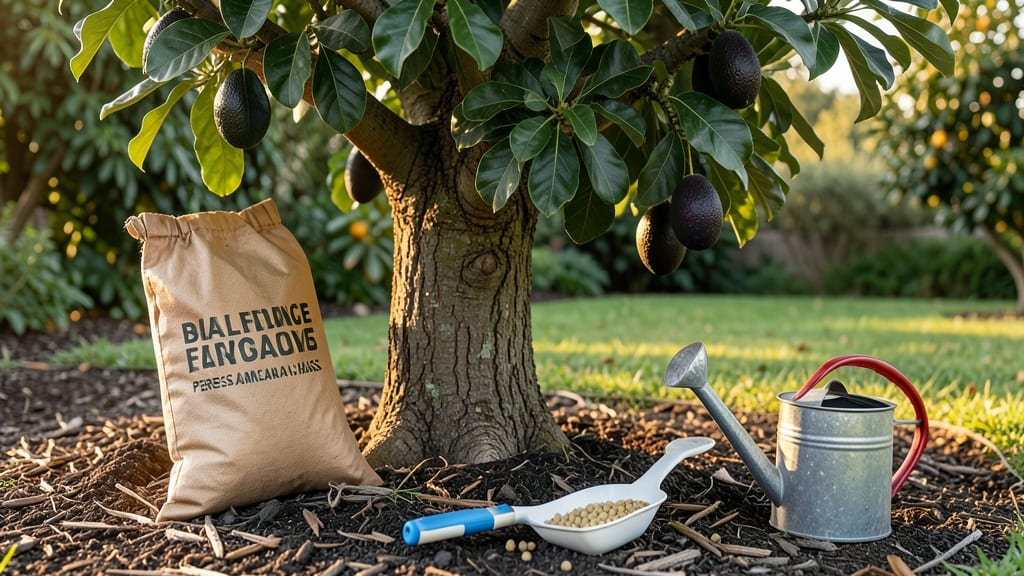
Boosting fruit production in your Hass avocado tree with the right fertilizer—a nitrogen-potassium blend—is the fastest way to keep your tree thriving in tropical and subtropical climates.
Struggling to get your Hass avocado tree to bear fruit faster? The secret lies in mastering the nitrogen-potassium ratio—this precise balance can transform your tree’s growth from slow to explosive.
Too much nitrogen, and you’ll end up with lush leaves but no fruit. Too little potassium, and your tree might struggle with disease resistance.
In this guide, I’ll break down the science-backed ratios for every growth stage—seedlings, young trees, and mature fruit-bearing trees—so you can apply the perfect blend at the right time.
Whether you prefer organic options like compost or banana peels or a balanced synthetic fertilizer, you’ll learn how to avoid common mistakes that stall growth or even harm your tree.
Ready to unlock faster fruit growth? You’ll discover when to feed, how much to use, and the warning signs of over- or under-fertilizing so your Hass avocado tree stays healthy and productive year-round.

Optimal nitrogen-potassium ratio for Hass avocado trees by growth stage
Hass avocado trees thrive when their nitrogen-potassium (N-K) ratio aligns with their growth stage. Too much nitrogen can delay fruiting, while insufficient potassium weakens disease resistance. The key is balancing these nutrients for explosive growth without sacrificing fruit production.
For seedlings (0-2 years), prioritize nitrogen to build strong roots and foliage. Young trees need 3 parts nitrogen to 1 part potassium (3-1-2 NPK ratio) to establish a sturdy framework before fruiting. This ratio supports rapid leaf and stem development while preparing for future fruit-bearing.
As your tree matures (3-5 years), shift to a 2:1 nitrogen-potassium ratio (2-1-1 NPK). This balance encourages flowering while maintaining foliage health. Mature trees (6+ years) producing fruit require equal nitrogen and potassium (1:1 ratio) (1-1-2 NPK) to support both leaf growth and fruit development.
Soil type plays a critical role. In sandy soils, nutrients leach quickly, so use slow-release fertilizers or apply more frequently. Clay soils retain nutrients longer, allowing for less frequent applications with balanced ratios. Always test your soil before adjusting ratios.
| Growth Stage | Recommended NPK Ratio | Nitrogen Focus | Potassium Focus | Climate Adjustments |
|---|---|---|---|---|
| Seedlings (0-2 yrs) | 3-1-2 | Root/foliage growth | Early disease resistance | Subtropical: 30% more N |
| Young Trees (3-5 yrs) | 2-1-1 | Flower bud formation | Stress tolerance | Mediterranean: 20% more K |
| Mature Trees (6+ yrs) | 1-1-2 | Fruit yield maintenance | Fruit quality/size | Arid zones: 15% more K |
In Mediterranean climates, where summers are dry and winters mild, increase potassium by 20% to help trees withstand water stress. Subtropical zones benefit from 30% more nitrogen during wet seasons to prevent nutrient runoff. Always monitor leaf color: dark green indicates adequate nitrogen, while yellowing suggests deficiency.
Apply nitrogen early in the growing season (spring) to fuel new growth. Potassium should be applied late spring to early summer when flowering begins. Over-applying nitrogen in mature trees can lead to excessive foliage at the expense of fruit production. Use a soil test every 2-3 years to fine-tune ratios.
For container-grown Hass avocados, reduce nitrogen by 15% since roots have limited access to nutrients. Increase potassium by 10% to compensate for faster nutrient loss through watering. Always use well-draining potting mix with added perlite to prevent root rot from excess moisture.
Watch for leaf curl or brown tips, which often signal potassium deficiency. Yellowing between leaf veins indicates nitrogen excess. Adjust ratios seasonally: spring = more nitrogen, summer = balanced N-K, fall = reduce nitrogen to prepare for dormancy in cooler zones.
Organic options like composted manure (2-1-1 ratio) or fish emulsion (5-1-1 ratio) work well for seedlings. Mature trees thrive with citrus-specific fertilizers (3-1-2 ratio) containing micronutrients like zinc and magnesium. Always water deeply after fertilizing to prevent root burn.
Top 5 fertilizer blends for Hass avocados (and how to avoid common mistakes)
Choosing the right fertilizer blend for your Hass avocado tree can mean the difference between sparse leaves and a fruit-loaded canopy. Hass avocados thrive on a balanced NPK ratio with extra micronutrients like zinc and magnesium.
The wrong mix leads to leaf burn, stunted growth, or even fruit drop—so let’s break down the best options and how to use them safely.
Commercial fertilizers designed for citrus and avocado trees often feature ratios like 6-6-6 or 8-3-9, but DIY blends can work too if you understand the science. For example, a 6-6-6 blend supports even growth, while an 8-3-9 blend prioritizes fruiting over foliage.
Young trees need more nitrogen (higher first number), while mature trees benefit from potassium (higher third number) to boost fruit production.
🌱 Hass Avocado Fertilizer Blends: Pros & Cons
- ✅ Balanced growth for young trees
- ✅ Easy to find commercially
- ✅ Affordable for large applications
- ✅ Potassium boosts fruit production
- ✅ Ideal for mature, fruiting trees
- ✅ Reduces leaf burn risk vs. high-nitrogen
- ✅ Rich in micronutrients
- ✅ Improves soil structure
- ✅ Safe for all growth stages
- 🚫 Overapplying nitrogen → Leaf burn and weak roots
- 🚫 Skipping micronutrients → Yellowing leaves (zinc/magnesium deficiency)
- 🚫 Fertilizing in winter → Wasted nutrients (tree is dormant)
For young Hass avocado trees, I recommend starting with a 6-6-6 blend every 6-8 weeks during the growing season (spring to early fall). Spread the fertilizer evenly around the drip line—never directly on the trunk—and water it in immediately to prevent root burn. Mature trees, on the other hand, do better with an 8-3-9 blend or a citrus-specific fertilizer to encourage flowering and fruiting.
DIY options like compost tea or banana peel infusions (for potassium) are excellent for organic growers. However, avoid homemade blends with high salt content, which can damage roots over time.
Always test your soil’s pH (ideal range: 6.0-7.0) before applying fertilizers, as acidic or alkaline soil can lock out nutrients.
Watch for warning signs like yellowing leaves (nitrogen deficiency), brown leaf tips (potassium deficiency), or leaf curl (over-fertilization). If you see these, flush the soil with water and adjust your fertilizer schedule. Remember, less is more—Hass avocados are sensitive to excess salts and fertilizers.
Pro tip: Pair your fertilizer routine with a 3-inch layer of mulch to retain moisture and regulate soil temperature. This simple step can double your fertilizer’s effectiveness while protecting your tree’s roots from temperature swings.