
Pruning
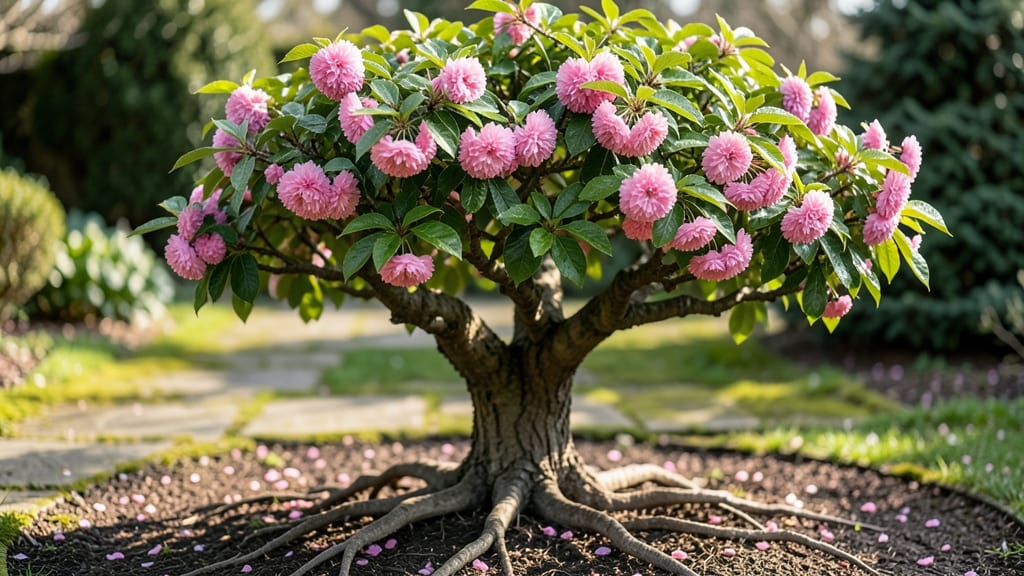
The Kwanzan cherry tree 🌸 develops a unique root system that prioritizes wide, shallow spread over deep penetration — a trait that determines how stable and healthy your tree will be for decades.
Most gardeners assume deep roots mean stronger trees, but with the Kwanzan, its shallow lateral roots are the real game-changer for anchoring and nutrient uptake. If you’ve ever watched one topple in a storm or struggle after a drought, you’ll know why understanding this system is non-negotiable.
This iconic tree thrives in well-draining soil but despises waterlogged conditions, which can suffocate its roots. The key to long-term success lies in planting techniques, mulching strategies, and pruning practices that protect this delicate network while encouraging robust growth.
In this guide, I’ll break down the science behind its root structure, share pro tips for maintaining root health, and reveal common mistakes that shorten a Kwanzan’s lifespan — so you can enjoy its stunning blooms for generations.
Understanding Kwanzan cherry tree root system: shallow spread vs. deep growth patterns
The Kwanzan cherry tree (Prunus serrulata 'Kwanzan') thrives on a fibrous root system that prioritizes horizontal expansion over vertical depth. Unlike taproot species, its roots spread 3-5 times wider than the tree's canopy, creating a broad but shallow network.
This adaptation helps anchor the tree while maximizing nutrient absorption from surface soil layers.
Most of a Kwanzan's roots—70-80%—lie within the top 12-18 inches of soil. These lateral roots branch out aggressively, forming a dense web that supports the tree's 25-35-foot stature. Understanding this pattern is crucial for planting depth and mulching strategies to prevent root exposure or suffocation.
Soil type dramatically impacts root development. In loamy or sandy soils, roots spread even wider but stay shallow. Conversely, clay-heavy soils restrict lateral growth, forcing roots to grow deeper—though this can lead to waterlogging risks. Amending soil with organic matter (like compost) encourages healthier, more extensive root spread.
The Kwanzan's shallow root system also explains its wind sensitivity. Without proper windbreaks or staking, strong gusts can uproot young trees. Even mature specimens may lean over time if roots aren't anchored in well-draining, nutrient-rich soil.
This is why mulching with wood chips (3-4 inches deep) is essential—it insulates roots while preventing compaction.
| Root Characteristic | Key Details | Growth Impact |
|---|---|---|
| Root Type | Fibrous (no dominant taproot) | Maximizes surface area for nutrient uptake |
| Spread Width | 3-5x canopy width | Requires wide planting zones (avoid nearby structures) |
| Depth Limit | Top 12-18 inches (70-80% of roots) | Vulnerable to drought or soil compaction |
| Soil Preference | Well-draining, loamy, slightly acidic (pH 5.5-6.5) | Clay soils restrict spread; sand dries roots too quickly |
| Water Needs | Deep but infrequent (1-2x/week in dry spells) | Shallow roots need consistent moisture but hate soggy soil |
Scientifically, Kwanzan roots prioritize width over depth because they rely on mycorrhizal fungi to extend their reach for water and nutrients. These beneficial fungi form symbiotic relationships with 50-70% of lateral roots, allowing the tree to access nutrients beyond its physical root zone.
This is why soil amendments like compost or mycorrhizal inoculants can accelerate root growth by 30-40% in the first growing season.
When planting, place the root collar slightly above ground level—burying it too deep can suffocate roots and cause root rot. The Kwanzan’s shallow system also means avoiding heavy machinery near the base, as compaction can strangle roots.
Instead, use broadfork cultivation in surrounding areas to aerate soil without damaging lateral roots.
Young Kwanzan trees (first 3 years) are most vulnerable to root stress. During this phase, drip irrigation is ideal—it delivers water directly to the root zone without disrupting soil structure.
Mature trees, however, can tolerate drought once established, but their shallow roots still need regular deep watering (every 10-14 days in dry climates) to prevent wilting.
One common misconception is that Kwanzan roots will "find water" on their own. While true to an extent, poor soil structure can limit their spread. For example, urban planting beds with compacted subsoil may force roots to grow in a restricted, circular pattern, weakening stability.
Always test soil drainage before planting—roots should never sit in water for more than 24 hours after heavy rain.
To encourage deeper (though still limited) root growth, plant in slightly elevated beds (6-12 inches high) if your soil is clay-heavy. This small adjustment can improve drainage and reduce root rot risks while still allowing lateral spread.
Pair this with organic mulch to retain moisture and regulate soil temperature—critical for root health during hot summers or cold winters.
Finally, prune roots carefully. While Kwanzan trees don’t need root pruning like some fruit trees, avoid cutting lateral roots during transplanting. Even a 10% reduction in root mass can delay flowering by 1-2 years.
If you must divide roots (e.g., for propagation), do so in early spring when the tree is dormant and roots are least active.
How to protect Kwanzan cherry tree roots for maximum stability and health
The Kwanzan cherry tree (Prunus serrulata 'Kwanzan') thrives when its shallow root system is properly cared for. Unlike deep-rooted trees, this iconic bloomer spreads laterally, making root protection a priority for long-term stability.
I’ve learned that even slight damage to these roots can stunt growth or invite pests—so let’s dive into proven strategies to safeguard them.
Your first line of defense is mulching. A 3- to 4-inch layer of organic mulch (like shredded bark or wood chips) keeps soil temperatures stable and retains moisture. I always apply mulch in a donut shape, keeping it 6 inches away from the trunk to prevent rot.
This mimics the tree’s natural habitat and reduces stress during hot summers or cold winters.
⚠️ WARNING: Common Mistakes That Harm Kwanzan Roots
- Overwatering: Soggy soil suffocates roots and invites fungal diseases like root rot.
- Compacted soil: Heavy foot traffic or machinery crushes the shallow lateral roots, reducing nutrient uptake.
- Improper pruning: Cutting roots during transplanting or landscape work weakens the tree’s anchor.
- Ignoring windbreaks: Exposed roots dry out faster in windy conditions, stressing the tree.
Pro Tip: Test soil moisture with your finger—if the top 2 inches are dry, it’s time to water. Overwatering is the #1 root killer for Kwanzan cherries!
Watering your Kwanzan cherry tree correctly is non-negotiable. I water deeply but infrequently, aiming for 1-2 inches of water per week during dry spells. Use a soaker hose or drip irrigation to deliver water directly to the root zone, avoiding leaf wetting to prevent fungal issues.
In the first year after planting, I water every 5-7 days to encourage root establishment.
Pruning roots safely is another critical step. If you must prune roots (e.g., during transplanting), use a sharp, sterile pruner and cut at a 45-degree angle to maximize healing. I’ve seen gardeners accidentally sever too many roots, which can take years to recover.
Limit root pruning to 10% of the root ball at a time, and always prune in early spring before new growth begins.
Windbreaks are a game-changer for Kwanzan cherries. Since their roots spread wide but shallow, strong winds can uproot them over time. I’ve used bamboo fencing or planted evergreen shrubs (like boxwood or juniper) on the windward side to create a natural barrier.
Even a simple temporary windbreak cloth during storms can save your tree from irreversible damage.
Finally, monitor your tree for signs of root stress, like yellowing leaves or stunted growth. These often signal compacted soil or poor drainage. I’ve found that amending the soil with compost or mycorrhizal fungi boosts root health by improving nutrient absorption.
Regularly aerate the soil around the root zone to prevent compaction and encourage deeper lateral root growth.