
Pruning
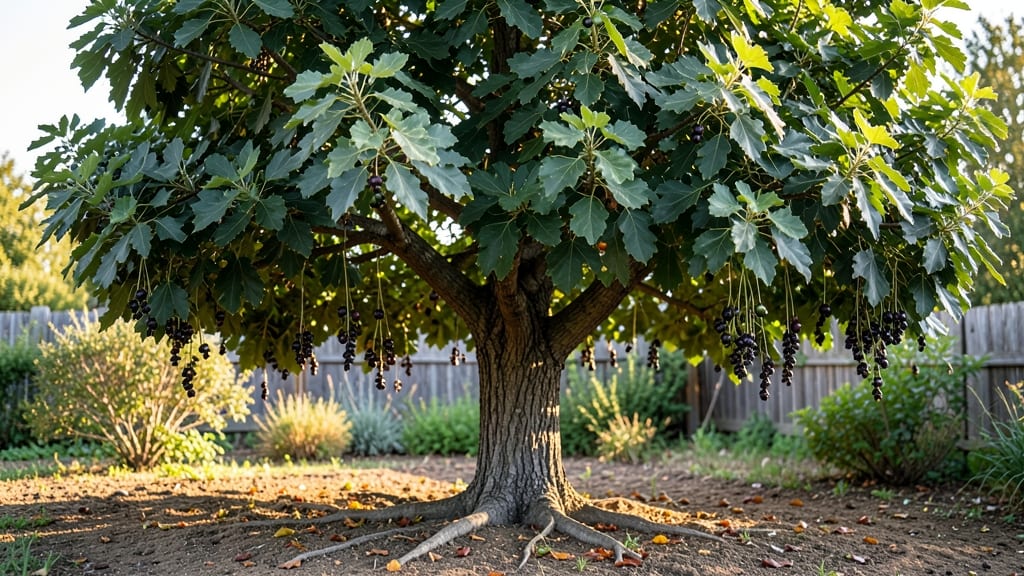
A large mulberry tree 🌳 can become a stunning centerpiece in your landscape—but without the right pruning, it’ll quickly outgrow its welcome, dropping fruit everywhere and straining its own branches.
If your mulberry tree is growing into a towering giant with an unruly canopy, proper pruning isn’t just about aesthetics—it’s essential for maintaining health, fruit production, and even preventing property damage.
Mulberry trees grow fast, often reaching 30 to 60 feet tall, and their sprawling branches can weigh hundreds of pounds when laden with fruit. Without strategic cuts, you risk weak limbs, reduced harvests, and a tree that’s harder to manage.
In this guide, I’ll walk you through the best pruning techniques to keep your mulberry tree fast-growing while controlling its size, improving air flow, and maximizing those sweet berries.
When and how to prune large mulberry trees for optimal growth
Large mulberry trees (Morus spp.) can reach heights of 30-60 feet with sprawling canopies that require strategic pruning to maintain health and productivity. Pruning isn't just about shaping—it's about balancing canopy weight, improving air circulation, and stimulating fruit production while preventing structural failure.
Without proper care, these trees can become wind hazards or shade monsters that overwhelm your landscape.
Timing is everything when pruning mulberry trees. The best time to prune is during late winter or early spring (February-March) before new growth begins.
This allows you to see the tree's structure clearly and make precise cuts. Summer pruning is possible but should be minimal to avoid stressing the tree before dormancy. Never prune in fall as it encourages late-season growth that won't harden off before winter.
For large mulberry trees, safety should be your top priority. Heavy branches can weigh hundreds of pounds when saturated with water or fruit. Always use proper protective gear (gloves, goggles, hard hat) and consider hiring a professional if branches exceed 3 inches in diameter.
A harness system or sturdy ladder with a spotter is essential when working at heights.
Step-by-Step Pruning Guide for Large Mulberry Trees
-
Step 1: Assess the Tree
- Examine the canopy structure for dead, diseased, or crossing branches
- Identify water sprouts (fast-growing vertical shoots) for removal
- Locate fruit-bearing branches to preserve (typically 2-3 year old wood)
-
Step 2: Gather Tools
- Pruning saw (for branches >2" diameter)
- Loppers (for branches 2"-4" diameter)
- Hand pruners (for small branches)
- Rubbing alcohol (to sterilize tools between cuts)
- Tar or pruning sealant (for cuts >1" diameter)
-
Step 3: Remove Dead/Diseased Wood
- Cut dead branches back to the collateral bud below the damage
- Remove branches with fungal spots or cankers immediately
- Dispose of infected material in a sealed trash bag
-
Step 4: Thin the Canopy
- Remove 25-30% of the canopy to improve light penetration
- Focus on crossing branches and suckers at the base
- Preserve scaffold branches (main structural limbs)
-
Step 5: Make Proper Cuts
- Cut 1/4" above a bud at a 45-degree angle
- For large branches, use the 3-cut method to prevent bark tearing
- Apply pruning sealant to cuts >1" diameter to prevent disease
-
Step 6: Clean Up
- Remove all pruned material from the area
- Sterilize tools with rubbing alcohol
- Monitor the tree for 3-4 weeks for signs of stress
When pruning large mulberry trees, focus on structural integrity first. Remove branches that are rubbing together or growing at sharp angles (less than 45 degrees) as these are prone to breaking. Aim to create an open-centered canopy that allows sunlight to reach the inner branches, which stimulates fruit production.
Remember, mulberry trees produce fruit on mature wood, so avoid over-pruning young trees.
For fruit production optimization, prioritize pruning that maintains a balance between leafy growth and fruit-bearing branches. Remove excessive water sprouts and suckers that compete with fruit production. A well-pruned mulberry tree can yield up to 3x more fruit than an unpruned specimen.
After pruning, apply a 2-3 inch layer of mulch around the base to retain moisture and protect roots.
Safety cannot be overstated when dealing with large mulberry trees. Always check for pests or disease before pruning, as infected branches can spread pathogens quickly. If you notice aphids, scale insects, or powdery mildew, treat these issues before and after pruning.
For trees near structures, consider cabling or bracing large branches to prevent wind damage, especially during storm season.
After completing your pruning, step back and evaluate the tree's new silhouette. The goal is a balanced, open structure with no single branch exceeding 1/3 of the tree's diameter.
Large mulberry trees should have a central leader (main vertical stem) with well-spaced scaffold branches. If the tree looks top-heavy, additional structural support may be needed to prevent future issues.
Remember that mulberry trees respond well to regular pruning—aim for a light pruning every year and more intensive shaping every 3-5 years. With proper care, your large mulberry tree will reward you with abundant fruit, improved health, and a manageable size that fits your landscape beautifully.
Common pruning mistakes that stunt large mulberry tree growth
Large mulberry trees grow aggressively, and without proper pruning, they can become unmanageable or even structurally weak. Many gardeners unintentionally make mistakes that slow growth, reduce fruit production, or invite pests and diseases. Understanding these errors helps you avoid costly fixes later.
One of the most damaging mistakes is pruning at the wrong time. Mulberry trees are sensitive to timing, and cutting branches during dormancy or late in the growing season can stress the tree.
For example, winter pruning can expose fresh cuts to harsh conditions, while summer pruning may stimulate weak, late-season growth.
Another critical error is making improper cuts. Jagged or uneven cuts leave wounds that heal poorly, inviting decay and pests. Always use sharp, clean pruning shears to make smooth cuts just outside the branch collar—the swollen area where the branch meets the trunk.
Over-pruning is another silent growth killer. Removing more than 25% of the canopy in a single session can shock the tree, reducing energy for fruit production and new growth. Mulberry trees thrive when pruned lightly but consistently, focusing on shaping rather than drastic reductions.
⚠️ Warning: Irreversible Damage Risks
Topping your mulberry tree—cutting the main stem flat—creates a stub that never heals properly. This leads to weak regrowth, increased pest entry, and a messy, unnatural shape. If you’ve already topped your tree, focus on structural pruning to encourage new leaders and reduce future risks.
Solution: Train new leaders by selecting 3-4 strong branches near the cut and prune competing growth. Apply wound dressing only if the cut is large (>2 inches), but avoid heavy coatings that smother the tree.
Ignoring branch weight limits is another common oversight. Heavy mulberry branches can snap under their own weight, especially after fruit-bearing seasons. Always check for weak crotches (the angle where branches meet the trunk) and reinforce them with cabling or bracing if needed.
Finally, neglecting sanitation after pruning invites trouble. Leaving behind dead branches or infected wood creates breeding grounds for diseases like anthracnose. Sterilize your tools between cuts with rubbing alcohol and remove all debris from the base of the tree to keep it healthy.
By avoiding these mistakes and pruning with intention, your large mulberry tree will reward you with stronger growth, better fruit yields, and a longer lifespan. Start small, observe the tree’s response, and adjust your approach as it matures. 🌳