
Trees
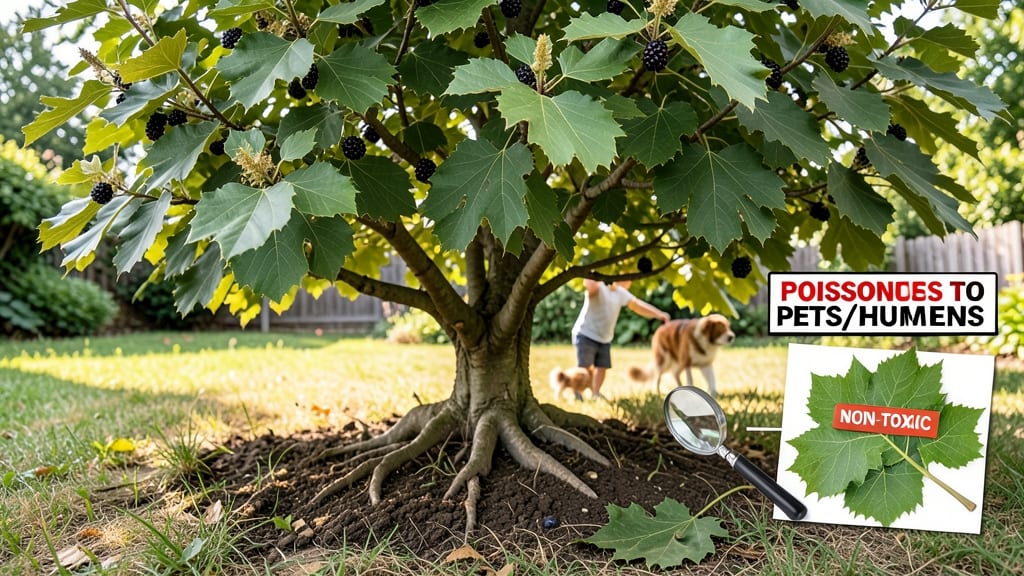
Mulberry tree leaves are poisonous to humans and pets, containing cyanogenic glycosides that release cyanide when ingested in large quantities. Symptoms include nausea, dizziness, or respiratory distress—seek medical help immediately if consumed.
Mulberry tree leaves contain natural compounds called cyanogenic glycosides, which break down into cyanide when chewed or crushed. 🌿 Even small amounts can cause mild symptoms, but larger ingestions may lead to severe reactions like vomiting or difficulty breathing.
I always recommend keeping pets and children away from these trees, especially during leaf drop or pruning seasons when accidental exposure is more likely.
Interestingly, some animals like deer and rabbits can graze on mulberry leaves without issue, while others—such as dogs or cats—are far more sensitive. This highlights how toxicity varies across species, making it crucial to monitor pets closely if you have a mulberry tree in your yard.
Proper disposal (like composting in sealed bins) helps prevent accidental ingestion too.
💡 In This Article
- Toxicity Levels in Mulberry Leaves: What Makes Them Dangerous
- Safe Handling and Gardening Tips for Mulberry Trees
Toxicity levels in mulberry leaves: What makes them dangerous
Mulberry leaves contain cyanogenic glycosides—specifically amygdalin and prunasin—which are naturally occurring compounds that convert into hydrogen cyanide (HCN) when the leaf cells are damaged. This chemical reaction occurs through an enzyme called beta-glucosidase, which activates when leaves are chewed, crushed, or even wilted.
The cyanide release isn’t instantaneous; it builds up gradually, meaning even small amounts can pose risks over time. For example, a single handful of fresh leaves might trigger mild symptoms in a child, while a full cup (about 20-30 leaves) could lead to severe poisoning in pets or adults.
The toxicity level varies by mulberry species and leaf maturity. White mulberry (Morus alba) leaves, commonly found in urban landscapes, contain 0.05–0.1% cyanogenic glycosides by dry weight—a seemingly small percentage, but enough to cause harm when ingested in large quantities.
Young, tender leaves have higher concentrations of these compounds than mature ones, making them particularly dangerous. 🌿 What’s fascinating is how this toxicity evolved: mulberry trees produce these chemicals as a natural defense against herbivores, though some animals (like deer) have adapted to tolerate them, while others (such as dogs) lack this resistance.
Cyanide disrupts cellular respiration by binding to cytochrome oxidase in mitochondria, effectively suffocating cells at a microscopic level. This explains why symptoms like headaches, dizziness, or rapid breathing appear within 15–60 minutes of ingestion. In extreme cases, cyanide can cause convulsions or cardiac arrest by overwhelming the body’s oxygen utilization.
The lethal dose for humans is estimated at 50–60 mg of cyanide, which roughly translates to consuming about 1–2 cups of fresh mulberry leaves—though individual sensitivity varies widely.
Interestingly, the cyanide content decreases when leaves are cooked or dried, but they remain toxic. Traditional preparations in some cultures (like mulberry leaf tea) often involve boiling or fermenting to reduce cyanogenic glycosides, but these methods don’t eliminate the risk entirely.
For instance, 1 cup of brewed mulberry leaf tea might contain trace amounts of cyanide—safe for occasional use but potentially harmful if consumed daily. This is why many health experts advise against using mulberry leaves in food unless properly detoxified through specialized processing.
Pets are especially vulnerable because their smaller body size means even a few leaves can deliver a dangerous dose. Dogs, for example, may experience drooling, vomiting, or weakness after nibbling on fallen mulberry leaves, while cats might show labored breathing due to their slower metabolisms.
The key takeaway? Prevention is critical—whether you’re a gardener, pet owner, or simply passing by a mulberry tree. Always assume the leaves are toxic and take precautions, especially during peak leaf drop in spring or early summer.