
Pruning
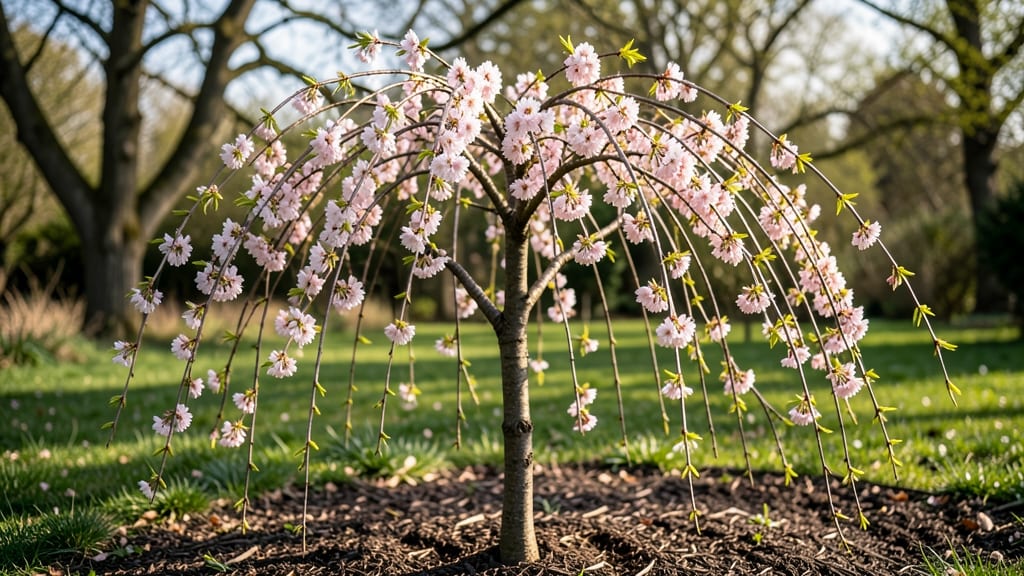
Your weeping cherry tree sapling will become the centerpiece of your garden—if you prune it right from day one. 🌿 The secret to that graceful, fountain-like shape isn’t complicated, but timing and technique make all the difference, especially in those first critical years.
Start with the right tools: sharp pruners, a small saw for thicker branches, and rubbing alcohol to sterilize cuts. I learned the hard way that dull tools tear bark instead of cleanly snipping, which invites disease.
Focus on removing dead or crossing branches first, then shape the canopy by cutting just above outward-facing buds. By late winter, you’ll see new growth emerge exactly where you want it, with a balanced silhouette that stays elegant year-round.
The tree’s delicate pink blossoms in spring and fiery fall foliage make every pruning session worth it. Works beautifully in USDA zones 5-8, but even in colder areas, proper winter protection keeps it thriving. Let’s get those branches in shape!
📚 In This Guide
- What you need
- Instructions
- Tips and common mistakes
- Wrapping up and next steps
What you need
- ● Weeping cherry tree sapling (1, healthy and disease-free, 3–6 feet tall)
- ● Pruning shears (sharp, bypass-style, for clean cuts on small branches)
- ● Loppers (1 pair, for thicker branches up to 1.5 inches in diameter)
- ● Hand pruners (1 pair, for precision work on fine branches)
- ● Disinfectant (70% isopropyl alcohol or a commercial pruning sealant)
- ● Garden gloves (1 pair, durable and cut-resistant)
- ○ Pruning saw (optional, for branches thicker than 1.5 inches)
- ● Extension pole pruners (for higher branches)
- ● Tree climbing gear (if your sapling is tall or in a hard-to-reach spot)
- ● Labeling tags (to mark cuts for future reference)
- ● Mulch or wood chips (to protect the root zone post-pruning)
- ● Safety glasses (to shield from debris)
- ● Choose a dry, sunny day to avoid spreading disease or stressing the tree.
- ● Ensure tools are clean and sterilized to prevent bacterial or fungal infections.
- ● Have a clear plan for pruning—sketch out your desired shape beforehand!
- ● Check local pruning guidelines (some regions have restrictions on when to prune flowering trees).
Step-by-Step pruning guide for your weeping cherry sapling
Transform your weeping cherry into a stunning, balanced focal point with these simple pruning techniques.
🌿 Step 1: Time Your First Pruning for Late Winter
Prune your weeping cherry sapling in late winter—just as buds begin to swell but before new growth starts. This timing ensures you remove dead wood while the tree is dormant, reducing stress. I like to schedule it for February or early March, when temperatures hover around 40-50°F. Cold snaps won’t harm the tree, but avoid pruning during frost warnings.
Use sharp, clean pruning shears to make 45-degree cuts just above a bud or branch collar. This angle helps water run off, preventing rot. If you’re unsure where to cut, look for the small bump where the branch meets the trunk—that’s your target. Never leave stubs; they invite disease and weak growth.
✂️ Step 2: Remove Dead, Crossing, or Weak Branches
Start by inspecting your sapling for dead branches—they’ll be dry, brittle, or snap easily when bent. Next, identify crossing branches rubbing against each other, which can create wounds. Remove one of the two, always choosing the smaller or weaker branch to preserve the tree’s natural shape. I prioritize branches growing inward or downward, as they disrupt the graceful weeping form.
Look for water sprouts—those fast-growing, upright shoots that steal energy from your tree’s structure. Snip them off at the base. You’ll also spot weak, thin branches that won’t support the tree’s weight. These should go too. Aim to remove no more than 25% of the tree’s foliage in one session to avoid shocking it.
☀️ Step 3: Shape for Balance and Airflow
Step back and visualize your tree’s natural weeping habit. Gently guide branches to create a rounded, layered silhouette, with the lowest branches arching outward and upward. Use your hands to lift and position branches before cutting—this helps you see the final shape. For weeping cherries, the goal is a soft, cascading effect, not a rigid, geometric look.
Thin out branches in the center of the tree to improve airflow and sunlight penetration. This prevents fungal diseases like powdery mildew, which thrive in dense, shaded areas. If a branch is too long, shorten it by cutting just above an outward-facing bud. You’ll see new growth emerge in spring, filling in gaps naturally.
🪴 Step 4: Light Maintenance Pruning in Summer
After the initial winter pruning, your weeping cherry will need light touch-ups in late summer—around August. This is when you address any suckers (shoots growing from the base) or overly vigorous branches that disrupt the tree’s form. Use hand pruners for small cuts and loppers for thicker branches. Always sterilize your tools with rubbing alcohol to prevent spreading disease.
Watch for new growth at the ends of branches—this is where your tree is directing its energy. If a branch grows too upright, cut it back to encourage a more horizontal, weeping habit. Summer pruning is about refinement, not drastic changes. You’ll notice the tree’s natural grace return as you shape it gradually.
⏰ Step 5: Final Check Before Bloom Season
In early spring, just before the tree blooms (usually March or April), do a final check for any winter damage or missed branches from your last pruning. Remove any dead wood or branches that grew in the wrong direction. This last step ensures your tree looks its best when it bursts into bloom, with pink or white flowers cascading elegantly.
After pruning, apply a balanced fertilizer (like 10-10-10) to support new growth. Water deeply at the base to help the tree recover. Over the next few weeks, you’ll see fresh, vibrant leaves emerging—your reward for careful pruning. Keep an eye on the tree throughout the growing season, and you’ll maintain its graceful shape year after year.
Tips & tricks for perfect weeping cherry tree pruning
These simple but game-changing tips will help you transform your weeping cherry into a stunning, year-round showstopper.
Timing Secret: The late winter window in Step 1 is your golden opportunity. If you miss it, wait until early spring before buds swell—but never prune after new growth starts. I've learned this the hard way after seeing trees stress from spring pruning. Check your local frost dates as a guide; pruning during frost warnings can shock the tree.
Cutting Technique: That 45-degree angle in Step 1 isn't just for looks—it's about tree health. Make your cuts just above a bud or branch collar to encourage proper healing. I always test my pruners first on a small branch to ensure they're sharp enough for clean cuts. Dull tools crush rather than slice, which creates wounds that invite disease. Use a clean rag to wipe your blades between cuts if you're working with multiple branches.
Shape Visualization: Before making any cuts in Step 3, step back and study your tree's natural growth pattern. Hold branches gently to visualize how they'll look after pruning—this prevents over-trimming. I imagine the tree as a waterfall, with each layer flowing gracefully into the next. For weeping cherries, aim for a natural, organic shape rather than a perfectly symmetrical look.
Tool Maintenance: Sterilizing your tools between cuts in Step 4 isn't just about disease prevention—it's about the longevity of your tree. I keep rubbing alcohol in a small spray bottle by my work area. After each cut, especially when dealing with suckers or diseased branches, I give my tools a quick wipe. This simple habit has saved me from dealing with fungal infections that could have spread throughout my entire yard.
Pro Tips for Weeping Cherry Tree Sapling
- These simple but game-changing tips will help you transform your weeping cherry into a stunning, year-round showstopper.
- Timing Secret: The late winter window in Step 1 is your golden opportunity.
- Cutting Technique: That 45-degree angle in Step 1 isn't just for looks—it's about tree health.
Frequently asked questions
Got questions about keeping your weeping cherry tree sapling looking its best? We’ve got answers! Here are some of the most common concerns—plus tips to keep your tree thriving year-round.
How often should I prune a weeping cherry sapling?
Prune young saplings once a year, ideally in late winter or early spring (before buds break) to encourage healthy growth. Avoid heavy pruning—focus on shaping and removing dead/diseased branches. For established trees, light maintenance pruning in summer (after flowering) helps maintain its graceful form.
Can I prune a weeping cherry tree in summer?
Yes, but minimize heavy cuts during summer. Light pruning to remove water sprouts or shape branches is fine, but avoid major structural changes. Summer pruning can stress the tree and may lead to excessive sap loss or pest attraction. Save big pruning for dormant seasons.
What’s the best way to prune without damaging the tree?
Use clean, sharp tools (bypass pruners or loppers) and make cuts at a 45-degree angle just above a bud or branch collar. Avoid tearing bark—always cut outside the branch bark ridge. Seal larger wounds (over ½ inch) with pruning sealant to prevent disease.
Will pruning affect my weeping cherry’s flowers?
Pruning after flowering (late spring/early summer) won’t harm blooms for next year. However, avoid heavy pruning in winter—it removes next season’s flower buds. For saplings, focus on structural shaping to promote airflow and light penetration, which actually enhances future blooms!
Are there alternatives if my sapling isn’t thriving?
If your weeping cherry struggles, consider dwarf varieties (like ‘Kanzan’ or ‘Stella Pink’) for smaller spaces or container-growing options. For poor soil, amend with compost or mulch. If pests/disease persist, consult a local arborist—some issues (like aphids or fungal spots) need targeted solutions.
Wrapping up and next steps
Growing a weeping cherry tree sapling into a stunning, year-round centerpiece is entirely within your reach—with patience, the right tools, and a gentle touch! Remember, pruning isn’t just about shaping; it’s about nurturing your tree’s health and encouraging its natural elegance.
Start small, observe its growth, and adjust your approach as it matures.
Ready to take the next step? Mark your calendar for seasonal pruning sessions and keep a pruning journal to track progress. Soon, your weeping cherry will be the talk of the neighborhood—a living work of art that blooms with beauty and grace! 🌸✨