
Pruning
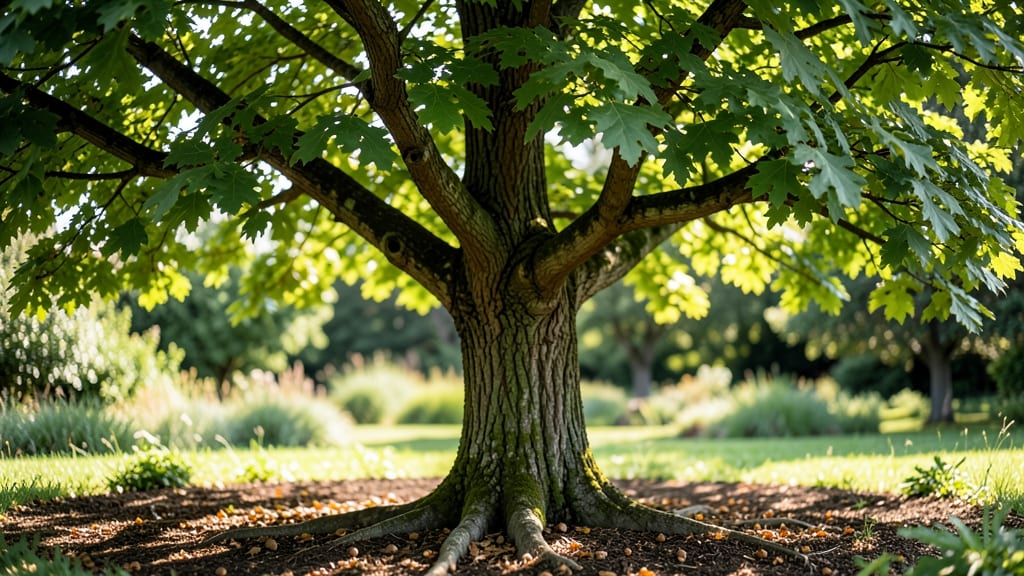
Identifying that towering tree in your yard just got easier. 🌳 I spent years staring at branches, memorizing leaf shapes, and finally cracked the code for quick tree ID—no botany degree required.
The secret lies in just four clues: leaf shape, bark texture, fruit/nuts, and tree size, all of which reveal themselves with a little observation.
Start with the leaves—their shape, edges, and arrangement tell you more than you think. A maple’s palmate lobes or an oak’s jagged edges narrow it down fast. Then check the bark: smooth and gray for young trees, deeply furrowed for mature oaks or sycamores.
Most people skip this step, but bark patterns are like fingerprints for trees. Seasonal changes add another layer—spring buds, summer fruit, or fall color shifts give major hints.
Within minutes, you’ll match your tree to common species like red maple, white oak, or sweetgum. No more guessing games or wasted time searching databases. The payoff? Knowing exactly how to care for it—when to prune, what pests to watch for, and even its approximate age.
My neighbor’s "mystery tree" turned out to be a black walnut, which explained why nothing else grew nearby.
This method works year-round, though spring and summer offer the clearest clues. For stubborn cases, snap a photo of leaves and bark and compare it to regional guides. You’ll go from "I have no idea" to "Ah, that’s a pin oak!" in no time—no green thumb required.
How Trees End Up Unrecognized
Ever stared at a tree in your yard and thought, "Huh? That’s not the oak I planted!" 🌳🤔 The truth is, trees can be sneaky—sometimes growing differently than expected, blending into their surroundings, or even sprouting from unexpected places. Here’s why identifying them can feel like solving a mystery.
Trees don’t follow a rigid script—they adapt to their environment, which means their leaves, bark, and shape can vary wildly even within the same species. Here’s why:
- Genetics: Just like humans, trees inherit traits from their parents. A seedling from a fast-growing oak might sprout leaves that look slightly different from its parent tree. Over time, these variations can make identification tricky, especially if you’re comparing it to a generic "oak" image online.
- Age Matters: Young trees often have smoother bark and simpler leaf shapes, while mature trees develop rougher bark, deeper fissures, and more complex foliage. A 10-year-old maple might look nothing like a 100-year-old one—even if they’re the same species.
- Sunlight Exposure: Trees in full sun vs. shade can develop different leaf sizes, colors, or even branch patterns. A shade-loving dogwood might grow tall and leggy in your yard if it’s not getting enough light, while one in a forest might stay compact.
Pro Tip: 🔍 Compare your tree to multiple stages of growth—check field guides or apps like iNaturalist for images of juvenile and mature forms of the same species.
Trees don’t always stay "pure." When two different species grow near each other, their pollen can mix, creating hybrids with bizarre traits. This is especially common in:
- Fruit Trees: Apple, pear, and cherry trees often hybridize in homeyards, resulting in trees with leaves that don’t match any standard variety. For example, a "crabapple" might have a mix of apple and ornamental crabapple traits.
- Oaks & Hickories: These genera love crossbreeding, leading to trees with leaves that are a confusing mashup of lobed and serrated edges. A Quercus × hybrid (like a bur oak crossed with a white oak) might leave you scratching your head.
- Willows & Poplars: Fast-growing and prone to hybridization, these trees can produce offspring with irregular bark patterns or leaf shapes that don’t fit neatly into identification keys.
Pro Tip: 🧬 Look for clues in the flowers or fruit—hybrids often have intermediate traits in these areas. If your tree has acorns that are neither round nor pointed, it might be a hybrid!
Sometimes, the mystery isn’t the tree—it’s the gardener. Mislabeling, accidental plant swaps, or even volunteer seedlings (trees that sprout from dropped seeds) can turn your yard into a botanical puzzle. Here’s how:
| Cause | Example | Red Flag |
|---|---|---|
| Misidentified Nursery Purchase | You bought a "Japanese Maple," but it’s actually a Norway Maple. | Leaves are too large, bark is wrong texture. |
| Seedling from a Neighbor’s Tree | A Ginkgo sprout appears where none existed before. | No parent tree in sight; odd location. |
| Grafting Gone Wrong | Your apple tree has branches with completely different leaves. | Two distinct leaf shapes on one tree. |
| Root Suckers from a Cut Stump | A Black Walnut sapling pops up near a stump you thought was dead. | Genetically identical to a nearby tree but smaller. |
Pro Tip: 📝 Keep a planting log with photos and purchase details. If you didn’t plant it, ask neighbors or check for seed sources (e.g., birds dropping acorns).
Drought, pests, disease, or even pollution can warp a tree’s appearance, making it look like an entirely different species. Here’s how to spot stress-induced changes:
- Leaf Shape Distortion: Aphids or mites can cause leaves to curl, pucker, or develop odd shapes. A healthy Sugar Maple with mites might look like a Boxelder at a glance.
- Bark Peeling or Cracking: Sun scald (from winter sun exposure) or fungal infections can create bizarre bark patterns. A Bald Cypress with peeling bark might resemble a Redwood.
- Stunted Growth: Compact, twisted growth can happen due to poor soil or root binding. A Pine struggling in clay soil might look like a Spruce.
Pro Tip: 🌡️ Check for other signs of stress—wilting, discolored leaves, or unusual growth patterns can hint at the real cause. If the tree looks "off," it might be fighting for its life, not just a different species.
Next time you’re stumped, remember: trees are dynamic, adaptive, and sometimes downright deceptive. The key is to look beyond the surface—bark texture, leaf arrangement, and even the tree’s "personality" (fast grower? thorny? fragrant?) can crack the case.
Identify Your Tree Fast
Now that you’ve spotted the clues—leaf shapes, bark texture, and growth habits—it’s time to turn those observations into action. Whether you’re a curious homeowner, a gardening newbie, or a pruning pro, these practical steps will help you pinpoint your tree in minutes. No botanist degree required!
Before diving into apps or books, organize what you’ve noticed about your tree.
Grab a notebook or your phone and jot down: - Leaf details: Shape (lobed, needle-like, palmate?), size, edge texture (smooth or serrated?), and arrangement (alternate, opposite, or whorled). - Bark features: Smooth, ridged, flaky, or scaly?
Any distinctive colors or patterns? - Fruit/seeds: Are there acorns, pinecones, berries, or winged samaras (those helicopter seeds)? - Seasonal traits: Does it drop leaves in fall?
Does it have evergreen needles year-round? - Tree size & shape: Is it a towering oak, a bushy maple, or a sprawling pine?
💡 Pro Tip: Take clear photos from multiple angles—close-ups of leaves, bark, and any unique features (like thorns or unusual branching). Lighting matters: snap pics on a sunny day for the best details.
Leverage free, user-friendly tools to cross-reference your clues with expert databases:
🌳 Option A: Tree Identification Apps (Fastest Method)
Download one of these top-rated apps and input your observations:
- LeafSnap (iOS/Android): Uses your phone’s camera to analyze leaves and bark.
- PictureThis (iOS/Android): Scans leaves/fruit and gives instant ID + care tips.
- iNaturalist (Web/App): Crowdsourced database where you can post photos for community ID.
🔥 Hot Tip: If the app gives multiple matches, compare bark and growth habits to whittle it down. Example: A tree with lobed leaves and smooth gray bark is likely a sycamore, while ridged bark points to an oak.
📖 Option B: Flip Through a Field Guide
If you prefer a tactile approach, grab a regional tree guide (like National Audubon Society Field Guide to Trees) and: 1. Sort by leaf type (needle vs. broadleaf).
- Check bark illustrations for texture/color matches.
- Look for fruit/seeds in the index.
✨ Genius Hack: Use the leaf key in most guides—it’s a flowchart that asks yes/no questions (e.g., “Are leaves compound?”) to zero in on the species.
Sometimes, hyper-local factors (soil, climate, or invasive species) throw a wrench in ID.
Double-check with: - Your county extension office: They often have free tree ID services or can confirm if a tree is native/invasive. - Neighborhood Facebook groups or Nextdoor: Post a photo and ask, “Does anyone know what tree this is in [Your Town]?” - Local arborists or landscapers: They’ve seen it all and might recognize rare species.
🌡️ Climate Check: If you’re in the Pacific Northwest, a Douglas fir is common, but in the Southeast, it could be a Southern magnolia. Know your region!
For mysterious or rare trees, a controlled test can reveal secrets: 1. Look for buds: In late winter, examine bud scales (tight clusters at branch tips). Maple buds are pointy; oak buds are fuzzy.
- Check sap color: Scratch the bark—maples ooze milky sap, while birches have white sap.
- Observe growth patterns: Do branches grow in opposite pairs (like a dogwood) or alternate spirals (like an oak)?
🔪 Caution: Only prune small branches if you’re unsure—avoid harming the tree during ID!
Once you’ve cracked the code, stay ahead of future ID puzzles with these habits:
- Label new trees: Use engraved metal tags or paint (non-toxic) near the base with the species name.
- Take seasonal notes: Jot down spring blooms, fall colors, or winter bud shapes to refresh your memory next year.
- Learn 3 new trees annually: Pick one from each category (oak, pine, maple, etc.) to build your visual library.
- Join a tree-walk: Local parks or nature centers often host guided ID hikes—great for hands-on learning!
If your tree doesn’t match any clues or you suspect:
- Disease (mushrooms at the base, oozing sap).
- Invasive species (like Bradford pear or tree of heaven).
- Structural risks (dead branches or hollow trunks).
…hire an arborist. They’ll confirm the species and offer pruning or treatment advice.
Now that you’ve got the ID game locked, your yard’s green mysteries are history! 🌳🔍 Next up: prune with confidence or plant the perfect companion species—because knowing your tree unlocks all the care secrets.
Frequently asked questions
What’s the quickest way to identify a tree if I only have a photo?
Use apps like LeafSnap or PictureThis—upload your photo, and they’ll analyze leaf shape, bark, and fruit to suggest matches in seconds. For best results, include close-ups of leaves and bark taken on a sunny day. If apps give multiple options, compare the tree’s growth habit (e.g., sprawling vs. upright) to narrow it down.
Can I identify a tree just by its bark in winter when there are no leaves?
Bark is a game-changer in winter. Look for unique textures: smooth gray (young trees), deeply ridged (oaks), or peeling layers (sycamores). Also check bud shapes—maples have pointy buds while oaks are fuzzy. Pro tip: Scratch the bark—maples ooze milky sap, while birches have white sap.
Why does my tree look different from online pictures of the same species?
Trees adapt! Sunlight, soil, and age change leaf size, bark texture, and growth patterns. A young oak might have smoother bark than a mature one, or a shade-loving tree could have smaller leaves. Even hybrids (like mixed oaks) create confusing traits. Compare your tree to multiple growth stages in field guides or apps like iNaturalist.
What should I do if my tree doesn’t match any identification tools?
Check for stress signs first—pests, disease, or drought can warp a tree’s appearance. If it truly stumps you, consult your local extension office (they often offer free ID help) or post on Nextdoor with a photo. For rare cases, an arborist can confirm the species and assess its health.
How do I know if my tree is native or invasive?
Native trees thrive in your region without harming ecosystems, while invasives often spread aggressively and crowd out locals. Use the USDA Plants Database to check your tree’s native range. Common invasive lookalikes include Bradford pear (thorny, weak wood) or tree of heaven (smells like rot). When in doubt, ask your local nursery or extension office.