Pruning
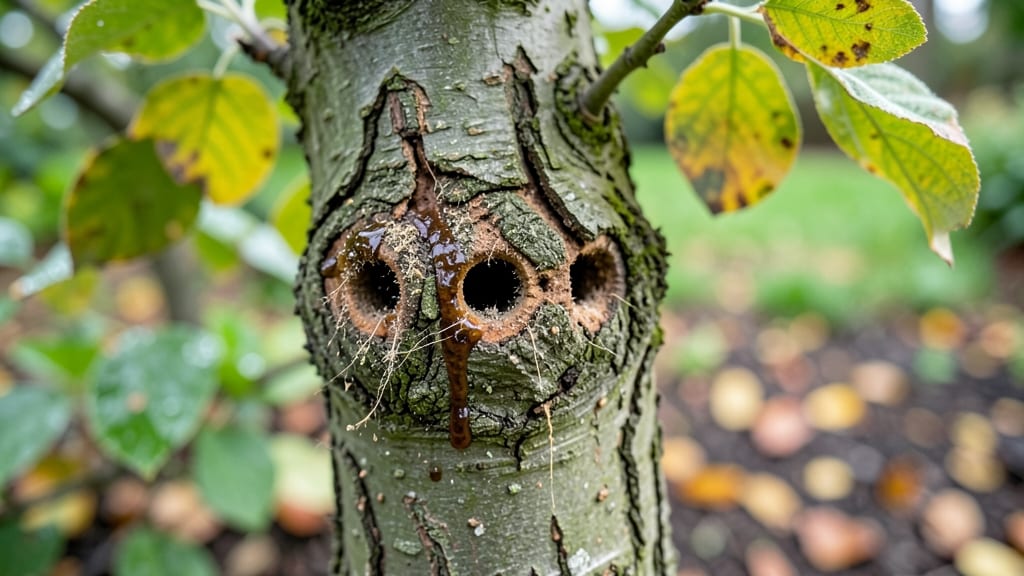
Your apple tree’s sudden decline might not be from drought or disease—it could be apple tree borer damage silently chewing through the bark. 🌳 I’ve seen healthy trees turn into skeletal remains in weeks, and the signs are often missed until it’s too late.
The key is catching the early warnings before the larvae tunnel deep into the trunk.
Look for sawdust-like frass piled at the base of branches or trunk—this is the borer’s waste, a dead giveaway. Then check for small, round exit holes (about the size of a pencil tip) where adult beetles emerge.
Wilting leaves on one side of the tree, despite consistent watering, is another red flag. These pests target stressed trees, so poor soil or drought can make them vulnerable.
The damage spreads fast, but early action can save your tree. Prune infected branches below the damage, then seal the wounds with pruning paint to prevent further entry. For severe cases, organic neem oil sprays or beneficial nematodes can help disrupt their life cycle before they mature.
The goal is to act before the borers move deeper into the wood.
Prevention starts with healthy soil and proper pruning—borers exploit weak trees. Inspect your tree every spring and fall, especially if you’ve had issues before. With the right vigilance, you can keep your apple tree thriving for years, not just seasons.
Root Causes of Apple Tree Borer
Apple tree borers—particularly the Saperda candida (apple tree borer) and Anobium spp.—don’t attack healthy, thriving trees on a whim. Their presence is almost always a red flag signaling deeper stress or vulnerability in your tree.
Understanding why these pests target your apple tree is the first step in prevention and early intervention. Below, we break down the key triggers, from environmental stressors to tree health decline.
Borers are opportunistic insects, and a tree’s weakened natural defenses make it an easy target. When an apple tree is compromised, its bark and sap—key barriers against pests—become less effective. Here’s what compromises those defenses:
- Nutrient Deficiencies: Trees lacking essential nutrients (especially nitrogen, potassium, and calcium) produce thinner bark and reduced sap flow. Borers detect these deficiencies and exploit the tree’s inability to "seal" entry points.
- Water Stress: Both overwatering (leading to root rot) and drought (causing bark cracking) create ideal conditions. Borers thrive in trees where moisture levels fluctuate wildly, as the stress makes the wood softer and easier to penetrate.
- Physical Damage: Cuts from pruning, storm wounds, or even hail scars create open wounds. Borers lay eggs in these cracks, using the exposed wood as a direct entry point. Poor pruning techniques (e.g., leaving jagged edges) accelerate this risk.
💡 Pro Tip: Conduct a soil test and visual bark inspection annually. Healthy bark should be smooth, firm, and slightly moist—any dryness or peeling signals potential vulnerability.
Borers are highly attuned to environmental conditions that weaken trees. While they can’t control the weather, they exploit it. Key environmental triggers include:
| Factor | How It Attracts Borers | Actionable Fix |
|---|---|---|
| Extreme Heat | Prolonged heatwaves dry out bark, making it brittle. Borers detect the reduced sap pressure and target stressed trees. | Apply mulch (3–4 inches deep) to retain moisture and water deeply during droughts. |
| Fungal Infections | Fungi like Valsa canker create deadwood and weak spots. Borers colonize these areas, as the tree can’t fight off both pests. | Prune infected branches immediately and treat with copper-based fungicides in early spring. |
| Compacted Soil | Poor root aeration starves the tree, reducing its ability to produce protective resins. Borers sense the chemical distress signals roots emit. | Use a garden aerator annually and amend soil with compost. |
✨ Key Insight: Borers often strike young trees or newly planted saplings because their root systems haven’t fully established. Prioritize root zone protection in the first 2–3 years.
Borers rarely appear alone. Their infestations are often a secondary infection after other pests or diseases have already weakened the tree. Common precursors include:
- Sap-Sucking Insects: Pests like aphids, scale, or spider mites drain sap, leaving trees energy-depleted. Borers follow, as the tree’s weakened vascular system can’t transport defensive compounds.
- Bacterial or Viral Infections: Diseases like fire blight or apple scab create entry points and reduce the tree’s ability to heal. Borers exploit these open wounds within weeks.
- Existing Borer Activity: Some borers (like the flatheaded apple tree borer) lay eggs in old infestation sites. If a tree has had borers before, it’s high-risk for reinfection.
🔥 Warning Sign: If you spot sawdust-like frass (borer excrement) near pruning cuts or oozing sap, treat it as an emergency. These are active infestation markers, not just "old damage."
By addressing these root causes—whether through proactive tree care, environmental adjustments, or disease monitoring—you can dramatically reduce the likelihood of apple tree borer damage. The key is early intervention before the tree’s structural integrity is compromised.
Fixing Apple Tree Borer Issues
Now that you recognize the signs of apple tree borer damage, it’s time to act. These pests can weaken or even kill your tree if left unchecked, but with the right approach, you can restore your tree’s health.
Below are practical, step-by-step solutions tailored to the root causes of infestation, from immediate fixes to long-term prevention.
If you’ve identified sawdust-like frass, oozing sap, or exit holes, the borers are already inside. Act fast to limit spread:
- 🔪 Prune Infested Branches
- Use sterilized pruning shears (clean with rubbing alcohol between cuts) to remove heavily damaged branches at least 6 inches below visible holes or oozing sap.
- Dispose of cuttings immediately in a sealed trash bag—do not compost them, as borers may survive.
- 🌡️ Check for Larvae
- Split open the bark near exit holes with a screwdriver or chisel to spot white, segmented larvae.
- Kill larvae on contact by drenching them with soapy water (1 tsp dish soap per gallon) or rubbing alcohol (70% or higher).
- 🧹 Clean Up Debris
- Rake and remove all fallen branches, sawdust, and bark from the base of the tree. Borers hide in these materials to pupate.
Once you’ve pruned, treat the tree to suffocate existing borers and deter new ones:
🌿 Organic Options (Safe for Pollinators & Soil)
| Method | How to Apply | Best Time |
|---|---|---|
| Beneficial Nematodes | Mix 5–10 million nematodes per gallon of water and apply to soil around the base with a watering can. | Late spring/early summer (when larvae are active) |
| Neem Oil Spray | Mix 2 tbsp neem oil + 1 tsp horticultural oil per gallon of water + drop of dish soap (as emulsifier). Spray thoroughly on bark and soil. | Spring & fall (avoid blooming season) |
| Diatomaceous Earth | Apply a thin layer around the trunk and in bark crevices (reapply after rain). | Dry conditions only (loses effectiveness when wet) |
💊 Chemical Solutions (For Severe Infestations)
- 🔹 Systemic Insecticide (Imidacloprid or Dinotefuran)
- How to use: Soak the root zone with a tree-injection system or granular treatment (follow label rates).
- When: Early spring (before borers emerge) or late summer (when larvae are feeding).
- ⚠️ Caution: Avoid overuse—borers can develop resistance.
Rotate with organic methods if possible.
- 🔹 Borer-Specific Sprays (Permethrin or Bifenthrin)
- How to use: Spray directly on bark and crevices (not leaves) when borers are active (June–July).
- ⚠️ Caution: Harmful to bees—apply at dusk when pollinators are inactive.
A healthy tree fights off borers better. Focus on these proactive steps:
- 💧 Water Deeply & Consistently
- Borers target stressed trees. Water 1–2 inches per week (more in drought) to keep roots hydrated.
- 💡 Pro Tip: Use drip irrigation to avoid wetting foliage (reduces fungal issues).
- 🌱 Improve Soil Health
- Test soil pH (ideal: 6.0–7.0 for apples) and amend with compost or aged manure.
- 🔥 Boost nitrogen (but avoid over-fertilizing—too much sap attracts borers).
- 🪓 Prune Properly
- Remove dead, diseased, or crossing branches in late winter/early spring (before borers wake up).
- ✨ Secret Trick: Seal large pruning cuts with pruning sealant to prevent entry points.
- 🛡️ Install Physical Barriers
- Trunk wraps: Apply tree banding material (like Tanglefoot) around the trunk to trap crawling adults.
- 🌡️ Solarization: For young trees, cover the soil with clear plastic for 4–6 weeks in summer to kill pupating borers.
Borers often return—stay ahead with this schedule:
| Season | Task |
|---|---|
| Early Spring | Inspect for new frass or sap, prune damaged wood, apply nematodes or neem oil. |
| Summer | Reapply treatments (especially after rain), check for exit holes. |
| Fall | Deep water, add compost, and seal wounds before winter. |
| Winter | Remove all debris, and check bark for overwintering eggs. |
If your tree is over 50% infested, large branches are dying, or you’re dealing with a mature tree, consider hiring an arborist.
They can: - Inject systemic treatments deeper into the wood. - Assess structural risks (weakened branches may need bracing). - Recommend species-specific care (some apple varieties are more resistant).
🌟 Remember: The key to beating apple tree borers is early detection + consistent care. With these steps, your tree can bounce back—and even thrive—without becoming a borer buffet! 🍏💪
Frequently asked questions
How can I tell if my apple tree has borer damage vs. disease?
Look for sawdust-like frass (borer excrement) at the base of branches or trunk—this is a dead giveaway. Borer damage also creates small, round exit holes (pencil-sized) where adult beetles emerge, while diseases often cause oozing cankers or fungal growth. Wilting leaves on one side of the tree despite consistent watering is another red flag.
Can I save a tree with severe borer damage?
It depends on how deep the infestation is. If the borers have tunneled into the larger branches or trunk, the tree may not recover. For early-stage damage, prune infected branches 6 inches below the holes, treat with neem oil or beneficial nematodes, and monitor closely. If over 50% of the tree is affected, consult an arborist—they can assess if removal is necessary.
What’s the best time of year to treat apple tree borers?
Act in late spring/early summer when larvae are active, or fall before they pupate. Apply neem oil sprays or beneficial nematodes in spring, and prune damaged wood in winter when the tree is dormant. Avoid treatments during blooming season to protect pollinators.
Will removing infected branches stop the borers from spreading?
Yes, but only if you dispose of cuttings properly—never compost them! Borers can survive in discarded wood. Seal pruning cuts with pruning paint to prevent new entry points, and clean your tools with rubbing alcohol between cuts to avoid cross-contamination.
Are there any apple tree varieties more resistant to borers?
While no variety is completely immune, dwarf or semi-dwarf apple trees tend to fare better because their smaller size makes them less appealing to borers. Varieties like Liberty or Enterprise (disease-resistant hybrids) may also have slightly better defenses, but proper care (like soil health and pruning) is the real key to prevention.