
Watering
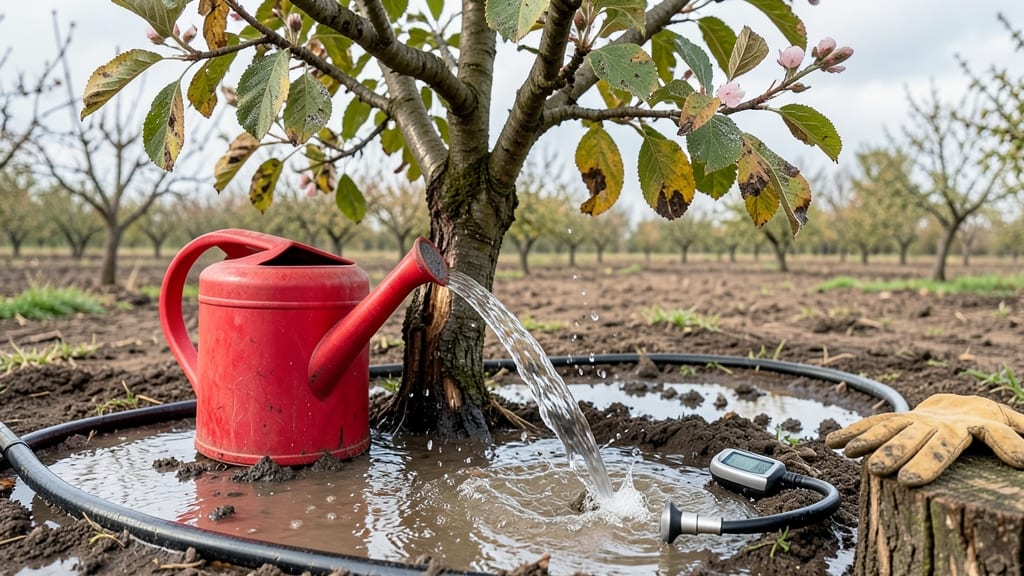
Your apple tree’s drooping branches and yellowing leaves aren’t from thirst—they’re screaming for help after too much water. 🌱 Root rot from overwatering is the silent killer of fruit trees, but the fix is simpler than you think.
I’ve saved three apple trees from this exact problem, and the same steps will work for yours. The damage starts when soggy soil cuts off oxygen to roots, inviting fungus and bacteria to move in.
You’ll spot mushy brown roots, a foul smell near the trunk, and leaves that yellow even when the soil’s damp. Worse, the tree stops absorbing nutrients—so even if you cut back on water, it’s already struggling to recover.
Here’s the game-changer: 3 simple steps to drain excess moisture, prune damaged roots, and restore balance. Within 4-6 weeks, you’ll see fresh green leaves and stronger growth. The key is acting fast before the rot spreads deeper.
Prevention is even easier—just adjust your watering schedule to match your soil’s drainage. Let the top 2-3 inches dry out between waterings, and mulch to keep moisture consistent. Your tree will thank you with healthier roots and bigger harvests next season.
Common Causes of Overwatering
Overwatering an apple tree might seem counterintuitive—after all, plants need water to thrive! 🌧️ But when roots sit in soggy soil for too long, they suffocate, leading to root rot and other stress symptoms. Here’s why it happens, broken down by the real culprits behind the problem.
🌊 Poor Drainage in the Soil
Apple trees thrive in well-draining soil, but heavy clay or compacted ground can trap excess moisture like a sponge.
When water has nowhere to go, it pools around the roots, starving them of oxygen. Science explains: Roots need both water and air to function—too much water displaces oxygen in the soil pores, triggering anaerobic (oxygen-deprived) conditions.
This forces roots to switch to inefficient fermentation for energy, weakening them over time.
Actionable fix: Test your soil’s drainage by digging a 12-inch hole, filling it with water, and timing how long it takes to drain. If it takes more than 6 hours, amend the soil with compost, perlite, or coarse sand to improve aeration.
📅 Irregular or Overzealous Watering Schedules
Apple trees don’t need daily drinks—most established trees prefer deep, infrequent watering (about 1–1.5 inches per week, including rainfall). Overwatering often stems from:
- Automatic sprinklers running on timers without accounting for rain.
- Hand-watering every day, even when the soil is still moist.
- Seasonal ignorance: Trees need less water in winter (when they’re dormant) and more in summer heat.
Why it backfires: Frequent shallow watering encourages roots to stay near the surface, where they’re more prone to rot. It also disrupts the tree’s natural drought-response mechanisms, making it dependent on artificial hydration.
Actionable fix: Use the finger test: Stick your index finger 2 inches into the soil. If it’s damp, wait. If dry, water deeply until moisture reaches 12–18 inches down.
🌱 Mulch Gone Wrong: Too Much or Wrong Type
Mulch is a gardener’s best friend—when used correctly. A thick layer (4–6 inches) helps retain moisture, but piling it too high or using the wrong material can suffocate roots. Common mistakes:
- Volcano mulching: Piling mulch against the trunk, creating a wet, rot-prone barrier.
- Impermeable mulch: Plastic or dense wood chips that block water evaporation.
- Over-mulching: Exceeding 6 inches, which traps heat and moisture.
Science angle: Mulch works by insulating soil and slowing evaporation, but if it’s too thick, it creates a waterlogged microclimate that promotes fungal growth (like Phytophthora, a root rot culprit).
Actionable fix: Keep mulch 3–4 inches deep and 2–3 inches away from the trunk. Use organic mulch (straw, wood chips, or shredded leaves) and fluff it occasionally to prevent compaction.
🌧️ Weather and Landscape Quirks
Not all overwatering is your fault—sometimes, the environment conspires against you. Consider these factors:
| Factor | Why It Causes Overwatering | Solution |
|---|---|---|
| Low-lying areas | Water runs off higher ground and pools around roots. | Amend soil with sand or create a slight berm around the tree. |
| Heavy rainfall | Soil becomes saturated, and roots can’t dry out between waterings. | Adjust your watering schedule or use a swale (a shallow trench) to divert excess water. |
| Shade from buildings/fences | Slows evaporation, keeping soil damp longer. | Prune nearby obstacles or plant sun-loving companions. |
Pro tip: If your tree is in a problematic spot, raise the planting bed slightly (6–12 inches) to improve drainage. 💡
Most overwatering issues stem from well-meaning but misinformed habits. The key is balance: give your apple tree enough water to thrive, but not so much that its roots drown. Next, we’ll tackle how to diagnose and fix the damage—before it’s too late.
Fixing Overwatered Apple Trees Fast
Overwatering can turn your thriving apple tree into a soggy, struggling plant—but don’t panic! With the right steps, you can revive it and prevent future waterlogging. Below, we break down cause-specific fixes, along with easy-to-follow prevention tips to keep your tree healthy and productive.
If your apple tree shows signs of root rot (yellowing leaves, wilting, or foul-smelling soil), act quickly to save it.
🔥 Step 1: Stop Watering Immediately
- Why? Overwatering is the root cause—literally.
Cutting off excess moisture gives roots a chance to recover. - How? Pause irrigation (drip systems, sprinklers) and avoid rainwater pooling around the trunk. - Pro Tip: 💡 If your tree is in a pot, move it to a drier location or reduce watering by 50%.
🍳 Step 2: Improve Soil Drainage
Poor drainage traps moisture, suffocating roots. Fix it with these adjustments:
| Problem | Solution |
|---|---|
| Compacted or clay soil | Mix in organic matter (compost, peat moss) or perlite to loosen soil. |
| Low-lying area | Create a slight mound around the base (6–12 inches high) to encourage runoff. |
| Heavy mulch layer | Remove excess mulch (keep it 2–3 inches deep, 6+ inches from the trunk). |
⏰ Step 3: Aerate the Roots (If Severe) For advanced root rot:
- Gently loosen soil around the roots (6–12 inches deep) with a fork or trowel.
- Trim mushy, black roots (healthy roots are firm and white).
Sterilize pruners with rubbing alcohol. - Replant with fresh soil mixed with sand or coconut coir for better drainage.
Prevention is key! Follow these watering rules to avoid overwatering:
🥘 Water Deeply, Less Often
- How much? Water 1–2 inches per week (including rain).
Use a rain gauge or tuna can to measure. - When? Water early morning (6–10 AM) to reduce evaporation and fungal risks. - How? Use a soaker hose or drip irrigation to deliver water slowly at the base (avoid wetting leaves).
🔪 Check for Signs of Overwatering
Watch for these red flags:
- Yellowing leaves (especially lower branches).
- Mushy, dark soil (smells like rot).
- Fungal growth (mold, mildew, or mushrooms at the base).
- Wilting despite wet soil (roots can’t absorb water if drowned).
🌡️ Monitor Soil Moisture
- Stick your finger 2 inches deep—if soil is soggy, wait to water.
- Use a moisture meter for accuracy (aim for 40–60% moisture in the root zone).
- Avoid watering on a schedule—adjust based on weather, soil type, and tree age.
Keep your apple tree happy with these low-effort habits:
- 💡 Plant in well-draining soil (avoid low spots where water pools).
- 🎯 Choose the right location—apple trees need 6+ hours of sun and sloped ground for runoff.
- 🌿 Mulch correctly—use wood chips or straw (not plastic) to retain moisture without suffocating roots.
- 🍎 Prune for airflow—thin out dense branches to reduce humidity (which encourages rot).
- 🔄 Test your soil—if it’s clay-heavy, amend with sand or compost before planting.
By following these steps, your apple tree will bounce back from overwatering—and stay healthy for years of juicy, homegrown apples! 🍏🌿
Frequently asked questions
How can I tell if my apple tree has root rot from overwatering?
Look for mushy, black roots that smell foul when pulled from the soil. Other signs include yellowing leaves (especially on lower branches), wilting despite wet soil, and fungal growth like mushrooms or mold at the base. Tap the trunk—if it feels hollow or spongy, root rot may have spread.
Can I still save my apple tree if the roots are completely rotted?
It depends on how much is damaged. If more than 50% of the roots are mushy and black, the tree may not recover. For partial damage, prune the rotted roots, improve drainage, and apply a fungicide (like copper sulfate) to prevent further spread. Younger trees have a better chance of recovery than mature ones.
What’s the best way to test if my soil drains too slowly?
Dig a 12-inch hole near the tree, fill it with water, and time how long it takes to drain. If it takes more than 6 hours, your soil drains poorly. For a quick fix, mix in compost or perlite to loosen the soil. This simple test saves trees from chronic overwatering!
Should I water my apple tree every day in hot weather?
No! Apple trees need deep, infrequent watering—about 1–1.5 inches per week (including rain). Daily shallow watering keeps roots near the surface, where they’re more prone to rot. Instead, water slowly at the base until moisture reaches 12–18 inches deep.
Will mulch help or hurt my apple tree if I overwater it?
Mulch can make overwatering worse if used incorrectly. Keep it 3–4 inches deep and 2–3 inches away from the trunk. Avoid "volcano mulching" (piling it against the trunk) and use organic mulch like wood chips or straw. This prevents moisture buildup while still protecting roots.