
Trees
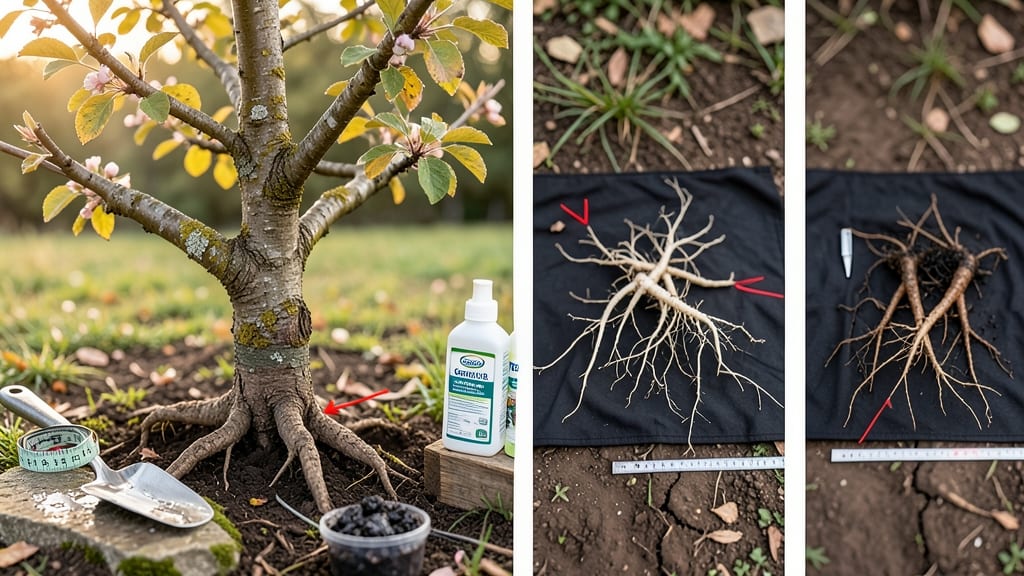
Your apple tree’s struggling roots could be silently starving the whole tree—before you even notice the leaves yellowing. 🌳 Root problems like rot, girdling, or poor drainage don’t just happen overnight; they’re often the result of years of ignored soil compaction, overwatering, or improper planting.
The good news? Most issues can be fixed with simple soil checks, targeted pruning, or smart watering adjustments—before you lose the tree entirely.
The worst offenders—root rot and girdling roots—start with symptoms you might dismiss as normal aging: wilting branches, stunted growth, or mushrooms sprouting at the base. But here’s the kicker: by the time you see these signs, the damage is already deep.
The key is catching problems early, when a few soil amendments or a strategic pruning cut can make all the difference. Think of roots like the tree’s circulatory system—if it’s clogged, nothing above ground thrives.
You’ll walk away with a 3-step diagnostic checklist to identify the exact issue (yes, even if you’re not a tree expert), plus foolproof fixes that work for backyard orchards. No arborist degree required—just a shovel, some mulch, and a little patience.
The best part? Healthy roots mean bigger harvests, stronger branches, and a tree that keeps producing for decades.
Whether you’re dealing with a newly planted sapling or a 20-year-old veteran, these solutions adapt to your tree’s age and size. Let’s get those roots back in fighting shape—before the next harvest season rolls around.
Root Causes of Apple Tree Struggles
Apple trees are resilient, but their roots can face a variety of challenges that stifle growth, weaken the tree, or even kill it if left unchecked. Understanding why these issues arise is the first step to prevention and recovery.
Below, we break down the most common culprits—backed by science—and explain how they disrupt your tree’s underground foundation.
Roots need the right environment to thrive, and when soil composition, drainage, or pH is off, problems follow. Apple trees prefer well-draining, slightly acidic soil (pH 6.0–7.0), but many gardeners unknowingly plant them in less-than-ideal conditions. Here’s how soil issues manifest:
- Compacted Soil:
Heavy foot traffic, construction, or natural clay buildup compresses soil, reducing oxygen and water flow. Roots suffocate, leading to stunted growth or fungal infections like Phytophthora. 💡 Pro Tip: Test soil compaction by digging a 6-inch hole—if the walls collapse, aerate with a garden fork or gypsum.
- Waterlogged Roots:
Apple trees hate "wet feet." Poor drainage (common in low-lying areas or after heavy rain) drowns roots, cutting off oxygen and inviting root rot (caused by Armillaria or Pythium fungi). Sign: Yellowing leaves even when soil is moist.
- Nutrient Deficiencies:
Soil lacking nitrogen, phosphorus, or micronutrients like zinc or iron stresses roots, making trees vulnerable to pests. A simple soil test reveals gaps—amend with compost or organic fertilizers like bone meal (for phosphorus) or Epsom salt (for magnesium).
Underground invaders and pathogens target apple tree roots with devastating precision. Unlike visible leaf damage, root problems often go unnoticed until the tree’s health plummets. Here’s what’s gnawing away:
- Root Weevils and Grubs:
Adult weevils (like the black vine weevil) chew roots, while their larvae burrow into the soil, creating tunnels that disrupt nutrient uptake. Sign: Wilting despite adequate water, or sawdust-like frass near the base. 🔥 Fix: Apply neem oil or beneficial nematodes (Steinernema carpocapsae) to soil in early spring.
- Armillaria Root Rot ("Honey Fungus"):
This aggressive fungus (Armillaria mellea) spreads via underground rhizomorphs (thread-like roots) from infected trees or stumps.
It thrives in damp, shaded conditions, killing roots and creating shelf-like mushroom growths at the tree’s base. ⚠️ Warning: Once established, it’s nearly impossible to eradicate—prevent by removing infected trees and solarizing soil.
- Nematodes (Microscopic Worms):
Root-knot nematodes (Meloidogyne) and lesion nematodes (Pratylenchus) pierce root cells, causing galls or brown lesions. Infected roots appear knobby or rotted. 🌡️ Solution: Solarize soil (cover with clear plastic for 4–6 weeks in summer) or plant marigolds (natural nematode repellent).
Sometimes, the problem isn’t biological—it’s external stress from the tree’s surroundings or mismanagement. These factors weaken roots over time:
- Improper Planting Depth:
Burying the graft union (visible bump on the trunk) or planting too deep suffocates roots, while planting too shallow exposes them to temperature swings. Rule of thumb: The graft union should sit 2–4 inches above soil level.
- Over/Under-Watering:
While waterlogged soil is obvious, chronic drought also harms roots. Apple trees need 1–2 inches of water weekly (more in fruit-bearing years). Overwatering, however, leaches nutrients and promotes rot.
- Physical Root Damage:
Construction, lawnmowers, or even aggressive pruning can sever roots. Large roots (over 2 inches) are critical for stability—damaging them triggers compensatory growth, draining the tree’s energy.
- Competition from Weeds/Grass:
Grassy lawns or invasive weeds (like bindweed) steal moisture and nutrients from roots. A 3–4 foot mulch ring (wood chips or straw) suppresses weeds while retaining soil moisture.
Most root problems start small but escalate quickly. The good news? Many can be prevented with proactive care—like soil testing, proper planting, and regular inspections.
If you spot wilted leaves, mushrooms at the base, or gnarled roots, act fast before the issue spreads. 🎯 Next up: How to diagnose these problems before they cripple your tree.
Quick Fixes for Root Troubles
When your apple tree’s roots are under siege—whether from disease, pests, or environmental stress—acting fast can mean the difference between a thriving orchard and a sad, struggling sapling.
Below, we’ve broken down practical, step-by-step solutions for the most common apple tree root problems, plus prevention tips to keep your tree healthy long-term.
Cause: Overwatering, compacted soil, or fungal infections (like Phytophthora). Fix:
- 🔥 Stop Watering Immediately – Let the soil dry out completely for 2–3 days to reduce fungal growth.
- 🍳 Improve Drainage – Dig a shallow trench (6–12 inches deep) around the tree’s drip line to redirect excess water. Add gravel or coarse sand to the trench to aerate the roots.
- 👨🍳 Apply Fungicide – Use a copper-based fungicide (like copper sulfate) or a biological option (e.g., Trichoderma spores) to combat the fungus. Follow label instructions for application.
- ⏰ Monitor & Mulch Lightly – Once roots recover, mulch with wood chips (2–3 inches thick) to retain moisture without suffocating roots.
💡 Pro Tip: If the tree is severely infected, consider root pruning (carefully trimming affected roots with sterilized shears) to remove diseased tissue.
Cause: Larvae from apple root borers or Japanese beetle grubs munching on roots. Fix:
- 🔪 Inspect & Remove Larvae – Gently dig around the root zone (6–12 inches deep) to spot white, C-shaped larvae. Drop them in soapy water to kill them.
- 🍳 Use Nematodes – Apply beneficial nematodes (Heterorhabditis bacteriophora) to the soil. These microscopic predators hunt grubs naturally.
- 👨🍳 Set Up Traps – Hang pheromone traps for adult borers in spring/summer to reduce egg-laying.
- ✨ Soil Treatment – Drench the root zone with neem oil or spinosad (follow label rates) to deter future infestations.
🌡️ Prevention: Avoid over-fertilizing with nitrogen—grubs love lush, soft roots. Instead, use balanced organic fertilizers (like compost or worm castings).
Cause: Heavy foot traffic, machinery, or clay soil restricting root growth. Fix:
- 🔥 Core Aeration – Rent a manual or electric soil aerator to punch holes (3–4 inches deep) every 6–12 inches around the tree’s canopy.
- 🍳 Add Organic Matter – Mix compost, leaf mold, or coconut coir into the top 6 inches of soil to improve structure.
- 👨🍳 Mulch Strategically – Use straw or shredded bark (not thick layers) to prevent future compaction.
- ⏰ Deep Watering – After aerating, water deeply to help roots expand into loosened soil.
🎯 Long-Term Fix: Plant cover crops (like clover or vetch) around the tree in winter to prevent soil from hardening.
Cause: Roots growing in circles or pressing against the trunk, restricting nutrient flow. Fix:
- 🔪 Identify & Cut Girdling Roots – Use sterilized pruners to carefully slice through roots that loop around the trunk. Make clean cuts just outside the trunk.
- 🍳 Mulch Away from the Trunk – Keep mulch at least 6 inches away from the base to prevent new girdling roots.
- 👨🍳 Improve Planting Depth – If the tree was planted too deeply, excavate soil around the trunk (but not the roots) to expose the flare where the roots meet the trunk.
✨ Prevention: When planting new apple trees, avoid burying the graft union—it should sit 2–3 inches above soil level.
Cause: Roots damaged by freezing temps or drought heat. Fix: 1. 🔥 For Cold Damage – Mulch heavily (4–6 inches of straw or leaves) in late fall to insulate roots.
In winter, wrap the trunk with burlap if temps drop below 10°F. 2. 🍳 For Heat/Drought Stress – Water deeply (1–2 inches per week) and shade young trees with lightweight fabric during extreme heat.
- 👨🍳 Root Zone Fertilizer – Apply a slow-release, root-specific fertilizer (like fish emulsion) to boost recovery.
💡 Pro Tip: Drip irrigation is ideal for apple trees—it delivers water directly to the root zone without wetting foliage (which can spread disease).
To keep root problems at bay: ✅ Test your soil (pH 6.0–7.0 is ideal for apple trees). ✅ Avoid heavy machinery near the tree’s drip line. ✅ Prune roots only when necessary—healthy roots should be left alone! ✅ Monitor regularly—check for wilting, yellowing leaves, or mushrooms (a red flag for rot).
Final Thought: Most root issues are manageable with early action. The key is observation + quick fixes before problems spiral. With these solutions, your apple tree will be back to strong, fruitful, and happy in no time! 🍏🌿
Frequently asked questions
How do I know if my apple tree has root problems?
Look for these key signs: yellowing leaves (even when soil is moist), stunted growth, mushrooms growing at the base (sign of root rot), or cracks in the trunk from girdling roots. Dig carefully around the base—healthy roots should be white or light tan, while rotted roots smell foul and turn dark brown or black.
Can I save an apple tree with root rot?
Early-stage root rot is often salvageable! First, stop watering immediately and improve drainage by creating a gravel trench around the root zone. Apply a copper-based fungicide and consider root pruning to remove infected tissue. For severe cases, consult an arborist—some trees may need removal to prevent spreading to nearby plants.
Why are my apple tree's roots growing in circles around the trunk?
This is called girdling roots, caused by improper planting depth or soil compaction. These roots strangle the trunk by restricting nutrient flow. Fix it by carefully cutting the circular roots (just outside the trunk) with sterilized pruners, then mulching away from the trunk to prevent recurrence. Always plant new trees with the graft union 2-4 inches above soil level.
What's the best way to prevent root problems in apple trees?
Start with well-draining soil (pH 6.0-7.0) and proper planting depth. Use drip irrigation instead of overhead watering, and maintain a 3-foot mulch ring (wood chips or straw) to retain moisture without suffocating roots. Test soil annually and avoid heavy foot traffic near the root zone.
Are there any natural remedies for apple tree root pests?
Yes! For grubs and weevils, apply beneficial nematodes (like Steinernema carpocapsae) or neem oil to the soil. Plant marigolds nearby—they repel nematodes naturally. For fungal issues, Trichoderma spores (a beneficial fungus) can outcompete pathogens in the soil.