
Pruning
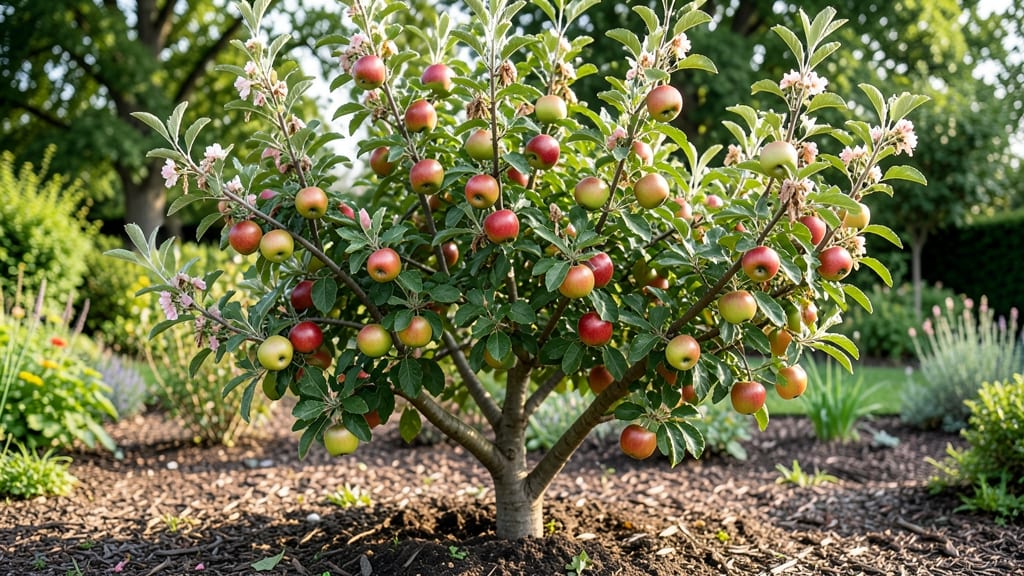
Growing a shrub-form apple tree gives you the joy of apples without the space needs of a full-sized tree. 🌳 My first columnar apple tree now stands proudly in my narrow backyard, producing bushels of crisp fruit while keeping its tidy shape year-round.
The secret lies in choosing the right variety—dwarf or columnar types like 'Columnar Apple' or 'Centennial' grow just 6-8 feet tall but still produce full-sized apples.
Plant in well-draining soil with full sun (6+ hours daily) and space them 8-10 feet apart to allow airflow, which prevents fungal diseases that plague crowded orchards. You'll prune lightly in early spring to shape the shrub and remove crossing branches, then again after harvest to encourage next year's fruit.
The result? A neat, fruit-bearing shrub that fits urban yards and small gardens while still delivering the harvest of a traditional tree. For best results, pair self-pollinating varieties or plant two different types nearby.
Winter protection (like burlap wraps) helps tender varieties survive cold snaps, and consistent watering (1-2 inches weekly) keeps roots happy without drowning them.
📚 In This Guide
- What you need
- Instructions
- Tips and common mistakes
- Wrapping up and next steps
What you need
- ● Pruning shears – Sharp, bypass-style (for clean cuts), size 6-8 inches (for small branches).
- ● Loppers – Bypass or anvil-type (for thicker branches, 2-3 inches in diameter).
- ● Pruning saw – Bow or folding saw for branches over 3 inches thick.
- ● Gloves – Cut-resistant, garden-grade (e.g., leather or heavy-duty fabric).
- ● Disinfectant – 70% isopropyl alcohol or 1-part bleach to 9 parts water (to sterilize tools between cuts).
- ● Rubbing alcohol or hydrogen peroxide – For cleaning wounds on the tree.
- ● Twine or zip ties – 1/4-inch wide (to secure branches during shaping).
- ○ Tree wound dressing (optional) – Pruning sealant (only for large cuts; skip for small ones—trees heal better without it!).
- ● Weather check – Prune on a dry, calm day (avoid frost or rain within 24 hours).
- ● Safety gear – Safety glasses (if working near overhead branches).
- ● Tree health assessment – Inspect for diseased or dead branches (remove first!).
- ● Ladder or step stool – If your tree is over 6 feet tall.
- ● Trash bags – For disposing of pruned branches (check local rules—some areas ban burning!).
- ● Pole saw – For high branches (extendable, 10-12 feet).
- ● Pruning paint – Non-toxic (to mark cuts for later reference).
- ○ Tree growth regulator (optional) – Hormone spray (e.g., Paclobutrazol) to control bloom intensity (follow label instructions!).
- ● Notebook & pen – To sketch your shrub design before cutting.
How to create a year-round apple tree shrub
This is the approach I use to keep a compact, ornamental apple tree blooming reliably while controlling its growth.
🪴 Step 1: Select the Right Dwarf Rootstock and Cultivar
Start with a dwarf apple tree rootstock—these stay small enough for shrub form while producing full-size fruit. I recommend Malling 9 (M.9) for compact growth or Budagovsky 9 (B.9) for slightly larger but still manageable shrubs. Choose a columnar or spindle-bush cultivar like 'Liberty,' 'Columnar Delicious,' or 'Centennial' for natural shrub-like branching.
Check the plant tag for chill hour requirements—most ornamental apple trees need 300-600 hours below 45°F annually. If you're in a warm climate, look for low-chill varieties like 'Dorsett Golden' or 'Ein Shemer.' Avoid standard-sized apple trees—they'll outgrow any pruning plan within a few years.
✂️ Step 2: Prune for Shrub Form in Early Spring
Prune before buds swell (late winter to early spring) when the tree is still dormant. Remove dead, crossing, or inward-growing branches first—these compete for energy and create weak structure. I cut back one-third of last year's growth from the main stems to encourage bushier branching. Use clean, sharp pruners and make cuts at a 45-degree angle just above an outward-facing bud.
For a fuller look, select 3-5 strong scaffold branches spaced evenly around the trunk. These will form your shrub's main structure. Thin out any branches growing from the bottom third of the trunk—these rarely produce fruit and create a messy base. After pruning, apply dormant oil spray to prevent pests from waking up with the tree.
☀️ Step 3: Maintain Seasonal Bloom Control
To keep blooms manageable, prune lightly after each flush of growth in late spring and summer. Remove any suckers (shoots growing from the base) immediately—they sap energy from your shrub. I also thin out 20-30% of the smallest water sprouts (fast-growing vertical shoots) to redirect energy into fruit production and thicker branches.
For fall cleanup, remove all dead or diseased wood and any branches that grew too vigorously during the season. This prevents overcrowding and makes winter pruning easier. Apply a 2-3 inch layer of mulch around the base (but not touching the trunk) to protect roots and retain moisture. Avoid heavy pruning in fall—it stimulates new growth that won't harden off before winter.
🌱 Step 4: Fertilize and Water for Compact Growth
Use a balanced, slow-release fertilizer (10-10-10 or 8-8-8) in early spring when buds swell. I apply half the recommended dose—too much nitrogen leads to leafy growth at the expense of flowers and fruit. Water deeply once a week during dry spells, aiming for 1-1.5 inches of water per session. Let the soil dry slightly between waterings to prevent root rot.
For year-round structure, avoid heavy pruning in summer unless you see aggressive vertical growth. Instead, pinch back new shoots to encourage bushier growth. If your shrub starts looking leggy, it needs more light—apple trees need 6+ hours of direct sun daily. Move it to a sunnier spot if possible, or supplement with a grow light for 4-6 hours in winter.
⏰ Step 5: Winter Care for Next Year's Blooms
In late fall, wrap the trunk with tree guard or burlap to protect it from sunscald (winter damage from temperature swings). I also prune out any weak or crossing branches one last time before dormancy. Avoid heavy pruning now—it stresses the tree when it's already conserving energy for spring.
Check for winter pests like scale or spider mites and treat with neem oil if needed. If you live in a cold climate, cover the base with straw mulch to insulate roots. In mild climates, a light frost cloth can protect blossoms from unexpected freezes. This prep ensures your shrub wakes up strong and ready for another season of blooms.
Tips & tricks for perfect year-round apple tree shrub
These practical strategies will help you maintain a thriving, compact apple tree that blooms beautifully through all seasons.
Rootstock and Cultivar Selection: When choosing your dwarf rootstock, pay close attention to the plant tag's chill hour requirements—this is non-negotiable for reliable blooming. I've found that Malling 9 (M.9) rootstocks handle colder climates better than Budagovsky 9 (B.9), which may struggle below 300 hours of chill. For warm climates, 'Dorsett Golden' is a game-changer with its low chill needs and consistent blooms.
Pruning Precision: In Step 2, when you're cutting back one-third of last year's growth, focus on removing branches that grow toward the center of the shrub. These "water sprouts" compete for sunlight and nutrients, weakening your tree's structure. I use a small flagging tape to mark branches I'll remove—it helps me visualize the final shape before making cuts. Always make your cuts at a 45-degree angle just above an outward-facing bud to encourage proper regrowth.
Seasonal Bloom Management: The 20-30% water sprout thinning in Step 3 is where you'll see the biggest difference in your shrub's shape. I recommend doing this thinning every 6-8 weeks during growing season to maintain that perfect rounded form. For fall cleanup, don't forget to remove any branches that grew more than 12 inches in a single season—they'll create an unbalanced look and make next year's pruning more difficult.
Light Supplement Strategy: If your shrub starts looking leggy despite proper pruning, it's likely not getting enough light. Apple trees need 6+ hours of direct sun daily, but if you're in a shaded area, supplement with a grow light for 4-6 hours during winter months. I use a simple LED grow light on a timer—it's made all the difference in maintaining my indoor winter blooms.
Pro Tips for Apple Tree Shrub
- These practical strategies will help you maintain a thriving, compact apple tree that blooms beautifully through all seasons.
- Rootstock and Cultivar Selection: When choosing your dwarf rootstock, pay close attention to the plant tag's chill hour requirements—this is non-negotiable for reliable blooming.
- Pruning Precision: In Step 2, when you're cutting back one-third of last year's growth, focus on removing branches that grow toward the center of the shrub.
Frequently asked questions
Got questions about keeping your apple tree shrub compact and thriving?
Here are answers to the most common ones—so you can prune with confidence and enjoy year-round structure!
Can I prune my apple tree shrub at any time of year?
The best time to prune is late winter or early spring (just before buds swell), but you can do light shaping in summer after harvest. Avoid heavy pruning in fall—it encourages new growth that may not harden off before winter. Pro tip: If you must prune in summer, do it early to reduce stress on the plant.
How much can I trim back without harming the shrub?
For apple tree shrubs, you can safely remove up to 25-30% of the total foliage in one session. Focus on thinning out crowded branches and removing deadwood. Over-pruning (more than 30%) can stress the plant, so space heavy cuts over 2-3 years if needed. Pro tip: Use hand pruners for small branches and loppers for thicker stems.
Will pruning affect next year’s apple harvest?
Pruning encourages better fruit production by improving airflow and sunlight penetration. However, heavy pruning too late in the season (after summer) may delay fruit set. Balance structural cuts with fruit-bearing branch preservation—never remove more than 1-2 main scaffold branches at a time.
What if my apple tree shrub stops blooming after pruning?
Lack of blooms often means you’ve pruned too aggressively or removed too many flowering spurs (those tiny buds on branches). Solution: Prune lightly in future, focusing on shaping rather than heavy cuts. Apple tree shrubs bloom on both old and new wood, so avoid cutting back more than 1/3 of the oldest branches in a year.
Are there dwarf apple tree shrubs that don’t require much pruning?
Yes! Varieties like ‘Columnar’ or ‘Sentinel’ apple trees grow upright with minimal pruning needs. For a shrub-like look, try ‘Red Jade’ or ‘Golden Hornet’—they stay compact (6-8 ft tall) with natural branching. Even these benefit from annual light pruning to maintain shape and remove deadwood.
Wrapping up and next steps
Transforming your apple tree into a stunning apple tree shrub is all about balance—pruning for structure while keeping those seasonal blooms in check. With the right tools, timing, and techniques, you’ll enjoy year-round beauty and a bountiful harvest. 🌿✨
Ready to take the next step? Grab your pruners, sketch a quick plan, and start shaping your tree this season. Your future shrub—full of blossoms and fruit—is just a cut away!