
Trees
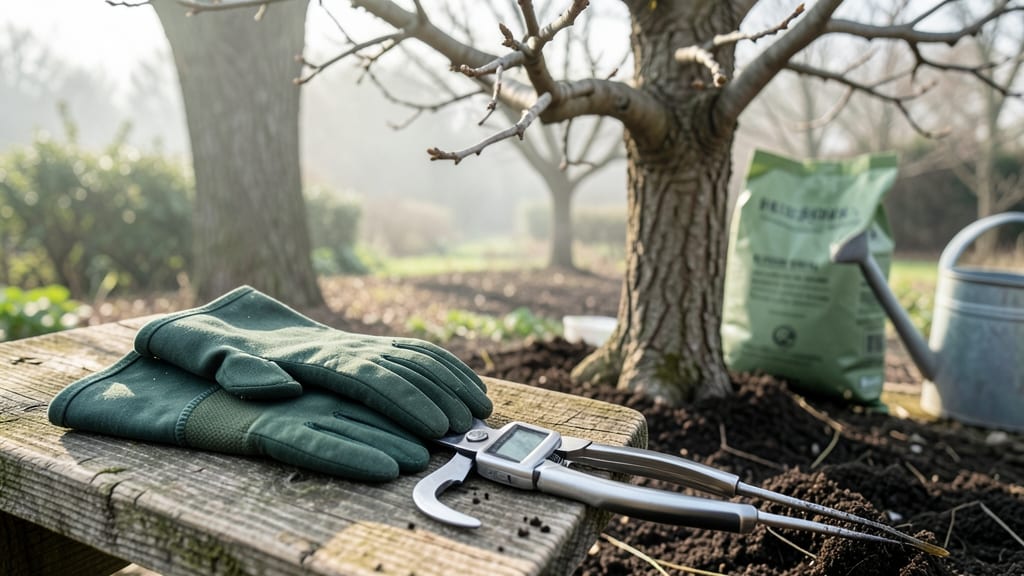
A plum tree not producing fruit can feel like a mystery—until you check these five key factors. 🌳 I’ve helped neighbors revive their fruitless plum trees by addressing age, pollination, pruning, soil health, and pests. The good news? Most issues have simple fixes that work even for first-time tree owners.
First, rule out age—young trees (under 3-5 years) focus on growing leaves and branches, not fruit. Then check pollination: plum trees need cross-pollination from another variety within 50 feet.
Poor pruning or overcrowded branches also steal energy from fruit production. Finally, test your soil—plums thrive in slightly acidic to neutral soil (pH 6.0-7.0) with balanced nutrients.
You’ll likely spot one of these red flags: sparse blooms, weak new growth, or visible pests like aphids. The solutions are straightforward: adjust pruning, add a nitrogen-rich fertilizer in early spring, or introduce a pollinator-friendly companion tree. Most trees rebound within one growing season with the right care.
If the problem persists after a year, consult a local arborist—some issues, like root rot or fungal diseases, need professional attention. But start with these basics, and you’ll likely see blossoms (and eventually fruit) by next summer.
Root Causes Behind Barren Plums
If your plum tree is standing tall but refusing to bear fruit, the issue likely stems from one—or several—key factors that disrupt its natural flowering and fruiting cycle.
Understanding these causes is the first step toward revival. Let’s break down the science behind why your tree might be playing hard to fruit.
🌱 Plum trees need patience—and the right genes.
Plum trees typically take 3–5 years to mature enough to produce fruit, depending on the variety. If yours is younger than this, it’s simply not ready.
Even then, some cultivars are bred for ornamental beauty rather than fruit production—check the label or consult a local nursery to confirm you’re growing a fruit-bearing variety (like ‘Santa Rosa’ or ‘Stanley’).
Actionable tip: 💡 If your tree is older than 5 years and still bare, it might be a non-fruiting ornamental (e.g., ‘Thundercloud’ or ‘Krauter Vesuvius’). These trees focus on foliage and form rather than fruit.
🐝 Without bees, blossoms = wasted energy.
Plum trees are self-pollinating, but cross-pollination from another variety (even a different plum or apricot tree) often boosts fruit set. If your tree lacks nearby pollinators—or if early spring frosts kill blossoms before bees arrive—fewer (or no) fruits develop.
Key signs:
- Blossoms drop off without forming small fruits.
- Tree has plenty of flowers but sparse harvest.
Fix it: ✨ Plant a compatible pollinator within 50 feet (e.g., ‘Larry Ann’ plums pair well with ‘Methley’). 🌡️ Protect blossoms from late frosts with frost cloth or a sprinkler system (water releases heat as it freezes).
✂️ Too much (or too little) pruning = no fruit.
Plum trees need structured pruning to encourage flowering. Over-pruning removes fruit-bearing wood, while under-pruning leads to dense, shaded branches that reduce blossom exposure to sunlight.
Common mistakes:
- Top-heavy cuts (removing too many branches at once).
- Pruning at the wrong time (late winter/early spring is ideal; avoid heavy cuts in fall).
- Not thinning branches (leaving a crowded canopy blocks light and air flow).
How to prune for fruit: 🔥 Open the center by removing inward-growing branches. 🍳 Shape like an open vase—keep the tree’s natural form but ensure sunlight reaches the core. 👨🍳 Remove "water sprouts" (fast-growing vertical shoots) to redirect energy to fruit production.
📊 Hungry trees won’t fruit.
Plum trees require balanced nutrients, especially nitrogen (N), phosphorus (P), and potassium (K). A deficiency in any of these—or an imbalance—can stunt flowering.
| Deficiency | Symptoms | Solution |
|---|---|---|
| Nitrogen (N) | Yellowing leaves (chlorosis), stunted growth | Apply compost or blood meal in early spring. |
| Phosphorus (P) | Dark green/purple leaves, weak roots | Use bone meal or rock phosphate before blooming. |
| Potassium (K) | Weak stems, brown leaf edges, poor fruit set | Add wood ash or greensand in late fall. |
| Zinc or Boron | Small, deformed leaves; poor fruit development | Spray with chelated zinc or borax solution (follow label rates). |
Pro tip: 🌡️ Soil test first! Many "deficiencies" are actually pH issues—plums thrive in slightly acidic soil (pH 6.0–6.5). Amend with sulfur or lime as needed.
🌡️ Too hot, too cold, or too wet = fruitless tree.
Plum trees are sensitive to extreme conditions, which can halt flowering or cause blossom drop.
| Stressor | Impact | Fix |
|---|---|---|
| Drought | Stunted growth, dropped blossoms | Deep watering 1–2x/week in dry spells; mulch to retain moisture. |
| Overwatering | Root rot, fungal diseases (e.g., silver leaf) | Improve drainage; water only when top 2" of soil is dry. |
| Late Spring Frost | Kills blossoms before pollination | Plant frost-hardy varieties (e.g., ‘Montgomery’) or use frost protection. |
| Heat Stress | Poor pollinator activity, blossom drop | Provide afternoon shade in hot climates; mulch to cool roots. |
🐜 Hidden invaders steal your tree’s energy.
Fungal diseases (like silver leaf or brown rot) and pests (such as plum curculio or aphids) can weaken a tree, reducing its ability to fruit.
Watch for:
- Blackened buds (brown rot).
- Sticky sap + ants (aphids).
- Chewed leaves/fruit (plum curculio).
Treatment: 🔥 Preventive sprays (copper fungicide for brown rot; neem oil for pests). 🎯 Remove infected fruit/dropped leaves to stop disease spread. ✨ Encourage beneficial insects (ladybugs, lacewings) with native plants.
Revitalize Your Plum Tree Now
A plum tree that refuses to bear fruit can be frustrating, but with the right fixes, you can bring it back to life—literally! Below, we’ve mapped out practical solutions for each common cause, along with prevention tips to keep your tree thriving for years. Let’s get your tree fruiting again!
Problem: Young trees (under 3–5 years) focus on growing leaves and branches before producing fruit. Solution:
- Be patient! Most plum varieties need 3–5 years to mature and fruit.
- Prune strategically to encourage a strong structure:
- 🔪 Trim dead or crossing branches in late winter (dormant season).
- 🌿 Open the canopy to improve airflow and sunlight penetration.
- 📏 Keep the tree balanced—avoid over-pruning, which stresses the tree.
- Fertilize lightly in early spring with a balanced 10-10-10 fertilizer to support growth.
💡 Prevention Tip:
- Plant dwarf or semi-dwarf varieties (like ‘Santa Rosa’ or ‘Methley’) if space is limited—they fruit sooner!
Problem: Plum trees need 6–8 hours of full sun daily to set fruit. Solution:
- 🌿 Relocate or prune obstructions (buildings, tall trees, or fences) blocking sunlight.
- 🍃 Thin nearby shade trees if necessary—plums hate competition.
- ⏰ Monitor sunlight patterns—if your tree gets <4 hours of sun, consider transplanting to a sunnier spot.
💡 Prevention Tip:
- Plant in the right spot from the start! Avoid low-lying areas where frost or shade lingers.
Problem: Plums are drought-tolerant but need consistent moisture, especially during flowering and fruiting. Solution:
- 💦 Deep water weekly (1–1.5 inches per week) during dry spells.
- 🌧️ Improve drainage—if your soil is clay-heavy, amend with compost or sand.
- 🚰 Avoid overwatering—soggy roots lead to root rot. Test soil moisture by sticking your finger 2 inches deep.
💡 Prevention Tip:
- Mulch around the base (2–3 inches of wood chips) to retain moisture and regulate temperature.
Problem: Compacted, nutrient-poor, or acidic soil stunts fruit production. Solution:
- 📊 Test your soil (pH should be 6.0–7.0 for plums). Adjust with:
- Lime (to raise pH if too acidic).
- Sulfur (to lower pH if too alkaline).
- 🌱 Feed with fruit-tree fertilizer in early spring and summer:
- 🍎 Organic option: Compost + banana peels (potassium boost).
- 💊 Synthetic option: 10-10-10 or a high-phosphorus fertilizer (like 5-10-10) to encourage blooms.
- 🔄 Aerate compacted soil with a garden fork or till lightly in fall.
💡 Prevention Tip:
- Top-dress annually with compost to replenish nutrients naturally.
Problem: Aphids, borers, fungal diseases (like silver leaf), or bacterial canker can weaken trees. Solution:
- 🐞 Inspect leaves & bark for:
- Holes, sawdust-like frass (borers).
- Sticky residue (aphids or scale).
- Black streaks or oozing sap (bacterial canker).
- 🧼 Treat immediately:
- 🍃 Organic: Neem oil spray (for pests) or copper fungicide (for diseases).
- 💊 Chemical: Horticultural oil (for borers) or systemic fungicide (like Myclobutanil).
- 🌿 Prune infected branches (sterilize tools with rubbing alcohol between cuts).
💡 Prevention Tip:
- 🌡️ Space trees properly (15–20 ft apart) for airflow and remove fallen leaves in fall to prevent disease buildup.
Problem: Plums often need cross-pollination (another variety nearby) or wind/bee activity. Solution:
- 🐝 Plant a pollinator-friendly companion (like a different plum variety or almond tree within 50 ft).
- 🌬️ Hand-pollinate (if bees are scarce): Use a small brush to transfer pollen from one flower to another on a calm, sunny day.
- 🌿 Avoid over-pruning—too few branches = fewer flowers.
💡 Prevention Tip:
- 🌼 Choose self-pollinating varieties (like ‘Stanley’) if space is limited.
Problem: Too much nitrogen = leafy growth but no fruit (plums need phosphorus for blooms). Solution:
- 📉 Reduce nitrogen—switch to a low-N, high-P fertilizer (like 5-10-5).
- 🍎 Balance with potassium (banana peels or wood ash) for root strength.
- 🌱 Avoid fresh manure—it burns roots and upsets the N-P-K ratio.
💡 Prevention Tip:
- 📊 Follow the label—more fertilizer ≠ better fruit!
- Age? Wait 3–5 years or prune for structure.
- Sun? Move or thin obstructions.
- Water? Deep, consistent moisture (not soggy).
- Soil? Test pH, amend with compost, and fertilize smartly.
- Pests? Inspect and treat early.
- Pollination? Add a companion tree or hand-help.
- Fertilizer? Balance N-P-K (less N, more P).
✨ Pro Tip: Keep a gardening journal to track pruning, fertilizing, and weather—it helps spot patterns!
With these fixes, your plum tree should be bursting with blossoms (and soon, fruit!). Happy growing! 🍑🌳
Frequently asked questions
How do I know if my plum tree is too young to produce fruit?
Most plum varieties need 3-5 years to mature enough for fruit production. Look for signs of maturity like thick branches and a well-established canopy. If your tree is younger than this and has healthy growth, it's likely just building its structure first.
What should I do if my plum tree has flowers but no fruit?
Check for pollination issues—plum trees often need cross-pollination from another variety within 50 feet. If you see flowers dropping without fruit forming, try planting a compatible companion tree or hand-pollinate using a small brush on calm days.
Why are my plum tree's leaves turning yellow?
Yellow leaves often indicate a nutrient deficiency, usually nitrogen (N) or iron. Test your soil pH—plums prefer 6.0-7.0. Amend with compost or a balanced fertilizer (10-10-10) in early spring. If yellowing appears between veins, it may be iron chlorosis, which responds well to chelated iron supplements.
Can I prune my plum tree in summer?
Light pruning for shape or safety is fine in summer, but avoid heavy pruning during the growing season. The best time is late winter/early spring when the tree is dormant. Summer pruning can stress the tree and reduce next year's bloom potential. Always sterilize your tools to prevent disease spread.
How do I know if my plum tree has a disease?
Watch for these red flags: blackened buds (brown rot), sticky sap with ants (aphids), or silver-colored leaves (silver leaf disease). Remove infected branches immediately and sterilize your pruners. For fungal issues, apply copper fungicide in early spring. If you're unsure, consult your local extension service for diagnosis.