
Pruning
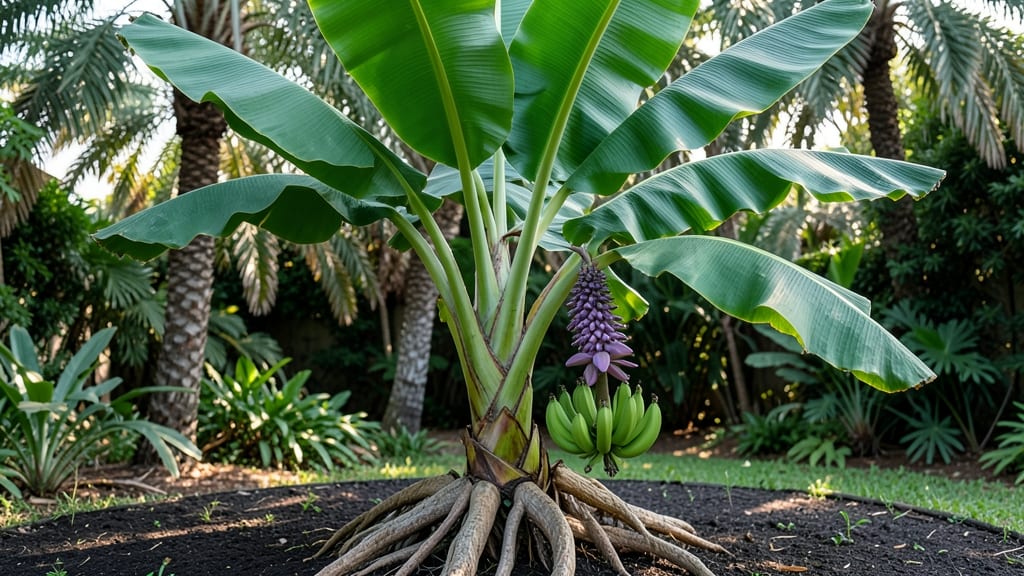
Banana trees thrive in tight spaces when you understand their secret adaptations—like their giant leaves that act as natural humidity traps and their pseudostem that stores water like a built-in reservoir. 🌿 I’ve grown them in urban yards where they outperform traditional plants by adapting to microclimates, even in partial shade.
The key is mimicking their tropical roots: loose, well-draining soil and consistent moisture without soggy feet.
Most gardeners overlook the root system’s shallow, aggressive spread—it’s why banana trees need wide containers or mounded soil to prevent root rot. My urban banana thrives in a 5-gallon pot with drainage holes, proving you don’t need a jungle.
The trick is mulching heavily to retain moisture and protect roots from temperature swings, which is especially critical in hot afternoons or cold snaps.
You’ll notice the difference within 6-8 weeks: glossy leaves unfurl faster, and the pseudostem stays firm, not mushy. The plants reward patience with year-round harvests (if you’re in zones 10-12) or dramatic foliage that outshines any ornamental.
Even in small yards, they become the star of the show—fragrant, fast-growing, and impossible to ignore.
For cooler climates, bring pots indoors before frost or wrap the trunk in burlap to insulate it. Banana trees aren’t just for the tropics—they’re survivalists with tricks to outsmart limited space. Let’s put those adaptations to work for your yard!
📚 In This Guide
- What you need
- Instructions
- Tips and common mistakes
- Wrapping up and next steps
What you need
- ● Banana plant (Musa spp.) – Choose a dwarf variety (e.g., Musa acuminata ‘Dwarf Cavendish’) for compact growth. 1-2 plants per container or in-ground spot
- ○ Large container or pot – Minimum 15-20 gallons (24–30" diameter) with drainage holes. Optional: Self-watering pots for efficiency
- ● High-quality potting mix – Well-draining blend with 50% organic matter (e.g., coconut coir + perlite + compost). Avoid garden soil—it compacts!
- ● Slow-release fertilizer – Balanced 10-10-10 or 8-3-9 (high in potassium for fruit production). Apply at planting + monthly
- ○ Mulch (optional but recommended) – 2–3 inches of straw or wood chips to retain moisture and regulate temperature.
- ● Garden gloves – Heavy-duty to protect against thorns and rough leaves.
- ● Trowel or spade – For digging and transplanting.
- ● Pruning shears – Sharp, bypass-style (for clean cuts). Sterilize with rubbing alcohol between cuts!
- ● Support stake or trellis – 5–6 ft tall (bamboo or metal) to guide growth in containers.
- ● Watering can or hose with nozzle – 1–2 gallons per watering (deep soak, not frequent shallow water).
- ○ Sunlight meter (optional) – To confirm your space gets 6+ hours of direct sun daily.
- ● Local climate data – Banana trees thrive in USDA Zones 10–11; colder zones need winter protection (e.g., frost cloth).
How to adapt banana trees for small-yard success
Growing bananas in tight spaces isn't just possible—it's a rewarding challenge that yields tropical beauty and fruit with the right approach.
🌱 Step 1: Choose a Dwarf or Compact Variety
Standard banana trees grow 10-15 feet tall, making them impractical for small yards. Instead, select dwarf Cavendish or Red Dwarf varieties, which typically reach 6-8 feet at maturity. These stay proportionate to your space while still producing fruit. I always check the mature height description on seed packets—some "compact" varieties still grow taller than advertised.
Another key adaptation is planting multiple small varieties instead of one large tree. For example, a 4-inch pot each of 4 different dwarf bananas creates visual interest while keeping each plant manageable. Just ensure each variety has its own container to prevent root competition.
🪴 Step 2: Use Container Gardening for Mobility
Banana trees thrive in 15-20 gallon containers with drainage holes, allowing you to move them indoors during frost or into sunlight as needed. I use fabric grow bags because they prevent root circling and dry out faster than plastic, reducing rot risk. Fill the container with a well-draining mix of 60% potting soil, 20% perlite, and 20% compost—bananas hate soggy roots.
Place pots on casters or a dolly so you can relocate them easily. In winter, move them to a garage with indirect light or a sunroom with southern exposure. The goal is to keep soil temps above 55°F—colder soil slows growth and stresses the plant.
☀️ Step 3: Optimize Light and Space with Strategic Placement
Banana trees need 6-8 hours of direct sunlight daily, but they tolerate partial shade better than most tropical plants. Position containers near a south-facing wall or under a partial shade cloth (30-50%) during peak summer heat. I’ve found that morning sun + afternoon shade prevents leaf scorch while maintaining growth.
For vertical space, train banana trees to grow against a trellis or sturdy fence using soft ties. The pseudostem naturally bends toward light, so a flexible bamboo stake inserted at planting helps guide growth. This keeps the plant contained while maximizing your small yard’s footprint.
💧 Step 4: Water and Feed for Compact Growth
Banana trees in containers dry out 2-3 times faster than in-ground plants. Water when the top 2 inches of soil feel dry, and always water at the base to avoid fungal issues. I use a drip irrigation line on a timer set for 10-15 minutes every other day in summer—this keeps moisture consistent without overwatering.
Feed with a balanced 10-10-10 fertilizer every 4-6 weeks during growing season, but reduce nitrogen in fall to encourage flowering. Bananas are heavy feeders, so I also add 1 cup of banana peel compost to each pot monthly—it’s free, nutrient-rich, and mimics their natural habitat.
✂️ Step 5: Prune and Manage Fruit for Small-Space Success
Remove suckers (new shoots) from the base of mature plants to redirect energy into fruit production. Keep only 1-2 strongest suckers per plant—more than that creates a crowded, unmanageable mess. Prune with clean, sharp shears at a 45-degree angle to prevent tearing.
When fruit appears, thin clusters to 3-5 hands per bunch—this ensures larger, higher-quality bananas. I also remove any blossoms that form on lower stems, as they drain energy from the main harvest. Harvest when the fruit turns mostly yellow with a few brown spots—this is the sweetest stage for container-grown bananas.
Tips & tricks for perfect small-yard banana tree adaptations
These space-saving strategies will help you grow tropical bananas without sacrificing yield or aesthetics.
Variety Verification: Always double-check mature height claims on seed packets—some "compact" varieties can still reach 10 feet. I've seen "Red Dwarf" advertised as 6 feet but grow to 8 feet in ideal conditions. When planting multiple 4-inch pots, space them at least 18 inches apart to prevent root competition while maintaining visual harmony.
Container Upgrade: While 15-20 gallon containers work, consider adding a 2-inch layer of expanded clay pebbles at the bottom for improved drainage. This mimics tropical forest conditions where bananas grow in well-drained volcanic soil. I've found this prevents root rot in my fabric grow bags, especially during summer downpours.
Light Optimization: For the critical 6-8 hours of direct sunlight, position your containers where they'll receive morning sun (cooler, less intense) and afternoon shade (to prevent leaf scorch). Use a light meter app to track exactly how many hours your space gets full sun—this helps you adjust shade cloth percentages precisely.
Winter Survival: Don't just move plants indoors—monitor soil temperatures closely. Use a soil thermometer to ensure they stay above 55°F. I've had success placing pots on top of refrigerators (with insulation) during cold snaps, as these appliances maintain consistent warmth. This prevents the shock that can kill tropical plants.
Pro Tips for Banana Tree Adaptations
- These space-saving strategies will help you grow tropical bananas without sacrificing yield or aesthetics.
- Variety Verification: Always double-check mature height claims on seed packets—some "compact" varieties can still reach 10 feet.
- Container Upgrade: While 15-20 gallon containers work, consider adding a 2-inch layer of expanded clay pebbles at the bottom for improved drainage.
Frequently asked questions
Got questions about growing banana trees in tight spaces? You’re not alone! Here are some of the most common queries—and straightforward answers—to help you thrive with these tropical giants in small yards.
How do I know if my banana tree is healthy despite limited space?
A thriving banana tree in a small yard shows strong, upright pseudostems (the "trunk"), large, glossy leaves, and new suckers at the base. Yellowing leaves or slow growth may signal nutrient deficiency or root-bound stress. Prune dead fronds and repot every 2–3 years to encourage airflow and root expansion.
How long does it take for a banana tree to bear fruit in a container?
Patience is key! Most dwarf or Musa acuminata varieties (like ‘Dwarf Cavendish’) may take 1–3 years to flower and fruit in containers. Factors like sunlight (6+ hours daily), well-draining soil, and balanced fertilizer (high in potassium) speed up the process. Pro tip: Use a 50-gallon+ pot and mimic tropical humidity with mulch or a pebble tray.
Can I grow a banana tree indoors year-round, or do I need outdoor space?
Indoor growth is possible but challenging! Banana trees crave sunlight—place them near south-facing windows or supplement with grow lights (12+ hours/day). If indoors, expect slower growth and smaller fruit. For outdoor winters, move potted trees to a garage or shed (above 50°F/10°C) or mulch heavily in USDA Zones 8–11.
Why are my banana tree’s leaves turning brown or crispy at the edges?
Brown, crispy edges usually mean low humidity or overwatering/underwatering. Check the soil—it should stay moist but not soggy. Mist leaves daily or use a humidifier. If soil is dry, water deeply; if soggy, let it dry out. Yellowing between veins? That’s often overwatering or fungus—improve drainage and prune affected fronds.
Are there banana tree alternatives for even smaller spaces?
If banana trees feel too bold, try these low-maintenance, space-saving tropicals:
- Dwarf Citrus (e.g., Calamondin): Thrives in pots, fragrant flowers, and edible fruit.
- Orchid Trees (Bauhinia): Fast-growing, drought-tolerant, and blooms profusely.
- Pineapple Sage: Compact, fragrant, and attracts pollinators—great for small balconies.
- Dwarf Banana (Musa ‘Ice Cream’): Non-fruiting but ornamental, with striped leaves and cold tolerance.
All love well-draining soil and 6+ hours of sun!
Wrapping up and next steps
From their compact growth habits to clever pruning techniques, banana trees prove that even small yards can grow big rewards! 🌱 Whether you’re maximizing vertical space, managing fruit production, or extending the plant’s lifespan, these adaptations make them a smart choice for urban gardeners.
Ready to transform your tiny plot into a thriving tropical oasis?
Your next step? Experiment with one adaptation this season—whether it’s training vines, pruning strategically, or choosing a dwarf variety. Grab your tools, get growing, and watch your banana tree work with you to create space-saving magic! 🌿