
Pruning
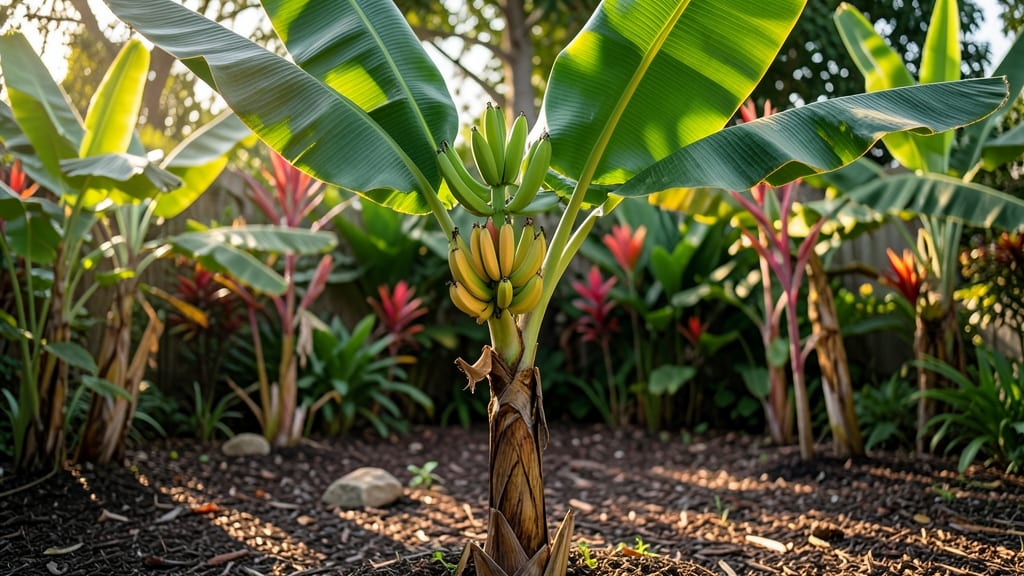
A banana tree in your yard isn’t just a bold statement—it’s a lush, year-round privacy screen that smells like sunshine. 🌿 I planted mine in a sheltered corner near the patio, and within a year, it became the centerpiece of my tropical-themed garden, shielding us from neighbors while adding height and drama.
The key is picking the right spot: 6+ hours of sunlight and protection from strong winds. In colder zones, group it with other tropical plants like hibiscus or bird of paradise to create a microclimate that keeps it happy.
Even in containers, banana trees can reach 10+ feet—perfect for patios or borders. You’ll love how the broad leaves filter light and noise while the occasional banana blossom adds unexpected beauty.
The tree’s rapid growth means quick privacy, and its fragrant foliage makes every walk by feel like a mini-vacation. Works in USDA zones 10-12 year-round, but with winter care (or containers), you can grow them almost anywhere. Here’s how to make it thrive in your space!
📚 In This Guide
- What you need
- Instructions
- Tips and common mistakes
- Wrapping up and next steps
What you need
- ● Banana tree plant(s): 1-3 Musa spp. (e.g., Musa acuminata or Musa balbisiana) – Choose dwarf varieties (3-6 ft tall) for easier yard maintenance.
- ○ Optional: Container-grown saplings (hardier for transplanting) or bare-root plants (cheaper but need extra care).
- ● Planting site: Sunny spot (6+ hours of direct sunlight daily).
- ● Well-draining soil (amend with 4-6 inches of compost or coconut coir if your soil is clay-heavy).
- ● Space: 6-10 feet apart for mature trees (or 3-5 feet for dwarf varieties in a hedge).
- ● Tools: 1 shovel (for digging holes 2x wider and deep as the root ball).
- ● 1 garden trowel (for delicate root adjustments).
- ● 1 hose with nozzle (for watering).
- ● 1 pair of pruning shears (sterilized with rubbing alcohol).
- ● 1 mulch (e.g., 3-4 inches of wood chips or straw to retain moisture).
- ● Soil amendments: Slow-release fertilizer (e.g., 10-10-10 NPK, 1 lb per tree).
- ● Epsom salt (1 tbsp per gallon of water for magnesium boost).
- ● Support: 3-4 bamboo stakes + twine (to secure young trees in windy areas).
- ● Pest control: Neem oil spray (2 tbsp per gallon of water for aphids/mites).
- ● Bird netting (if squirrels or birds are a problem).
- ● Pruning gear: Heavy-duty loppers (for mature trees).
- ● Gloves (banana sap can irritate skin!).
Step-by-step guide to planting a banana tree for year-round privacy
Here's how to establish a lush, tropical privacy screen that grows fast and stays green all year.
🌱 Step 1: Choose the Right Variety and Planting Location
Select a dwarf banana variety like 'Dwarf Cavendish' or 'Lady Finger' for yard planting—they stay under 10-15 feet and thrive in most climates. Avoid cold-sensitive types unless you live in USDA Zone 9-11. The ideal spot gets full sun (6+ hours daily) but tolerates partial shade in hotter regions.
Test your soil—bananas prefer slightly acidic to neutral (pH 6.0-7.5). If your soil is heavy clay, amend with 3-4 inches of compost mixed into the top 12 inches of soil. The planting hole should be twice as wide as the root ball but only as deep—planting too deep suffocates the roots.
🪴 Step 2: Prepare the Planting Site and Transplant
Dig the hole while keeping the plant in its nursery container. Remove the banana from its pot and gently loosen the roots if they're circling. Place the plant in the hole so the top of the root ball sits 1-2 inches above ground level—this prevents waterlogging during heavy rains.
Backfill with native soil mixed with 1 cup of balanced 10-10-10 fertilizer per plant. Water deeply to settle the soil, then add a 3-inch layer of mulch (straw or pine bark) around the base, keeping it 6 inches away from the trunk. This conserves moisture and protects roots from temperature swings.
☀️ Step 3: Establish Watering and Sunlight Routines
Water newly planted bananas 2-3 times per week for the first month, keeping soil consistently moist but not soggy. After establishment, water deeply once weekly unless your area experiences drought conditions. You'll know it's time to water when the top 2 inches of soil feel dry—bananas hate "wet feet."
In winter, move potted dwarf varieties to a sheltered spot if temperatures drop below 50°F. For in-ground plants, wrap the trunk with burlap and cover with straw mulch to insulate roots. Watch for yellowing leaves—this often signals overwatering or poor drainage, not cold damage.
✂️ Step 4: Fertilize and Prune for Healthy Growth
Feed bananas every 6-8 weeks during growing season (spring-fall) with a potassium-rich fertilizer (like 0-10-10) to encourage strong stems and fruit production. Apply fertilizer only when soil is moist—never on dry soil. In late winter, add 1 cup of compost around the base to replenish nutrients.
Prune only to remove dead or damaged leaves—never cut back healthy foliage. If a leaf turns brown, snip it at the base with sterilized pruners. For privacy screens, allow 3-4 main stems to develop naturally. These will produce the thickest growth and fastest height increase.
🌿 Step 5: Monitor for Pests and Seasonal Care
Check leaves weekly for aphids or spider mites—common pests that thrive on banana trees. Spray infestations with neem oil (mix 1 tbsp per gallon of water) or rinse leaves with water. Avoid chemical pesticides, which damage beneficial insects and the plant's sensitive foliage.
In late fall, reduce watering slightly to once every 10-14 days unless your area stays dry. This helps harden the plant for winter. If you're in a frost-prone zone, cover the base with 12 inches of straw mulch and wrap the trunk with burlap to protect it from freezing temperatures.
Tips & tricks for thriving tropical privacy screens
Here's what I've learned from growing banana trees as living privacy screens—these little details make all the difference between a struggling plant and a lush, year-round screen.
Variety Selection Matters: When choosing between 'Dwarf Cavendish' and 'Lady Finger', opt for 'Lady Finger' if you want faster growth for privacy—it reaches 10 feet in about 2 years, while 'Dwarf Cavendish' takes closer to 3. Both handle pruning well, but 'Lady Finger' produces slightly larger leaves that create denser coverage.
Soil Prep is Non-Negotiable: That 3-4 inches of compost mixed into the top 12 inches of soil isn't just about nutrients—it's about creating the right texture. Banana roots need aeration, and heavy clay suffocates them. If your soil tests outside the 6.0-7.5 pH range, amend with sulfur (to lower pH) or lime (to raise it) before planting. I've seen plants struggle for years because their owners skipped this critical step.
Watering Wisdom: The "top 2 inches dry" test is your best friend, but there's a trick to it: use your finger to check moisture at the base of the plant, not just near the trunk. Banana roots spread wide, and surface soil can dry faster than deeper layers. In summer heat, you might need to water every 4-5 days instead of weekly—just check that moisture level consistently.
Winter Protection Secrets: For in-ground plants in frost-prone areas, don't just wrap the trunk—create a "root nest" by piling that 12 inches of straw mulch in a cone shape around the base. This insulates the roots better than flat mulching. And here's a pro move: after wrapping the trunk with burlap, secure it with twine but leave a small gap at the bottom—this allows air circulation while still protecting from cold winds.
Pro Tips for Banana Tree In Yard
- Here's what I've learned from growing banana trees as living privacy screens—these little details make all the difference between a struggling plant and a lush, year-round screen.
- Both handle pruning well, but 'Lady Finger' produces slightly larger leaves that create denser coverage.
- Soil Prep is Non-Negotiable: That 3-4 inches of compost mixed into the top 12 inches of soil isn't just about nutrients—it's about creating the right texture.
Frequently asked questions
about growing a banana tree in your yard—here’s what you need to know before planting!How long does it take for a banana tree to grow tall enough for privacy?
A banana tree grows fast—expect 6–10 feet of height in just 1–2 years with proper care! Dwarf varieties (like ‘Dwarf Cavendish’) may reach privacy-screen height (6–8 ft) in about 12–18 months, while larger types (e.g., ‘Lady Finger’) can top 15 ft in 2–3 years. Plant in clusters for quicker coverage!
Can banana trees survive winter in my yard?
Most banana trees are tropical and die back in frost (<32°F/0°C). However, hardy varieties like ‘Red Dacca’ or ‘Ice Cream’ tolerate light freezes (down to 20°F/-7°C) with mulch and protection. In colder zones (below 8a), grow them in containers and move indoors or use a greenhouse. Pro tip: Prune dead fronds in spring—the tree often regrows!
Will a banana tree produce edible fruit in my climate?
Yes! If your zone is 9–11, banana trees thrive outdoors year-round and produce fruit in 1–2 years. In cooler areas (zones 8–9), plant ‘Dwarf Cavendish’ or ‘Bluggoe’—they’re more cold-tolerant and may fruit if protected. Key factor: Trees need 6+ months of warm weather (60°F/15°C+) to set fruit. Patience pays off—first bunches take time!
How do I keep pests (like aphids or borers) off my banana tree?
Banana trees attract pests, but prevention is easy! Start with healthy soil (well-draining, rich in compost) to boost resilience. Monitor for aphids (sticky leaves) or borers (sawdust-like frass). Spray with neem oil or insecticidal soap early. Quick fix: Introduce ladybugs or parasitic wasps for natural control. Prune damaged leaves promptly to stop spread.
What’s a good alternative if my yard isn’t sunny enough for a banana tree?
Banana trees need 6+ hours of sun daily, but if your yard is shady, try these low-light tropical alternatives for privacy:
- Elephant Ear (Colocasia) – Bold foliage, thrives in partial shade.
- Cordyline (Ti Plant) – Drought-tolerant, colorful stems, grows in shade.
- Ficus (Weeping Fig) – Fast-growing, handles shade better than banana trees.
- Schefflera (Umbrella Plant) – Compact, great for small yards.
Wrapping up and next steps
Growing a banana tree in your yard isn’t just about adding a stunning tropical touch—it’s a rewarding way to enjoy year-round privacy, shade, and even fresh fruit! With the right care, this versatile plant thrives in diverse climates, making it a low-maintenance yet high-impact addition to any outdoor space.
Whether you’re pruning for shape, health, or harvest, the key is consistency and patience.
Ready to transform your yard? Start small—plant a single tree as a test run, then expand as you gain confidence. Before you know it, your backyard will feel like a lush, private paradise! 🌿✨