
Pruning
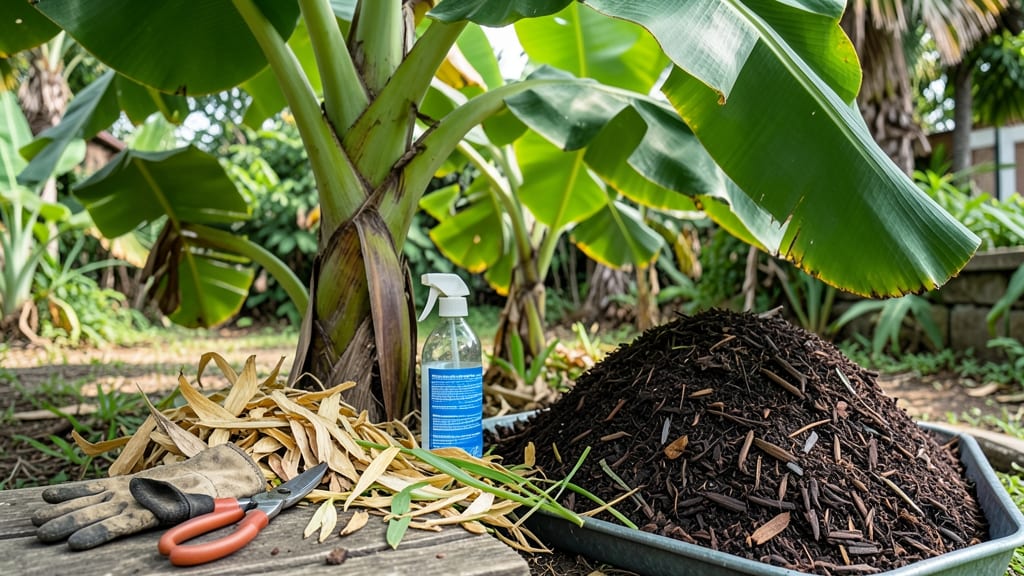
Your banana tree’s year-round fruit boost starts with just four simple cuts—and I’ll show you exactly where to make them. 🌿 The key is timing: trim after fruiting (when fronds turn brown) and during dormancy (late winter), but never when new growth is pushing.
Most people over-prune, leaving the plant weakened, but these four strategic cuts keep it strong and productive.
First, sterilize your pruners with rubbing alcohol to prevent disease spread—this is non-negotiable. Then, remove only dead fronds (they’re easy to spot: brown, dry, and hanging limp) and any pseudostems that’ve finished fruiting.
The goal is to expose the meristem (that fuzzy growth point at the center), which is where all future growth begins. Never cut healthy fronds—those are the plant’s energy factories.
What you’ll end up with is a banana tree that looks tidy but stays vigorous, producing 20-30% more fruit per cycle. The first harvest after proper trimming is always the sweetest, and the plant recovers faster from winter stress.
Just watch for yellowing leaves or oozing sap—those are red flags that you’ve cut too much or too aggressively.
This method works for Musa acuminata, Musa balbisiana, and most dwarf varieties, whether you’re growing in pots or in-ground. The only rule? Patience. A well-trimmed banana tree takes 6-8 months to rebound, but the payoff—bigger, sweeter fruit—is worth every careful cut.
📚 In This Guide
- What you need
- Instructions
- Tips and common mistakes
- Wrapping up and next steps
What you need
- ● Pruning shears or loppers – Choose bypass pruners (sharp, clean cuts) for small branches or loppers (16-24" handles) for thicker stems. Disinfect blades with rubbing alcohol before and after use!
- ● Pruning saw – A curved-tooth handsaw (8-10" blade) for stems over 2" in diameter. Never use a chainsaw—banana pseudostems are fibrous and dangerous!
- ● Gloves – Heavy-duty gardening gloves (cut-resistant, like those rated for thorns) to protect against sharp edges and sap.
- ● Disposable pruning bags or bucket – A 5-gallon heavy-duty contractor bag or wheelbarrow to haul away debris (banana leaves = slippery when wet!).
- ● Rubbing alcohol (70%+) – 1 small bottle to sterilize tools and prevent disease spread.
- ● Sharpie or permanent marker – For labeling cuts (e.g., "fruit-bearing" vs. "dead growth").
- ● Ladder or step stool – A stable, 6-8 ft. ladder (with non-slip feet) for tall trees. Never stand on wobbly surfaces!
- ● Hose or spray bottle – To rinse sap off tools and skin (banana sap can irritate).
- ● Compost bin or mulch – Chopped banana pseudostems make great compost (high in potassium!).
- ● Safety goggles – If your tree has sharp serrated edges or you’re working near your face.
- ○ Pruning sealant – Optional for large cuts (like tree wound dressing), but not always needed for banana trees.
- ● Identify your banana tree’s growth stage – Is it flowering, fruiting, or dormant? Timing matters!
- ● Check local regulations – Some areas restrict composting banana pseudostems (they can harbor pests).
- ● Wear long sleeves/pants – Banana sap can stain and irritate skin.
Step-by-Step instructions for banana tree trimming
Here's how I keep my banana tree productive year-round with just four strategic cuts.
✂️ Step 1: Remove Dead or Damaged Leaves
Start by inspecting your banana tree for leaves that are completely brown, torn, or showing signs of disease. These leaves are no longer photosynthesizing and can harbor pests or fungal spores. Use clean, sharp pruning shears to cut them off at the base, making a clean cut just above a healthy node or bud if possible.
I always work from the bottom up, removing the oldest leaves first. This opens up the plant's center to better airflow and sunlight, which encourages new growth. Watch for any yellowing leaves with black spots—those need to go immediately to prevent spread. Never leave dead material hanging; it drains energy from the plant.
✂️ Step 2: Trim Suckers for Better Fruit Production
Banana trees produce suckers—those smaller shoots growing from the base. If you want larger fruit, you'll need to remove all but one or two of the strongest suckers. Use your pruning shears to cut these off at the base, leaving a small stub about ½ inch tall. This redirection of energy helps the main plant produce bigger, more flavorful bananas.
Here's the thing—if you leave too many suckers, the plant divides its energy. I like to keep just one or two for replacement if the main stem dies. Time this cut in early spring when new growth is just beginning. You'll see the remaining suckers thicken and grow more vigorously within a few weeks.
✂️ Step 3: Prune Overly Long Leaves for Compact Growth
When banana leaves grow too long, they can flop and block sunlight from reaching the center of the plant. If a leaf is over 6 feet long and flopping, it's time to trim. Cut the leaf back to about half its length, making the cut at a 45-degree angle just above a leaf node. This encourages the plant to produce shorter, sturdier leaves that stay upright.
I usually do this in late summer after the main harvest. The plant will respond by putting energy into producing new, stronger leaves for the next fruiting cycle. Never remove more than one-third of the leaf surface area at once—this prevents shock. You'll notice the remaining leaves perk up and grow more upright within days.
✂️ Step 4: Cut Back Old Fruit Stems After Harvest
After your banana harvest, don't forget to remove the old fruit stems. These dried stalks can harbor pests and diseases. Use your pruning shears to cut them off at the base, making sure to remove any remaining fruit clusters or seed pods. This also makes it easier to spot new suckers emerging from the base.
This is the moment that matters: cutting back old stems right after harvest signals the plant to focus on regrowing leaves and preparing for the next fruiting cycle. I always clean up any remaining debris around the base to prevent fungal growth. Within a few weeks, you'll see fresh green leaves emerging from the center, ready to support the next batch of bananas.
Tips & tricks for perfect banana tree trimming
Took me a while to figure these out, so here goes—these simple tricks will keep your banana tree thriving with minimal effort.
Timing Secret: In Step 2, when trimming suckers, early spring is ideal because the plant's energy is naturally redirecting toward new growth. If you miss this window, you can still trim in late winter, but the recovery time may extend slightly. Watch for new shoots emerging—these are your cues to act. The goal is to leave just one or two strong suckers, but if you accidentally remove too many, don't panic! The plant will still recover, though you might see a slight delay in fruit production.
Pruning Precision: For Step 3, when pruning overly long leaves, focus on the 45-degree angle cut—this prevents water from pooling and reduces the risk of fungal infections. I've found that making the cut just above a leaf node (where new growth emerges) encourages the plant to produce stronger leaves in that exact spot. If you're unsure where the node is, look for the small bump or bump-like area on the leaf stem. This small detail makes all the difference in how quickly your tree recovers.
Cleanup Matters: After Step 4, when you cut back old fruit stems, don't just toss the debris—remove it from the immediate area around the tree. I've seen fungal growth creep up within days when old stems are left lying around. Rake up any fallen leaves or spent fruit clusters and dispose of them in a compost bin far from your banana tree. A clean workspace is half the battle in preventing pests and diseases.
Seasonal Strategy: If you're in a tropical climate, you can trim suckers year-round, but in cooler regions, early spring is your best bet. The plant's natural growth cycle aligns with warmer temperatures, so timing your cuts to match this rhythm ensures the best results. For Step 3, late summer is perfect because the tree has already had its main harvest and is gearing up for the next cycle—this gives it time to recover before winter slows things down.
Pro Tips for Banana Tree Trimming
- Took me a while to figure these out, so here goes—these simple tricks will keep your banana tree thriving with minimal effort.
- Timing Secret: In Step 2, when trimming suckers, early spring is ideal because the plant's energy is naturally redirecting toward new growth.
- Pruning Precision: For Step 3, when pruning overly long leaves, focus on the 45-degree angle cut—this prevents water from pooling and reduces the risk of fungal infections.
Frequently asked questions
Got questions about trimming your banana tree? Here are some common ones—and their answers—to help you keep your plant thriving!
When is the best time to trim a banana tree?
The ideal time to trim a banana tree is after it produces fruit, typically in late winter or early spring. This gives the plant time to recover before new growth begins. Avoid trimming during cold months or when the tree is flowering, as this can stress it. For tropical climates, timing is less critical, but always trim when the plant is dormant.
How do I know which branches to cut?
Focus on removing dead, diseased, or damaged leaves first—they drain energy from the plant. Next, trim suckers (small shoots at the base) if you want to control the tree’s size or redirect energy to a single trunk. For fruit-bearing branches, cut back only after harvest to encourage new growth. Never remove healthy green leaves unless absolutely necessary!
What if I trim too much? Can I hurt my banana tree?
Over-trimming can stress your banana tree, leading to reduced fruit production or even death in extreme cases. As a rule, never remove more than 30% of the foliage at once. If you’ve already trimmed too much, stop immediately and focus on watering deeply and fertilizing to help recovery. The tree may take a season to bounce back, but it’s not usually fatal.
Can I trim a banana tree in pots?
Yes! Potted banana trees follow the same trimming rules as outdoor ones, but with a few extra considerations. Since space is limited, prune suckers aggressively to prevent overcrowding. Also, repot every 2–3 years to accommodate new root growth. If your tree is root-bound, trimming can help stimulate growth—just avoid heavy cuts during the first year after repotting.
Will trimming my banana tree increase fruit production?
Proper trimming redirects energy to the main trunk, often resulting in larger, healthier fruit in subsequent harvests. However, timing matters: Trim after fruiting to avoid sacrificing current yield. For dwarf varieties, light pruning can also encourage more frequent flowering. Just remember—patience is key; some trees take a season to show improved fruit quality!
Wrapping up and next steps
Trimming your banana tree isn’t just about aesthetics—it’s the secret weapon for bigger, healthier fruit year-round! 🌱 By mastering those four simple cuts, you’ll encourage stronger growth, prevent disease, and unlock a bountiful harvest.
Whether you’re a seasoned gardener or just starting, every snip brings you closer to a thriving tree.
Ready to level up your banana tree game? Grab your tools, roll up your sleeves, and give those branches the TLC they deserve. Your next step? Schedule your first trim today—your future fruit will thank you!