Container Gardens
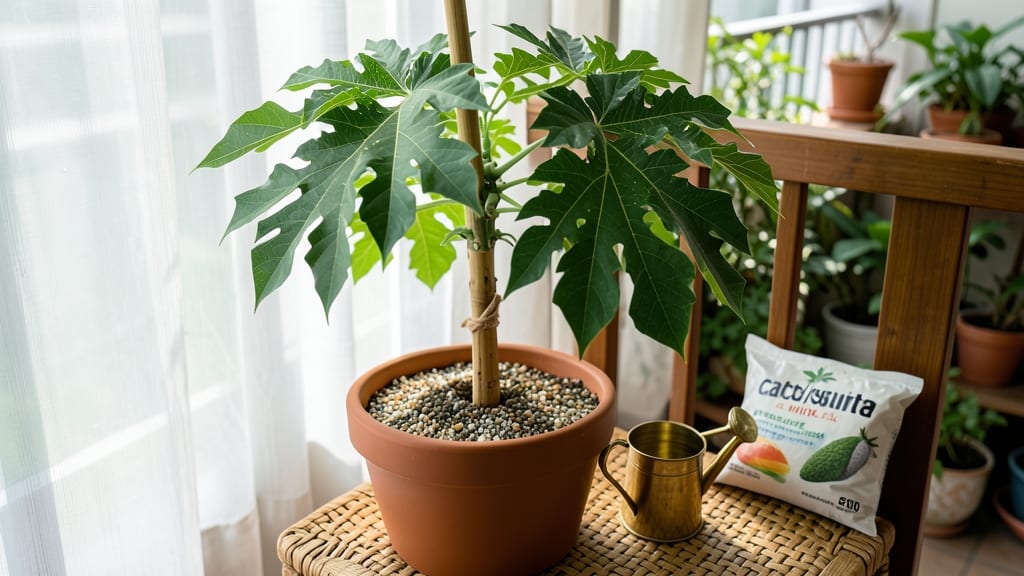
Yes, papaya trees can be grown successfully in pots with the right dwarf varieties and attentive care, including spacious containers, nutrient-rich soil, and consistent sunlight exposure.
Growing papayas in containers is absolutely possible with the right approach! 🌱 The key lies in selecting compact varieties like 'SunUp' or 'Tahitian,' which stay manageable in pots while still producing fruit. These dwarf types typically reach only 6-8 feet tall, making them ideal for patios or balconies.
Beyond variety selection, success hinges on providing adequate root space—pots should be at least 18 inches in diameter and depth to accommodate the tree's spreading roots and support fruit production. Well-draining soil mixed with compost is essential, as papayas hate soggy conditions.
What many gardeners overlook is the importance of seasonal adjustments. During the growing season, these tropical plants need 6-8 hours of direct sunlight daily and regular feeding with a balanced fertilizer every 4-6 weeks.
In cooler months, you may need to bring potted papayas indoors or provide supplemental grow lights to maintain their vigor. With proper care, container-grown papayas can produce fruit just as reliably as their in-ground counterparts!
💡 In This Article
- Best Dwarf Papaya Varieties for Container Gardening
- Container Size and Care Tips for Potted Papayas
Best dwarf papaya varieties for container gardening
Dwarf papaya varieties are specifically bred to thrive in confined spaces, making them perfect for container gardening. The 'SunUp' variety, for example, typically grows to just 6-8 feet tall and produces small, sweet fruits weighing around 1-2 pounds.
Its compact growth habit means it won't outgrow a 15-gallon pot within 2-3 years, unlike standard varieties that can reach 20 feet in ideal conditions.
The 'Tahitian' papaya is another excellent choice, known for its vibrant orange flesh and slightly larger fruit (2-3 pounds) while maintaining a manageable height of 8-10 feet. 🌿
What sets these dwarf varieties apart is their root system's adaptability to container life. Standard papayas develop extensive root networks that spread 10-15 feet underground, but dwarf types like 'Solo' papaya (a hybrid) have been genetically modified to keep roots contained within 12-18 inches of soil depth.
This makes them ideal for fabric grow bags or large ceramic pots, where they can still produce fruit without becoming top-heavy. The trade-off? Dwarf varieties may yield slightly smaller fruit than their in-ground counterparts, but the convenience of container growing often outweighs this for urban gardeners.
When selecting a dwarf variety, consider your climate zone. 'SunUp' excels in USDA zones 10-11, thriving in warm, humid conditions year-round, while 'Tahitian' is more adaptable to zones 9-11 and can tolerate brief temperature drops to 50°F if protected.
Both varieties require similar care—regular pruning to maintain shape and remove suckers—but dwarf types need less aggressive pruning since their natural growth is already controlled. This makes them far more manageable for beginners or those with limited outdoor space. 🌱
One common misconception is that dwarf papayas produce less fruit than standard varieties.
In reality, while individual fruits may be smaller, the plants often bear fruit 6-12 months after planting (vs. 18-24 months for standard types), and with proper care, a well-established dwarf papaya in a 20-gallon pot can yield 10-20 fruits per year.
The key is consistency in care—dwarf varieties are just as sensitive to water stress or nutrient deficiencies as their larger counterparts, but their compact size makes it easier to monitor and adjust their environment.
For those in cooler climates, consider the 'Miracle' papaya, a cold-tolerant dwarf variety that can handle brief exposures to 40°F temperatures. Its smaller leaves (6-8 inches wide) also make it more wind-resistant when placed on patios or balconies.
However, all dwarf papayas share one critical need: they require cross-pollination to produce fruit, which means growing at least two plants (preferably different varieties) within 100 feet of each other for successful fruiting.
This is where container gardening shines—you can place two dwarf papayas side by side on a sunny balcony and still achieve pollination. 🐝
If you're choosing between varieties, prioritize based on your space and fruit preferences. 'SunUp' is ideal for small balconies (12-inch pots for young plants), while 'Tahitian' suits larger containers (18-inch diameter) where you can accommodate its slightly larger root system.
Both varieties reward gardeners with fragrant, tropical-scented flowers and fruit that ripens from green to vibrant orange—proof that even in limited space, you can grow a productive papaya tree. 🍈