
Watering
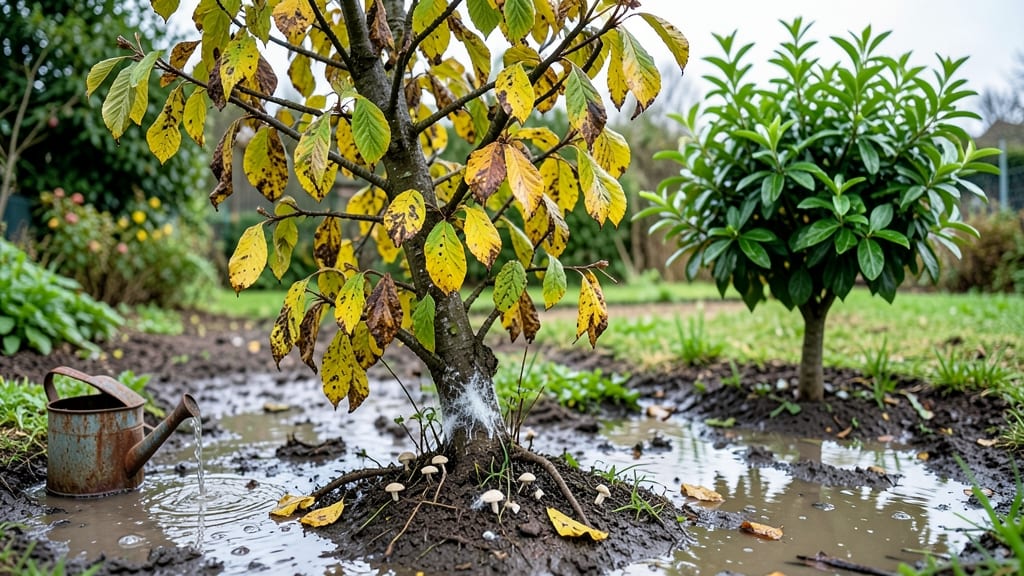
Your cherry tree’s yellowing leaves and mushy roots are clear cherry tree overwatering signs—and they’re begging for action before it’s too late. 🌳 Overwatering is the silent killer of fruit trees, and cherries are especially vulnerable because their roots need air almost as much as water.
I’ve seen healthy trees turn into soggy messes in just weeks when watering gets out of control, and the first signs are often missed until it’s too late.
Start by checking the soil: if it smells like a swamp or feels like a wet sponge when you squeeze it, you’ve got a problem. Yellow leaves that start at the bottom and spread upward?
Classic overwatering. Worse, mushy roots that crumble at the touch mean root rot has set in—this fungus thrives in waterlogged soil and can finish off your tree if ignored.
The fix starts with cutting back on watering—deep soaks once a week (or less) are better than daily sprinkles. Amend the soil with compost or perlite to improve drainage, and consider raising the tree’s root zone with a mound of soil or gravel if your yard stays soggy.
Prune any dead branches now to prevent fungal spread, and within a month, you’ll see new green growth pushing through.
Long-term, mulch properly (2-3 inches of wood chips) to keep moisture even, and test your soil’s drainage before next season. Cherry trees are tough once they’re established—what matters is giving them the right balance of water, air, and nutrients.
Your tree can bounce back, but you’ve got to act fast before the roots give out completely.
Root Causes Of Overwatering
Overwatering your cherry tree isn’t just a gardening mistake—it’s a silent killer that disrupts its very survival. Understanding the why behind soggy soil and wilting roots helps you fix the problem before it’s too late. Let’s dig into the science (and the soil) to uncover the real culprits.
Cherry trees thrive in well-draining soil, but when water can’t escape, roots drown in their own moisture. Here’s why this happens:
- Compacted Soil: Heavy clay or tightly packed soil acts like a sponge, trapping water instead of letting it seep away.
Roots suffocate because oxygen can’t reach them, leading to anaerobic conditions—where microbes deplete oxygen faster than roots can absorb it. - Improper Amendments: Adding too much organic matter (like compost) without balancing it with sand or perlite can create a hydrophobic layer—soil that repels water but still holds it tightly. - Low Elevation Planting: If your cherry tree sits in a natural dip or low spot, rainwater pools around the roots, turning the area into a swamp.
💡 Pro Tip: Test your soil’s drainage by digging a 12-inch hole, filling it with water, and timing how long it takes to drain. If it takes more than 6 hours, your soil is too dense.
Even with good soil, human error plays a huge role. Here’s how watering gone wrong derails your cherry tree:
- Ignoring the Soil’s Moisture Level: Watering on a schedule (e.g., every Tuesday) assumes consistency, but soil moisture varies with weather, season, and tree age.
A soil moisture meter or the finger test (stick your finger 2 inches deep—if damp, wait) prevents guesswork. - Shallow Watering: Light, frequent watering encourages roots to stay near the surface, where they’re more prone to rot and less able to access deeper, drier layers. - Automatic Irrigation Gone Rogue: Drip systems or sprinklers left on too long (or malfunctioning) can deliver excessive water, especially during rainy periods.
⚠️ Warning Sign: If your tree’s leaves yellow even after watering, you’re likely overdoing it. Yellowing from overwatering starts at the bottom of the tree and spreads upward—opposite of nutrient deficiency (which hits older leaves first).
Sometimes, Mother Nature teams up with your watering can to create a disaster. Watch for these red flags:
- Heavy or Prolonged Rainfall: A single storm can saturate soil for weeks, especially in impermeable soils.
If your area gets more than 1 inch of rain in 24 hours, pause watering until the top 3 inches of soil dry out. - High Humidity + Poor Airflow: Cherry trees in shady, enclosed spaces (like tight gardens or against walls) struggle to dry out.
Stagnant air traps moisture, slowing evaporation and keeping roots wet longer. - Winter Watering Woes: Overwatering in cold months can freeze soil, creating ice pockets that damage roots. If temperatures drop below 40°F (4°C), reduce watering by 50%.
🔥 Quick Fix: Improve airflow by pruning dense branches and ensuring your tree has at least 3 feet of clearance from structures.
When soil stays soggy, pathogenic fungi throw a party at your tree’s roots. The most common culprits:
| Fungus | How It Spreads | What It Does |
|---|---|---|
| Phytophthora | Thrives in waterlogged, anaerobic soil | Attacks roots, causing root rot and cankers |
| Armillaria (Honey Fungus) | Spreads via root grafts in wet soil | Weakens the tree’s vascular system, leading to sudden wilting |
| Pythium | Loves overly moist, warm soil | Causes damping-off in seedlings and root decay in mature trees |
🎯 Prevention: Apply copper fungicide in spring if your area is prone to fungal outbreaks, and mulch properly (2–4 inches of organic mulch, kept 6 inches away from the trunk).
Some cherry trees are more sensitive to overwatering than others.
For example: - Sweet cherries (Prunus avium) have shallow root systems and rot faster in wet soil. - Sour cherries (Prunus cerasus) are slightly more drought-tolerant but still suffer if waterlogged for more than 48 hours. - Young saplings (under 3 years old) have delicate root hairs that absorb water aggressively but also rot quickly in excess moisture.
👨🍳 Gardener’s Note: Mature cherry trees (10+ years old) can handle occasional dry spells better than young trees, but never assume they’re immune to overwatering.
Overwatering doesn’t act alone—it triggers a chain reaction that stresses your tree:
- Root Rot → Roots can’t absorb water or nutrients.
- Nutrient Lockout → Excess water leaches away essential minerals like nitrogen and potassium.
- Weakened Immunity → The tree becomes susceptible to pests (like borers or spider mites).
- Leaf Scorch & Dieback → The tree’s transpiration system (how it sweats) gets thrown off balance.
✨ Key Takeaway: Overwatering isn’t just about too much water—it’s about disrupting the delicate balance of oxygen, nutrients, and microbial life in the soil.
Revive Your Cherry Tree Now
Overwatering can feel like a silent killer for your cherry tree, but the good news is that with the right steps, you can nurse it back to health—even if it’s already showing signs of distress.
Below, we’ll map out practical fixes for each symptom, along with prevention tips to keep your tree thriving long-term. Think of this as your cherry tree’s emergency first aid kit!
If your cherry tree’s leaves are turning yellow, drooping, or falling prematurely, it’s likely suffering from root rot or nutrient starvation due to excess moisture. Here’s how to turn things around:
🔥 Step 1: Stop Watering Immediately
- Why? Overwatering is the root cause (pun intended). Let the soil dry out before watering again.
- How? Skip watering for 3–5 days to allow excess moisture to evaporate. If the ground is still soggy after a week, wait longer.
🍳 Step 2: Improve Soil Drainage
Poor drainage traps water at the roots. Fix it with these tweaks: - Amend the soil with compost, perlite, or coarse sand to loosen heavy clay or compacted soil.
Mix in a 2–3 inch layer around the base (but avoid piling against the trunk). - Raise the tree’s position (if in a container) by adding a layer of gravel or broken pottery at the bottom before repotting. - Install drainage holes if your tree is in a pot—no excuses!
👨🍳 Step 3: Prune Damaged Foliage
- Snip off yellow, brown, or mushy leaves with clean pruning shears. This helps the tree redirect energy to healthy growth.
- Pro tip: 💡 Sterilize your tools with rubbing alcohol to prevent spreading disease.
🥘 Step 4: Fertilize Lightly
Overwatered trees often lack nutrients. Use a balanced, slow-release fertilizer (like 10-10-10) once after pruning. Avoid high-nitrogen fertilizers—they can worsen root stress.
If you’ve dug up your tree and spotted dark, mushy roots or a foul smell, root rot is likely setting in. Act fast:
⏰ Step 1: Trim the Rotten Roots
- Use sterilized pruners to cut away black, soft, or slimy roots. Healthy roots are firm, white, or light tan.
- Warning: 🔥 If more than 30% of the roots are rotten, your tree may not recover—consider replacing it.
🔪 Step 2: Repot or Replant in Fresh Soil
- For potted trees: Remove the tree, rinse the roots gently with water, and repot in new, well-draining soil (mix equal parts potting mix, perlite, and compost).
- For in-ground trees: Dig a new planting hole nearby, mix in amended soil, and transplant the tree carefully.
Water lightly only to settle the soil.
🌡️ Step 3: Adjust Watering Habits
- Water deeply but infrequently. Cherry trees prefer 1–1.5 inches of water per week (including rain).
Use the finger test: Stick your finger 2–3 inches into the soil—if it’s damp, wait. - Upgrade your irrigation: Switch to drip irrigation or soaker hoses to deliver water slowly at the root zone, reducing runoff.
An ounce of prevention is worth a pound of cure. Keep these tips top of mind:
- 💡 Choose the right spot: Plant cherry trees in full sun with well-draining soil.
Avoid low-lying areas where water pools. - ✨ Mulch correctly: Apply 2–3 inches of mulch (wood chips or straw) around the base, but keep it 6 inches away from the trunk to prevent rot. - 🌡️ Monitor weather: After heavy rains, skip watering for a few days.
Use a rain gauge to track moisture. - 📊 Check soil type: If you’re unsure if your soil drains well, do the jar test: Fill a jar with soil and water, then observe how long it takes to drain. Ideal time: 4+ hours to drain. - 🍎 Know your tree’s needs: Young cherry trees need more frequent watering (every 5–7 days), while mature trees can go 10–14 days without water in dry climates.
With proper care, you should see improvement in 2–4 weeks:
- Leaves: New growth should emerge within 10–14 days.
- Roots: Healthy roots will firm up in 3–6 weeks (if rot wasn’t severe).
- Fruit: If the tree was overwatered early in the season, delayed blooming or fruit drop may occur, but it’ll bounce back next year.
Remember: Patience is key. Overwatered trees recover slower than underwatered ones, but with these steps, your cherry tree can make a full comeback—and even produce sweeter fruit as a reward for your efforts! 🍒
Frequently asked questions about cherry tree overwatering
Why do cherry tree leaves turn yellow when overwatered?
Yellow leaves on cherry trees from overwatering happen because roots can't get oxygen in soggy soil. The tree can't absorb nutrients properly, so leaves (starting at the bottom) turn yellow and may drop. Unlike nutrient deficiencies, this yellowing spreads upward—not just on older leaves.
How can I tell if my cherry tree has root rot from overwatering?
Check for mushy, dark brown or black roots that smell foul when pulled from the soil. Healthy roots should be firm and tan-colored. If you see white fungal growth or roots that crumble easily, root rot has set in and requires immediate action like pruning affected roots and improving drainage.
What's the best way to test if my cherry tree is getting too much water?
Use the finger test: stick your finger 2-3 inches into the soil. If it feels damp, wait before watering. For a more precise check, dig a small hole—if water pools at the bottom after 6+ hours, your soil drains poorly. A moisture meter (under $20) also works well for tracking soil conditions.
Can I save a cherry tree with severe root rot from overwatering?
It depends on how much of the root system is damaged. If less than 30% of roots are affected, prune the rotten sections, repot in fresh soil, and adjust watering. For advanced rot (>50% damage), the tree may not recover—consider replacing it. Always sterilize tools to prevent spreading fungal infections.
How often should I water a cherry tree after fixing overwatering issues?
Once recovered, water deeply once a week (or every 10-14 days in dry climates), giving 1-1.5 inches of water total. Use drip irrigation or soaker hoses to deliver water slowly at the root zone. Always check soil moisture first—never water on a schedule without testing.