
Pruning
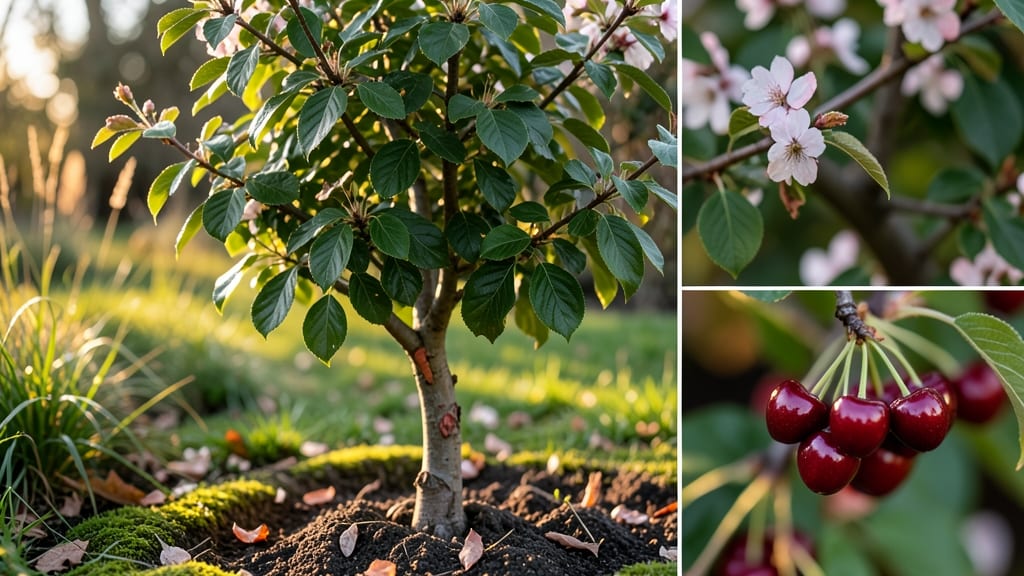
Small-fruit cherry trees like 'Stella Compact' prove you don't need a yard to grow sweet, juicy cherries. 🌿 My first attempt with a dwarf variety in a 15-gallon pot showed me how these trees thrive in tight spaces—with the right pruning, they stay manageable while producing hundreds of fruit each season.
The secret lies in three key steps: choosing a variety suited to your space, pruning aggressively in early spring to control height, and training branches into an open vase shape.
Most people skip the pruning, and that's when trees become unruly. I've seen 6-foot trees reduced to 4 feet in a single session without sacrificing fruit production.
By summer, you'll have clusters of glossy cherries ripening weeks earlier than their full-sized cousins. The flavor rivals store-bought, and the birds won't get to them first if you harvest promptly. Even in containers, these trees live 15+ years with proper care.
Works for balconies, patios, or small yards—just pick the right spot with 6+ hours of sun and well-draining soil. Let's get those branches shaped for maximum harvests!
Root Causes Of Tiny Cherries
Understanding why your cherry tree produces small fruit is the first step toward fixing the issue. Often, it’s not just one factor but a combination of environmental, biological, or cultural mismatches. Let’s break down the most common reasons—backed by science—and what you can do to correct them.
Small cherries often signal a nutrient deficiency, particularly nitrogen (N), phosphorus (P), or potassium (K). While nitrogen fuels leafy growth, phosphorus and potassium are critical for fruit development and sugar accumulation. A deficiency in these elements stunts cell expansion, leading to undersized fruit.
- Nitrogen deficiency 🔍 - Symptoms: Pale, yellowing leaves (chlorosis) and stunted new growth. - Why it happens: Excess nitrogen early in the season promotes foliage over fruit, while a lack of it later can limit fruit size. - Fix: Apply a balanced fertilizer (e.g., 10-10-10) after bloom but before pit hardening (6–8 weeks post-flowering).
Avoid high-nitrogen fertilizers like urea in late summer.
- Phosphorus or potassium shortages 📉 - Symptoms: Dark green or purple-tinged leaves, weak stems, or fruit that fails to sweeten. - Why it happens: Phosphorus aids energy transfer for fruit growth, while potassium regulates water and sugar movement.
Sandy or acidic soils often lack these minerals. - Fix: - Test your soil (pH should be 5.5–6.5 for cherries). - Amend with bone meal (for phosphorus) or potassium sulfate (for potassium). - Use composted manure (like cow or chicken) for slow-release nutrients.
Cherries are sun-worshippers—they need 6–8+ hours of direct sunlight daily to produce large, flavorful fruit. Without enough light, photosynthesis slows, limiting sugar production and fruit growth.
- Why it happens: - Shade from trees/buildings: Even partial shade (e.g., from a nearby oak or fence) can reduce fruit size by 30–50%. - Cool climates: Cherries require warm daytime temps (75–85°F) for proper cell division.
If nights stay below 50°F during fruit development, growth stalls. - Fix: - Prune nearby competing plants or thin dense branches to open the canopy. - Plant heat-loving varieties (e.g., ‘Stella,’ ‘Lapins,’ or ‘Sweetheart’) if you’re in a cooler zone. - Use black plastic mulch in early spring to warm the soil and roots.
Water is the lifeblood of fruit expansion. Too little or too much at the wrong time can lead to small, hard cherries.
- Drought stress 💧➡️🔥 - Why it happens: Cherries need 1–1.5 inches of water per week during fruit set and growth.
Drought causes cells to shrink, resulting in undersized fruit. - Fix: - Deep-water trees at the drip line (not just the trunk) every 5–7 days. - Use drip irrigation to avoid wetting leaves (which can cause fungal diseases).
- Overwatering or poor drainage 🌧️🚫
- Why it happens: Soggy soil leads to root asphyxiation and nutrient leaching, weakening the tree’s ability to support fruit growth.
- Fix:
- Ensure the planting site has well-draining soil (amend clay with sand/compost).
- Avoid watering late in the day to prevent fungal issues like brown rot.
Cherries are chilling-sensitive—extreme cold or late frosts can damage flowers or young fruit, leading to poor development.
- Frost damage ❄️💥 - Why it happens: Flowers/fruit exposed to temperatures below 28°F can die or fail to set properly.
Even light frosts (<32°F) can stunt growth. - Fix: - Plant late-blooming varieties (e.g., ‘Montmorency’ or ‘Black Tartarian’) to avoid spring frosts. - Use frost cloth or overhead sprinklers (which create ice crystals to insulate buds) during critical bloom periods.
- Heat waves during fruit growth 🌡️🔥
- Why it happens: Temperatures above 90°F during pit hardening (6–8 weeks post-bloom) can cause fruit to split or stay small.
- Fix:
- Provide afternoon shade with shade cloth if temps consistently exceed 90°F.
- Mulch heavily to keep roots cool.
Certain pests and diseases sap nutrients or physically damage fruit, leading to stunted growth.
- Common culprits:
- Cherry fruit flies 🪰: Lay eggs in fruit, causing larvae to feed and deform cherries.
- Brown rot fungus 🍄: Causes blossom blight and mummified fruit, reducing yield and size.
- Aphids or spider mites 🕷️: Suck sap, weakening the tree’s energy reserves.
- Fix:
- Preventively spray with neem oil (for pests) or copper fungicide (for brown rot) before bloom.
- Remove mummified fruit in fall to reduce fungal spores.
- Introduce beneficial insects (ladybugs, lacewings) to control aphids naturally.
Pruning isn’t just about shaping—it’s about balancing energy between leaves and fruit.
- Why it happens:
- Too much pruning 🪓🚫: Removes too many fruiting spurs (wood that bears cherries), reducing potential harvest.
- Overcrowded branches 🌿🤝: Shade and competition limit fruit size.
- Fix:
- Prune in late winter/early spring to remove dead, crossing, or inward-growing branches.
- Aim for an open vase shape to maximize sunlight penetration.
- Thin fruit in early summer (leave 4–6 inches between cherries) to reduce competition for nutrients.
Revitalize Your Cherry Harvest
If your cherry tree is struggling to produce full-sized fruit, don’t panic—there are practical steps to turn things around. Below, we’ve mapped out targeted solutions based on the most common causes of small fruit, along with prevention tips to keep your tree thriving.
Let’s get your cherries back to their juicy, plump best!
When branches compete for sunlight and nutrients, cherries stay small. Fix it:
- 🔪 Thinning cuts: Remove 20–30% of dense growth, focusing on crossing or inward-growing branches. Aim for an open canopy to improve airflow and sunlight penetration.
- 🌿 Selective pruning: Prioritize branches with the most fruit—keep the strongest, most productive limbs and prune weaker ones. Use sharp, clean shears to avoid damaging bark.
- ⏰ Timing matters: Prune in late winter or early spring (before buds swell) to minimize stress on the tree.
💡 Pro Tip: If your tree is young, delay heavy pruning until it’s 3–4 years old. Over-pruning early can stunt growth.
Cherries need 6–8 hours of direct sunlight daily to develop properly. Fix it:
- 🌳 Trim nearby obstacles: Remove overhanging branches from taller trees, shrubs, or structures casting shade. Even partial shade can limit fruit size.
- 🔄 Rotate the tree: If possible, reposition potted cherry trees (like dwarf varieties) to follow the sun’s arc throughout the day.
- 🌱 Choose the right spot: Plant new cherry trees in full-sun locations with southern or western exposure for maximum light.
✨ Prevention: Avoid planting near large evergreens or buildings that block sunlight year-round.
Drought or overwatering can lead to stunted fruit. Fix it:
- 💧 Deep watering: Water at the base (not the leaves) 1–2 times per week, providing 1–2 inches of water per session. Use a soil moisture meter to check depth.
- 🌱 Mulch properly: Apply 2–4 inches of organic mulch (wood chips or straw) around the tree’s drip line to retain moisture and regulate soil temperature.
- 🚫 Avoid soggy soil: Ensure the planting area has well-draining soil. Amend heavy clay with compost or sand if needed.
🌡️ Watch for signs: Wilting leaves or yellowing fruit indicate underwatering, while mushroom growth or root rot suggests overwatering.
Small cherries often signal a lack of key nutrients. Fix it:
| Symptom | Likely Deficiency | Solution |
|---|---|---|
| Pale yellow leaves | Nitrogen (N) | Apply a balanced 10-10-10 fertilizer in early spring or use composted manure. |
| Red/purple leaf edges | Phosphorus (P) | Use a bone meal or rock phosphate supplement in late winter. |
| Weak stems, small fruit | Potassium (K) or Calcium (Ca) | Add wood ash or greensand for potassium; use lime for calcium (test soil pH first—ideal is 6.0–6.5). |
| Poor fruit set | Boron (B) or Zinc (Zn) | Apply a chelated micronutrient spray or use a soil drench with boron. |
📊 Test first: Conduct a soil test every 2–3 years to tailor fertilizers to your tree’s needs.
Insects (like aphids or mites) or fungal diseases (e.g., brown rot) can drain energy from fruit development. Fix it:
- 🦟 Identify the culprit: Check for:
- Sticky residue (aphids)
- Webbing (spider mites)
- Black mold on fruit (brown rot)
- 🧴 Organic treatments:
- Spray neem oil for soft-bodied pests.
- Use baking soda spray (1 tbsp baking soda + 1 quart water + drop of soap) for fungal issues.
- Apply copper fungicide preventatively in early spring.
- 🌿 Encourage predators: Plant companion flowers (like marigolds or alyssum) to attract ladybugs and bees that eat pests.
🎯 Prevention: Prune out infected branches immediately and sterilize tools with rubbing alcohol between cuts.
With these targeted fixes, your cherry tree should rebound with larger, sweeter fruit in no time. Consistency is key—monitor your tree’s progress and adjust care as needed. Happy pruning! 🍒✂️
Frequently asked questions
What are the best small-fruit cherry varieties for containers?
'Stella Compact' and 'Sweetheart' are top picks for pots—they stay under 6 feet tall and produce hundreds of cherries each season. For even smaller spaces, 'Lapins' grows just 4-5 feet tall and thrives in 15-gallon containers. All three varieties need 6+ hours of sun daily and well-draining potting mix.
How do I know if my cherry tree needs pruning?
Look for overcrowded branches, dead wood, or crossing limbs—these are clear signs. Prune in late winter/early spring to remove 20-30% of dense growth and shape an open vase form. Avoid heavy pruning on young trees (3-4 years old) to prevent stunted growth. Always use clean, sharp shears!
Why are my cherries staying small even with proper care?
Small fruit often signals nutrient deficiencies (especially phosphorus or potassium), poor sunlight (<6 hours/day), or overcrowded branches competing for resources. Test your soil (ideal pH: 5.5-6.5) and thin fruit clusters to 4-6 inches apart in early summer. Also check for pests like aphids or diseases such as brown rot.
Can I grow a cherry tree in partial shade?
While cherries prefer full sun (6-8 hours daily), dwarf varieties like 'Stella Compact' can tolerate 4-5 hours of sunlight in partial shade—though fruit may be smaller and less flavorful. If growing in shade, use a balanced fertilizer (10-10-10) and ensure well-draining soil to maximize fruit production. Monitor for fungal issues from excess moisture.
How often should I fertilize a small-fruit cherry tree?
Apply a balanced fertilizer (10-10-10) in early spring (just as buds swell) and again 6-8 weeks after bloom. For container-grown trees, use half the recommended dose to avoid over-fertilizing. Avoid high-nitrogen fertilizers in late summer, as they promote leafy growth over fruit development. Always water deeply after fertilizing!