
Trees
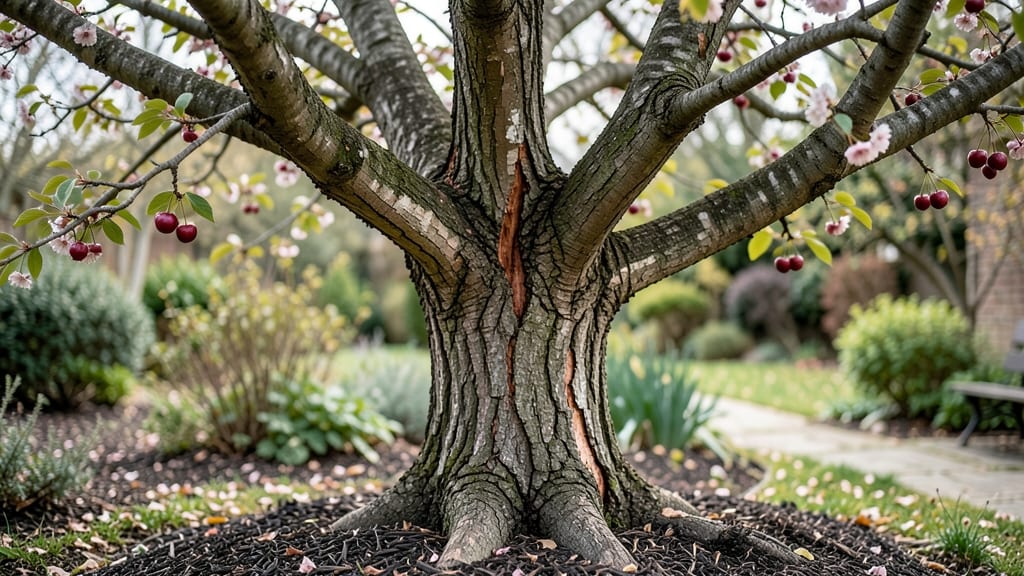
That jagged split in your cherry tree’s bark isn’t just unsightly—it’s a warning sign that could weaken the tree if ignored. 🌳 I’ve seen split bark turn into major structural issues, but the right steps can save your tree and keep it healthy for years.
The first move depends on how deep the split goes and whether it’s actively peeling or just a surface crack.
Most splits happen from sudden temperature swings, heavy fruit loads, or even animals rubbing against the trunk. If the bark is peeling back in sheets, it’s a sign of deeper stress—possibly even disease.
But not all splits are emergencies: shallow cracks can often be stabilized with simple protective measures, while deeper damage might need professional help to prevent further splitting.
You’ll learn how to assess the damage, whether to prune or wrap the affected areas, and when to call in an arborist. The goal? Stop the split from worsening and give your tree the best chance to heal naturally.
With the right care, many trees recover surprisingly well—some even regrow bark over time.
Prevention is key, so I’ll share what worked for me to keep my own cherry tree strong, including watering tips, mulching techniques, and seasonal checks. Whether your tree is young or mature, these steps will help you decide if it’s worth saving—or if removal is the safer choice.
Root Causes Behind Bark Splits
Understanding why your cherry tree’s bark splits is the first step to preventing further damage. These fissures rarely happen by chance—they’re usually a response to environmental stress, structural weaknesses, or improper care. Below, we break down the key culprits behind split bark in cherry trees, explained in clear, actionable terms.
Cherry trees are sensitive to rapid shifts in temperature, especially between freezing winters and scorching summers. Why it happens: - Winter freeze-thaw cycles cause the bark to expand and contract.
When water seeps into cracks and refreezes, it pry’s the bark apart like a wedge. - Summer drought + heatwaves dry out the bark, making it brittle.
A sudden downpour or irrigation can then swell the wood unevenly, splitting the outer layer. - Young, fast-growing trees are most vulnerable because their bark hasn’t yet developed the flexibility of mature trees.
💡 Pro Tip: Mulch heavily in late fall to insulate roots and reduce temperature stress. Avoid overhead watering in winter to prevent ice buildup.
Strong winds, hail, or even heavy snow can tear bark away from the trunk or branches.
But the real damage often happens after the initial impact: - Wind rub (branches scraping against each other or structures) creates friction burns, weakening the bark over time. - Hail or falling debris can puncture the bark, creating entry points for pests and disease. - Improper pruning cuts (too close to the trunk) leave jagged edges that split under stress, mimicking natural fissures.
⚠️ Warning: If splits expose wet wood underneath, fungal infections like silver leaf fungus (common in cherries) can take hold.
Cherry trees grow quickly, but their bark can’t keep up with the expansion of the trunk or branches.
This mismatch leads to: - Uneven growth rings where the tree outgrows its bark’s elasticity, causing longitudinal splits (vertical cracks). - Water sprouts or weak crotches (where branches meet the trunk) are hotspots for splits because they bear uneven weight. - Poor soil drainage forces the tree to grow aggressively to compensate, straining the bark beyond its limits.
🔧 Fix It: Prune in late winter/early spring (before sap rises) to remove water sprouts. Use three-cut pruning to avoid tearing bark.
While not always the direct cause, pests and pathogens weaken bark integrity, making splits more likely:
- Bark beetles (like the shothole borer) burrow under the bark, creating tunnels that compromise structural support.
- Fungal infections (e.g., canker diseases) rot the inner bark, causing it to peel or split as the tree tries to heal.
- Vine or ivy growth smothering the trunk can restrict airflow, leading to moisture buildup and bark decay.
🛡️ Prevention: Inspect your tree annually for sawdust-like frass (beetle droppings) or oozing sap. Treat early with bark sealants or copper fungicides.
Too much or too little water throws cherry trees into hydraulic shock, forcing bark to crack:
- Overwatering leads to root rot, which starves the trunk of oxygen and weakens cell walls.
- Underwatering causes the tree to shrink and swell unpredictably, splitting the bark as it adjusts.
- Sudden soaking after drought can cause the bark to absorb water too quickly, leading to explosive splits.
💧 Best Practice: Water deeply but infrequently (1–2 inches per week in dry spells). Use drip irrigation to avoid wetting the bark directly.
Sometimes, the problem starts before the tree is even planted:
- Planting too deep buries the root flare, suffocating the trunk and causing girdling roots that split the bark upward.
- Construction or lawnmower damage can scar the trunk, creating stress points where splits form.
- Traffic or pet damage (e.g., dogs rubbing against the trunk) abrades the bark, making it prone to cracking.
🚜 Solution: If the split is near the base, check for girdling roots—carefully excavate and prune them if needed.
Not all splits are emergencies, but watch for these red flags: ✅ Deep, jagged splits (exposing bright green or wet wood) = fungal risk. ✅ Oozing sap or foul odor = active decay. ✅ Splits that keep widening = structural failure imminent.
If you see any of these, act fast—your next step is assessing the damage and deciding whether to prune, seal, or call an arborist.
Quick Fixes for Damaged Tree Bark
When your cherry tree’s bark splits—whether from storms, heavy fruit loads, or age—acting fast can save its life. Below are practical, step-by-step solutions tailored to the most common causes, plus prevention tips to keep your tree healthy long-term.
Fix it now:
- Assess the Damage 🔍
- Gently inspect the split. If it’s deep (over 1/3 of the trunk’s width) or jagged, the tree may need professional help. Superficial cracks can often be managed at home.
- Clean the Wound 🧼
- Use sterilized pruning shears or a sharp knife to trim away any loose or hanging bark. This prevents rot and pest entry.
- Wipe the area with a 10% bleach solution (1 part bleach to 9 parts water) to disinfect.
- Seal the Split (If Needed) 🛡️
- For small, clean cracks, apply tree wound sealant (like Tanglefoot Tree Wound Pruning Sealer) to protect against moisture and pests.
- Avoid sealing large wounds—this can trap decay. Let the tree’s natural healing response (callusing) take over.
- Support the Tree 🪵
- If the split is causing the trunk to lean dangerously, tie it to a sturdy stake with soft tree ties (not wire). Space ties evenly to avoid girdling.
💡 Prevention Tips:
- Prune strategically before storm season to reduce weak branch weight.
- Mulch properly (2–4 inches deep) to stabilize roots and improve resilience.
- Plant windbreaks (like evergreens) to shield young trees from harsh gusts.
Fix it now:
- Thin the Fruit 🍒➡️🌱
- Remove 30–50% of cherries to reduce stress on branches. Use sharp pruning shears to cut clusters at the stem, not just the fruit.
- Check for Weak Branches 🌿💪
- If branches are sagging or splitting under fruit, prune them back to a strong lateral branch (use the 3-cut method to avoid bark tears).
- Water Deeply 💦
- Drought-stressed trees are more prone to splits. Water deeply 1–2 times per week (1–2 inches per session) during fruit-bearing seasons.
- Apply a Supportive Fertilizer 🌱
- Use a balanced fertilizer (like 10-10-10) in early spring to strengthen bark elasticity. Avoid high-nitrogen fertilizers late in the season—they promote tender, split-prone growth.
💡 Prevention Tips:
- Harvest cherries in stages to avoid overloading branches.
- Choose dwarf or semi-dwarf varieties if your tree is in a high-wind area—they’re less prone to splitting.
- Avoid over-fertilizing in late summer, which can stimulate weak, brittle growth.
Fix it now:
- Protect the Tree in Winter ❄️🔥
- Wrap the trunk with tree wrap or burlap (remove in early spring to avoid trapping heat).
- Avoid mulch volcanoes—pile mulch 3–4 inches deep, 6 inches from the trunk to regulate soil temps.
- Prune Damaged Areas ⏰
- After the last frost, trim dead or cracked bark back to healthy tissue. Sterilize tools between cuts to prevent disease spread.
- Monitor for Sun Scald ☀️🔥
- If the south-facing side of the trunk splits from winter sun exposure, paint it with white latex paint (diluted 1:1 with water) to reflect heat.
💡 Prevention Tips:
- Water trees in late fall (before freezing) to keep roots hydrated and reduce split risk.
- Choose cold-hardy cherry varieties (like ‘Montmorency’ or ‘Stella’) for your climate zone.
- Plant trees in microclimates (e.g., near a south-facing wall) to buffer temperature swings.
Fix it now:
- Consult an Arborist 🌳👨🍳
- For large, deep splits in mature trees, a professional can assess whether cabling or bracing is needed to stabilize the trunk.
- Encourage Natural Healing 🛡️
- Leave small, shallow splits uncovered—the tree will seal them over time. Only intervene if the wound is weeping or infected.
- Boost Tree Health 💪
- Deep-root fertilize with mycorrhizal fungi or compost tea to improve bark resilience.
- Avoid heavy pruning—focus on structural support rather than cosmetic cuts.
💡 Prevention Tips:
- Regularly inspect mature trees for weak branches or bark flaws.
- Keep the canopy open to reduce wind resistance on large limbs.
- Test soil moisture—aged trees are more vulnerable to drought stress.
✨ Pro Tip: If the split exposes green tissue, the tree is still alive and can heal. If it’s brown or crumbly, the damage is severe—act fast or consult an expert!
Frequently asked questions
Can a cherry tree recover from split bark?
Yes, many cherry trees can recover if the split isn't too deep. Shallow cracks often heal naturally as the tree produces new bark tissue (called callusing). For deeper splits, clean the wound and avoid sealing it—this lets the tree's natural defenses work. If the split exposes green tissue, the tree is still alive and can regenerate. Only seek professional help if the bark is peeling in large sheets or the trunk shows signs of structural weakness.
How do I know if a split is serious enough to call an arborist?
Call an arborist if you see these red flags: splits wider than 1/3 of the trunk's diameter, oozing sap with a foul odor, or bark peeling back in large flaps. Also consult a pro if the tree leans dangerously or if splits appear on multiple branches simultaneously. For young trees, even moderate splits may need professional stabilization to prevent long-term damage.
What's the best way to protect a cherry tree from winter splits?
Start with proper winter preparation: wrap the trunk with tree wrap or burlap to prevent sun scald, and avoid mulch volcanoes near the base. Water trees deeply before the first freeze to keep roots hydrated. For young trees, consider burlap windbreaks to reduce temperature fluctuations. If your area gets extreme cold snaps, apply a light layer of white latex paint (diluted) to the south-facing side to reflect heat.
Will sealing a split with pruning sealant actually help?
Only for small, clean cracks—sealant can trap moisture and pests in larger wounds. For minor splits, use a tree-specific wound sealant to protect against insects and disease. But for deep or jagged splits, skip the sealant and let the tree's natural healing process (callusing) take over. The sealant should only be a temporary measure while the tree works on recovery.
Can I still harvest fruit from a cherry tree with split bark?
It depends on the severity. If the splits are on the trunk or major branches, the tree may still produce fruit, but the weight could worsen the damage. For safety, thin the fruit load by 30-50% to reduce stress. If splits are near fruit-bearing branches, monitor closely—weak branches may snap under fruit weight. Always prioritize tree health over fruit yield when splits are present.