
How To
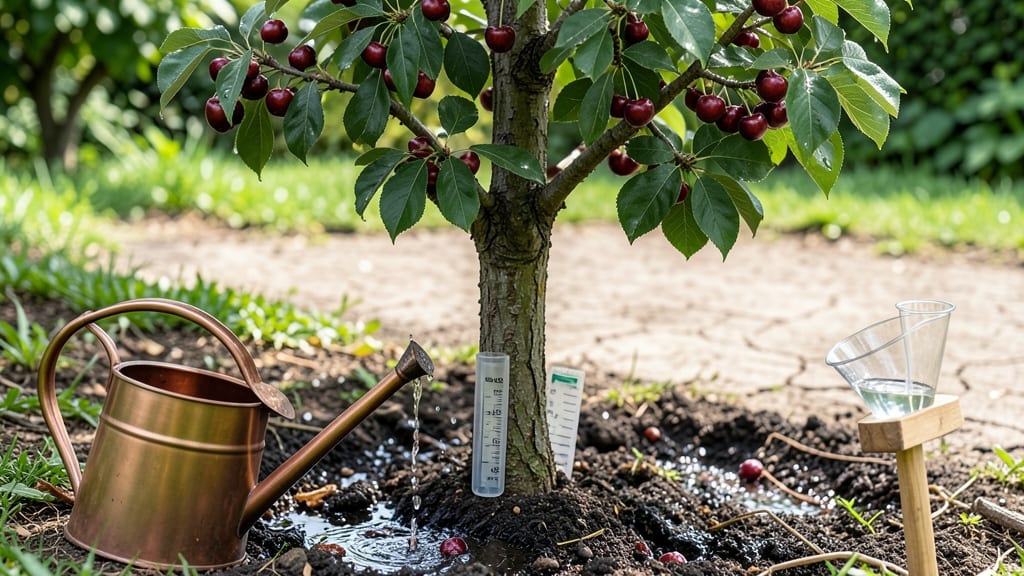
A cherry tree needs deep, infrequent watering to establish strong roots and produce sweet fruit 🍒 — too much or too little can ruin years of growth.
Struggling to keep your cherry tree healthy? Overwatering or underwatering can turn your lush canopy into a sad, wilted mess. The secret is matching watering to the season, soil type, and tree age.
In spring and summer, your young cherry tree may need 15-20 gallons every 7-10 days, while mature trees thrive on deep soaks every 10-14 days. Winter slows everything down, so cut back to just a monthly check.
Below, I’ll break down the exact watering schedule by season, how to spot over- or underwatering, and pro tips to keep your tree thriving without wasting a drop.


Cherry tree watering requirements by season: monthly breakdown for optimal growth
Watering a cherry tree isn't just about keeping the soil damp—it's about deep, strategic hydration that matches the tree's growth stage and season. Young saplings need frequent, shallow checks, while mature trees thrive with infrequent deep soaks.
The key? Understanding your tree's root zone depth and adjusting for heatwaves or droughts.
In spring and summer, cherry trees enter their active growth phase, demanding consistent moisture to support fruit production. Winter slows everything down, so your watering routine shifts dramatically.
Below, I’ll walk you through a month-by-month watering schedule tailored to both young and mature trees, plus how to adapt for extreme weather.
Let’s start with spring planting, when your cherry tree’s roots are establishing. For the first 3 months after planting, water deeply every 5-7 days—about 15-20 gallons per tree. Use a soaker hose or drip irrigation to deliver water slowly to the root zone, avoiding surface evaporation.
Young trees can’t handle soggy soil, so always check moisture 2 inches below the surface before watering again.
As summer arrives, increase frequency to every 5-7 days for young trees and every 7-10 days for mature ones. Heatwaves demand extra attention: double-check soil moisture daily. A simple test is to insert a screwdriver into the soil—if it resists, water more.
Mulch with 3-4 inches of organic matter (like wood chips) to retain moisture and regulate temperature.
Fall signals a shift toward dormancy prep. Reduce watering to bi-weekly for young trees and monthly for mature ones. This helps harden the tree for winter. Avoid wet foliage, which can invite fungal diseases like powdery mildew. Water early in the morning to allow leaves to dry quickly.
Winter is
Signs your cherry tree is overwatered or underwatered (and how to fix it)
Your cherry tree communicates water needs through leaf color, bark condition, and root health—ignore these signs, and you’ll end up with a stressed tree or worse, root rot 🌱.
The key is learning the difference between overwatered (soggy roots) and underwatered (dry soil) symptoms, so you can adjust before damage sets in.
Start by checking the soil moisture 2-3 inches below the surface. Stick your finger in—if it feels damp like a wrung-out sponge, you’re overdoing it. If it’s bone-dry, your tree is thirsty.
For young trees, this check should happen every 3-5 days in summer, while mature trees need less frequent monitoring.
🚨
Young trees (1-3 years): 15-20 gallons every 5-7 days during peak growth (spring-summer). Mature trees (4+ years): 20-30 gallons every 10-14 days. Always water deeply—aim for 6-8 inches of soil moisture.
Overwatering danger: Soggy soil + yellow leaves = root rot in 2-3 weeks. Underwatering danger: Wilting + brown edges = irreversible leaf scorch.
Pro tip: Use a moisture meter ($15 at garden centers) for accuracy—guessing leads to mistakes.
Overwatered cherry trees show yellowing leaves that stay soft, even when dry. The edges may curl upward, and you’ll spot mushy brown roots if you gently dig near the trunk.
Fungal growth like black mold on bark or white powdery mildew on leaves is a red flag—these thrive in wet conditions. To fix it, reduce watering by 50% and improve drainage by adding compost or perlite to heavy clay soil.
Underwatered trees, meanwhile, develop crispy brown edges on leaves that feel dry to the touch. The leaves may wilt midday but not recover by evening. Check for cracked soil around the base—this means water evaporates too fast.
For immediate relief, give your tree a deep soak with 10 gallons of water, then mulch with 3-4 inches of wood chips to retain moisture. Repeat every 3-4 days until the soil stays consistently moist.
Root health is your best early warning system.
Gently loosen the top 2 inches of soil with a trowel and inspect the roots. Healthy roots are white or light tan and firm to the touch. Rotten roots smell sour and turn black or mushy, while dry roots appear brittle and dark brown.
If you find rot, trim affected roots with sterilized pruners and repot or replant in fresh, well-draining soil. For drought-stressed roots, soak them in room-temperature water for 10 minutes before replanting.
Adjust your watering based on the season and soil type. Sandy soil drains quickly, so you’ll need to water more frequently (every 3-5 days), while clay soil holds moisture longer, requiring bi-weekly deep watering. In hot climates, increase watering by 30% and mulch heavily to protect roots.
Remember: cherry trees hate soggy feet but also can’t handle drought stress—find that sweet spot, and your tree will reward you with years of fruit.