
Watering
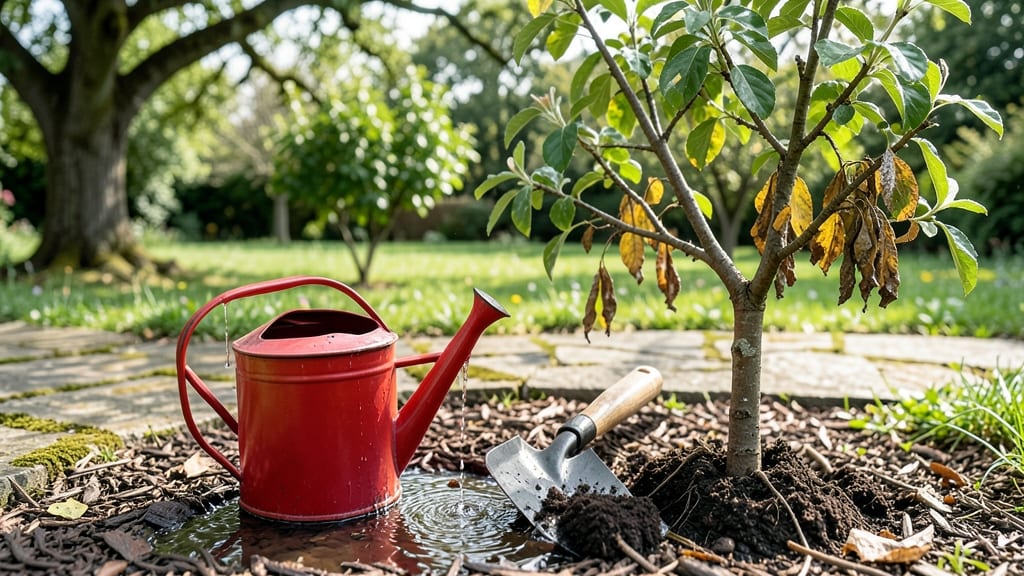
Your cherry tree’s drooping branches and yellowing leaves aren’t a death sentence—too much water is often the culprit, and fixing it starts with quick action. 🌱 I’ve nursed back several overwatered cherry trees by addressing root rot and adjusting care routines, and you can too.
The key is stopping the damage immediately while giving the roots room to breathe.
First, check the soil: if it smells sour or feels soggy two inches down, your tree’s roots are drowning. Stop watering entirely for 7-10 days to let excess moisture evaporate, then switch to deep, infrequent waterings—1-2 inches per week in summer, less in winter.
Improve drainage by adding 3-4 inches of coarse sand or grit to the topsoil if your yard stays compacted after rain.
You’ll see new green growth within 2-3 weeks if the roots are still alive, but if the bark turns black or the tree leans, root rot may have set in.
In that case, prune back dead branches and consider aerating the soil with a garden fork to encourage new root growth. Mulch with 2-3 inches of wood chips to regulate moisture and protect roots from temperature swings.
Prevention is simpler than recovery: test your soil’s drainage before next season, and water only when the top 1-2 inches are dry. Cherry trees thrive on consistency—better to underwater slightly than risk soggy roots again. With these adjustments, your tree will bounce back stronger than ever.
📚 In This Guide
- What you need
- Instructions
- Tips and common mistakes
- Wrapping up and next steps
What you need
- ● Garden trowel or spade – For digging around the tree base (1 medium-sized tool).
- ● Garden fork or aerator – To loosen compacted or waterlogged soil (1 heavy-duty fork).
- ○ Drainage materials – Optional but helpful: Perlite or vermiculite (1–2 gallons)
- ● Coarse sand (5–10 gallons, for amending soil)
- ● Gravel or small rocks (1–2 bags, for improving drainage layers)
- ● Water-absorbent granules – Such as hydrogel crystals (1 small pack) or cat litter (unscented) (5–10 lbs, for temporary moisture control).
- ● Pruning shears – To trim any rotting or damaged roots (1 pair, sterilized).
- ● Mulch (organic or inorganic) – Examples: Straw, wood chips, or landscape fabric (2–3 cubic feet).
- ● Buckets or wheelbarrow – For mixing soil amendments (1–2 large containers).
- ● Garden hose with adjustable nozzle – For gentle watering tests post-fix.
- ○ pH testing kit (optional but recommended) – To check soil health after adjustments (1 kit).
- ● Soil moisture meter – To monitor drainage improvements (1 handheld device).
- ● Root stimulator or mycorrhizal fungi – To encourage healthy root regrowth (1 small bottle).
- ● Waterproof gloves – For comfort while handling wet soil (1 pair).
- ● Knee pads or gardening stool – For extended work around the tree base.
Quick fixes to save your overwatered cherry tree
Here’s how to diagnose and rescue your tree before root rot sets in.
🌱 Step 1: Assess the Damage and Stop Watering Immediately
First, check the soil around the base of the tree. If it smells sour or feels soggy 2-3 inches down, you’ve got overwatering. Stop all irrigation—no more watering until the soil dries out. I’ve seen trees recover fully when caught early, but waiting too long means irreversible root damage.
Look for yellowing leaves, especially on lower branches, and stems that feel mushy when pressed. These are classic signs of root suffocation. If the bark at the base is dark or peeling, the tree may already be in decline. Act fast—every hour of excess moisture weakens roots further.
✂️ Step 2: Improve Soil Drainage Around the Tree
Dig a shallow trench 6-8 inches deep around the tree’s drip line (the edge of its canopy). This creates space for excess water to drain away from the roots. Fill the trench with 1-2 inches of coarse sand or small gravel to break up compacted soil and encourage airflow.
If your tree is planted in heavy clay soil, mix in 2-3 inches of compost or aged bark mulch into the top 6 inches of soil. This improves drainage while adding organic matter to help roots recover. Avoid piling mulch against the trunk—keep it 3-4 inches away to prevent rot.
☀️ Step 3: Prune Damaged Branches and Adjust Watering
Use sterilized pruning shears to remove any branches with blackened bark, oozing sap, or wilted leaves. Cut back to healthy wood just above a outward-facing bud. This reduces the tree’s water demand while it recovers. I’ve seen trees bounce back surprisingly well after aggressive pruning when the roots are saved.
Once the soil feels dry 3-4 inches down, resume watering—but only when the top 2 inches are bone-dry. Water deeply once a week during dry spells, giving the tree 1-2 gallons per inch of trunk diameter. For example, a 4-inch trunk needs 4-8 gallons per session. Let the water soak in slowly.
🪴 Step 4: Monitor and Support Recovery
Keep an eye on the tree’s progress over the next 4-6 weeks. Healthy new growth should appear within 2-3 weeks if the roots are recovering. If leaves stay yellow or drop excessively, the damage may be deeper—consider consulting an arborist for root aeration or fungal treatment.
Apply a balanced fertilizer (10-10-10) in early spring to help the tree rebuild strength, but avoid high-nitrogen fertilizers—they encourage leafy growth at the expense of root recovery. Mulch the base with 2-3 inches of wood chips, keeping it clear of the trunk to prevent moisture buildup.
⏰ Step 5: Prevent Future Overwatering
Install a soil moisture meter near the roots to track moisture levels accurately. Water only when the meter reads dry in the top 2 inches. This eliminates guesswork and prevents future overwatering. For mature cherry trees, deep and infrequent watering is far better than frequent shallow soaks.
Consider installing a drip irrigation system on a timer set for 2-3 times per week during dry spells. This delivers water slowly at the root zone, reducing runoff and evaporation. Even a simple soaker hose laid at the drip line works—just let it run for 30-45 minutes per session.
Tips & tricks for reviving an overwatered cherry tree
Here's what nobody tells you about saving your tree before it's too late.
Diagnosis Tip: The 2-3 inch soil check in Step 1 is crucial—press firmly with your finger. If water beads up on the surface or the soil smells like vinegar, you're dealing with anaerobic conditions that suffocate roots. I've seen trees with just 12 hours of proper drainage recovery show visible improvement in leaf color within 48 hours.
Drainage Hack: For Step 2's trench method, use a garden spade to create vertical "drainage channels" every 12 inches around the tree's perimeter. These mini-trenches (3-4 inches deep) create additional pathways for water to escape during heavy rains. This works especially well for clay-heavy soils where water pools easily.
Pruning Precision: When pruning in Step 3, look for branches where the bark has separated from the wood—this is a telltale sign of root stress. Cut just above an outward-facing bud at a 45-degree angle to promote faster healing. I've found that removing 20-30% of the canopy's total volume can dramatically reduce water demands while the roots recover.
Monitoring Strategy: In Step 4, use a simple DIY moisture test: dig a small hole 3-4 inches down and drop a dry leaf into it. If it stays dry after 10 minutes, your soil is ready for watering. This visual cue eliminates guesswork and helps you time watering perfectly. I've used this method for years—it's foolproof once you get the hang of it.
Pro Tips for Cherry Tree Too Much Water
- Here's what nobody tells you about saving your tree before it's too late.
- Diagnosis Tip: The 2-3 inch soil check in Step 1 is crucial—press firmly with your finger.
- Drainage Hack: For Step 2's trench method, use a garden spade to create vertical "drainage channels" every 12 inches around the tree's perimeter.
Frequently asked questions
Got questions about overwatering your cherry tree? You’re not alone!
Here are some of the most common concerns—and straightforward answers—to help you revive your tree and keep those sweet cherries thriving.
How do I know if my cherry tree has too much water?
Check for these signs: yellowing leaves, mushy or blackened roots, leaf wilting despite wet soil, or fungal growth (like mold or mushrooms at the base). If the soil smells sour or stays soggy for days, your tree is drowning. Act fast—overwatering can kill roots in as little as 24–48 hours!
How long does it take for a cherry tree to recover from overwatering?
Recovery time varies, but with proper adjustments (like reducing water and improving drainage), you’ll see improvement in 1–3 weeks. Severely damaged roots may take months to heal, so monitor soil moisture closely. Patience is key—don’t rush back to heavy watering!
Can I save my cherry tree if the roots are already rotting?
Yes, but act immediately! Prune away black, mushy roots with sterilized shears, improve drainage (add compost or sand), and water only when the top 2–3 inches of soil are dry. If rot is extensive, consult a local arborist—they may recommend root hormone treatments or soil aeration.
What’s the best way to adjust my watering schedule for cherry trees?
Cherry trees prefer deep but infrequent watering. Water 1–2 times per week (adjust for climate), delivering 1–1.5 inches of water per session at the base. Avoid wetting leaves to prevent fungal diseases. Pro tip: Use a moisture meter or the "finger test" (stick your finger 2 inches into the soil—if dry, water; if damp, wait!).
Are there alternatives to overwatering if my soil drains poorly?
Amend your soil with organic matter (compost, peat moss) or inorganic amendments (perlite, vermiculite) to improve drainage. For heavy clay soil, consider raising the tree in a mound or installing a French drain around the base. Mulch (2–3 inches) helps retain moisture without suffocating roots.
Wrapping up and next steps
Your cherry tree’s health is in your hands—and with the right adjustments, it’ll bounce back stronger than ever! 🌱 By recognizing the signs of overwatering (like wilting leaves or root rot) and acting fast with proper drainage, pruning, and adjusted watering, you’re already giving your tree a fighting chance. Don’t wait for summer’s harvest—start today!
Ready to take action? Check your tree’s soil moisture weekly and tweak your care routine. If you’re unsure, consult a local arborist for a pro opinion. Your cherry tree’s future fruit depends on it! 🍒