
Pruning
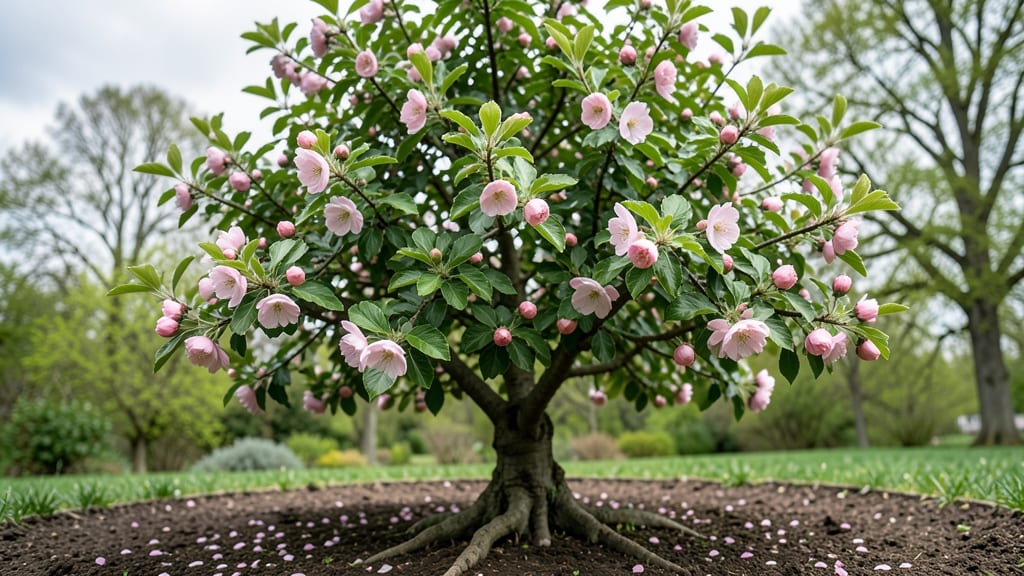
Michigan's harsh winters and humid summers demand smart pruning for crabapple trees. ✂️ I've learned through trial and error which cuts keep these trees healthy—and which ones turn your yard into a winter hazard.
The right technique transforms your crabapple from a weakling to a showstopper that produces fruit and blooms reliably. Start with the three D's: dead, diseased, and crossing branches. Remove any wood that's brown inside, has fungal spots, or rubs against other branches.
Then shape the tree to open the center for sunlight and air circulation—this prevents those dreaded summer fungal infections that plague Michigan crabapples. I prune mine in late winter, just before buds swell, when diseases are dormant but the tree's structure is visible.
You'll see immediate results in next year's blooms and fruit set. A properly pruned tree develops stronger branches that hold up to snow and ice, and the open center means fewer pest hideouts. The key is consistency—don't over-prune, but don't skip seasons either.
Even small annual cuts keep your tree thriving through Michigan's extremes. This works for all crabapple varieties grown here, from the disease-resistant 'Adams' to the classic 'Dolgo' with its abundant fruit. The same principles apply whether you're maintaining an established tree or shaping a young one.
Let's get those pruners ready!
📚 In This Guide
- What you need
- Instructions
- Tips and common mistakes
- Wrapping up and next steps
What you need
- ● Pruning shears: Bypass pruners (for cuts ½-inch in diameter). Example: Felco F-2 or Corona 3-in-1.
- ● Loppers: 1 pair (for cuts 1–3 inches in diameter). Example: Fiskars X27.
- ● Pruning saw: 1 handheld saw (for thick branches 3+ inches in diameter). Example: Bahco Laplander.
- ● Rubbing alcohol (70%+) or bleach solution: 1 bottle (to sterilize tools between cuts).
- ● Heavy-duty gloves: 1 pair (cut-resistant, like Mechanix Wear).
- ● Safety glasses: 1 pair (to protect from debris).
- ○ Ladder (optional): Extendable or step ladder (if tree exceeds 6 feet). Example: Little Giant Magnum.
- ● Disposable bags or bucket: 1–2 (for collecting pruned branches).
- ● Weather check: Prune on a dry, calm day (avoid frost or rain within 24 hours).
- ● Tree health assessment: Inspect for diseases (fire blight, apple scab) or pests (borers, aphids) before pruning.
- ○ Marking tools (optional): Colored spray paint or flagging tape (to mark cuts for later reference).
- ● Notebook + pen (to sketch the tree’s structure).
- ○ Post-pruning care (optional): Fungicide (copper-based): 1 spray bottle (if tree has a history of fungal issues).
- ● Mulch: Shredded bark (2–3 inches deep, 3 feet from trunk).
Step-by-Step pruning guide for Michigan crabapple trees
Here's how to maintain your crabapple's health through all four seasons—Michigan's climate demands special attention.
✂️ Step 1: Time Your Pruning for Michigan's Seasons
Michigan's cold winters and hot summers mean precise timing. Start with late winter dormant pruning (February-March) when buds swell but before sap rises. This removes dead wood and opens the canopy for spring sunlight. I avoid pruning in fall because late frosts can stress fresh cuts.
Summer pruning comes in two phases: light thinning in June to improve air circulation (critical for disease prevention) and corrective pruning in August to shape the tree. Never prune after mid-September—new growth won't harden off before winter.
✂️ Step 2: Remove Dead, Diseased, and Crossing Branches First
Start with sanitation. Cut out dead wood (branches that snap easily or have no bark) and diseased limbs (look for cankers, oozing sap, or fungal growth). Sterilize your pruners with 70% rubbing alcohol between cuts to prevent spreading fire blight—a common Michigan threat.
Remove crossing branches that rub together, creating wounds where pests enter. Make cuts just outside the branch collar (the swollen area where the branch meets the trunk). I always step back to check the tree's silhouette—you want an open center that lets light reach all branches.
✂️ Step 3: Thin the Canopy for Airflow and Fruit Quality
Selective thinning improves fruit production and reduces disease. Remove 15-20% of the canopy by targeting branches growing inward or downward. Focus on suckers (vigorous shoots at the base) and water sprouts (fast-growing vertical shoots). These compete with fruit-bearing branches.
Watch for overcrowded clusters—crabapples produce better-quality fruit when branches aren't competing. Step back frequently to visualize light penetration. In Michigan's humid climate, poor airflow leads to fungal issues like apple scab, so this step is non-negotiable.
✂️ Step 4: Shape for Structural Integrity and Winter Survival
Crabapples need a balanced structure to handle Michigan's snow and ice loads. Remove branches that create a "widowmaker" risk (long, heavy limbs that could snap in storms). Aim for a natural vase shape—broad at the base, narrowing upward—while preserving the tree's character.
For young trees, prune to establish a strong central leader (main upward branch). Mature trees benefit from heading back (cutting just above an outward-facing bud) to encourage bushier growth. Seal larger cuts (>2 inches) with pruning sealant to prevent silver leaf disease entry.
✂️ Step 5: Clean Up and Monitor Post-Pruning
Rake up all debris immediately—left-behind branches harbor pests and diseases. Disinfect tools again after finishing. In Michigan's climate, post-pruning care is critical: water deeply if spring arrives dry, and apply 2-3 inches of mulch (keeping it 6 inches from the trunk) to retain moisture.
Monitor for new growth flushing (rapid leaf production) within 4-6 weeks. Healthy growth means you've pruned correctly. If you see yellowing leaves or dieback, you may have over-pruned—next time, remove less wood. Michigan's variable weather means adjustments are often needed.
Tips & tricks for pruning Michigan crabapple trees
Michigan's unique climate makes crabapple care a bit different—here's how to avoid common pitfalls and get pro-level results.
Seasonal Timing is Non-Negotiable: The February-March dormant pruning window in Step 1 is critical because Michigan's late frosts can stress fresh cuts. If you miss this, wait until buds swell but don't delay past early spring—delayed pruning reduces winter hardiness. For summer pruning, I schedule my June thinning during dry weather to minimize disease risk from wet conditions.
Sanitation is Your First Line of Defense: Between each cut in Step 2, I sterilize my pruners with 70% rubbing alcohol—not just water. Michigan's humid summers create perfect conditions for fire blight, and I've seen entire branches die from contaminated tools. For large trees, I use a separate pair of pruners for diseased wood and dispose of infected branches immediately in sealed bags.
Canopy Thinning Requires Precision: When removing 15-20% of the canopy in Step 3, I focus on branches growing at less than a 45-degree angle from the trunk. These are the ones that create dense clusters where air can't circulate. I also prioritize removing branches that are thinner than my pinky finger—these are often water sprouts that drain energy from fruit production.
Structural Integrity Matters More Than Aesthetics: In Step 4, I always check for "widowmaker" branches by gently shaking each limb—if it feels unstable or has a hollow sound, it's a candidate for removal. For young trees, I mark the central leader with reflective tape to ensure it gets priority sunlight. And yes, that 2-inch cut sealing rule is worth it—Michigan's wet springs make silver leaf disease particularly aggressive.
Pro Tips for Crabapple Tree Michigan
- Michigan's unique climate makes crabapple care a bit different—here's how to avoid common pitfalls and get pro-level ...
- Seasonal Timing is Non-Negotiable: The February-March dormant pruning window in Step 1 is critical because Michigan's...
- Sanitation is Your First Line of Defense: Between each cut in Step 2, I sterilize my pruners with 70% rubbing alcohol...
Frequently asked questions
Got questions about growing and pruning crabapple trees in Michigan?
You’re not alone! Here are answers to the most common queries from gardeners and homeowners alike.
When is the best time to prune a crabapple tree in Michigan?
Prune your crabapple tree during late winter to early spring (February–March) when the tree is dormant but before buds swell. This timing minimizes stress and disease risk. Avoid heavy pruning in fall, as wounds may not heal before winter. Light cleanup pruning can be done in summer to remove dead or diseased branches.
How much of my crabapple tree can I prune safely?
For young trees (under 5 years), remove no more than 20-25% of the canopy per year. Mature trees can handle up to 30% of selective pruning to maintain shape and health. Avoid over-pruning—this can weaken the tree and reduce fruit production. Focus on removing dead, crossing, or diseased branches first.
Why are my crabapple tree’s leaves turning yellow or brown?
Yellowing or brown leaves can signal nutrient deficiencies (like iron or nitrogen), pests (such as aphids or spider mites), or disease (like apple scab or fire blight). Check for pests on the undersides of leaves and inspect branches for signs of fungal spots. Adjust soil pH (ideal: 6.0–6.5) and fertilize if needed. Severe issues may require fungicides or professional help.
Will my crabapple tree produce edible fruit, or is it just ornamental?
Most crabapple varieties in Michigan are ornamental, prized for their colorful blooms, glossy foliage, and small fruit. While the fruit is not typically eaten fresh (it’s tart and astringent), birds and wildlife love it! Some cultivars, like ‘Adams’ or ‘Dolgo,’ yield slightly sweeter fruit that can be used for jellies or sauces—always confirm the variety before harvesting.
Can crabapple trees survive Michigan’s harsh winters?
Yes! Crabapple trees are hardy to USDA Zones 4–8, making them perfect for Michigan’s climate. Young trees may need winter mulch (2–3 inches of wood chips) to protect roots, and wrapping the trunk with tree guard can prevent rodent damage. Choose cold-resistant varieties like ‘Sargent’ or ‘Centennial’ for extra resilience.
What’s a good alternative if my crabapple tree keeps failing?
If your crabapple struggles with disease, pests, or poor growth, consider these low-maintenance Michigan-friendly alternatives:
- Serviceberry (Amelanchier): Hardy, edible berries, and stunning fall color.
- Hawthorn (Crataegus): Disease-resistant, supports wildlife, and has beautiful spring flowers.
- Apple or Pear Trees: Choose disease-resistant varieties like ‘Liberty’ apple or ‘Seckel’ pear for fruit and ornamental value.
Wrapping up and next steps
Growing a thriving crabapple tree in Michigan is a rewarding experience, and with the right pruning techniques, you’ll enjoy year-round beauty and bountiful fruit! 🌳 Whether you’re trimming for shape, health, or harvest, remember that consistency is key—tackle tasks in early spring, late winter, and summer to keep your tree flourishing.
Ready to take the next step? Mark your calendar for your first pruning session this spring and observe how your tree responds. Over time, you’ll develop an eye for what works best for your crabapple—happy pruning!