
Light Requirements
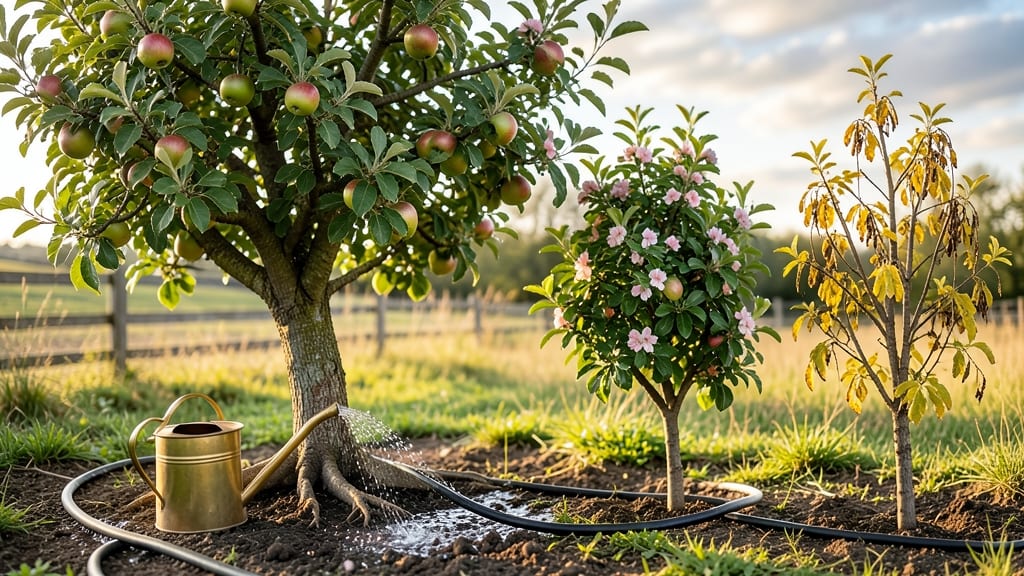
An apple tree 🍎 needs consistent moisture, but not a lot of water—think deep soaks rather than daily sprinkles, especially in Zone 6’s hot summers.
Picture this: you’re diligently watering your young tree every morning, only to watch its leaves wilt by afternoon. Or worse, you skip watering during a dry spell, and the branches sag.
The truth? Apple trees hate both extremes, and getting the balance right is the key to healthy growth and sweet fruit.
Young trees need more frequent watering to establish roots, while mature trees thrive on deep, infrequent watering that encourages strong root systems. Soil type, season, and even rainfall play a huge role—sandy soil drains fast, while clay holds moisture longer.
Here’s how to adjust your watering schedule for every stage of your tree’s life.
In this guide, I’ll walk you through the signs of over- and underwatering, the best times to water, and how to set up an irrigation system that saves time and keeps your tree thriving—no guesswork required.


How much water does an apple tree really need?
Apple trees aren’t the thirsty giants you might think—they need consistent moisture, but not constant soaking. The key is deep watering that reaches their root zone, typically 12-18 inches deep. Young trees need more frequent watering, while mature trees develop deep roots that store moisture.
Climate plays a huge role: drought-prone areas demand more water, while rainy seasons can lead to overwatering if you’re not careful.
Think of watering like a slow-drip irrigation system—you want to encourage roots to grow deeper rather than staying shallow. A 15-20 gallon deep soak (about 56 liters) once a week is a good starting point for established trees in Zone 6 climates.
Adjust based on your soil type: sandy soil drains fast, while clay soil holds moisture longer.
Deep watering is non-negotiable for apple trees. Shallow watering—like a quick sprinkle—encourages roots to stay near the surface, making trees vulnerable to drought. Use a soaker hose or drip irrigation to deliver water slowly to the root zone. Avoid overhead sprinklers, which waste water and can spread fungal diseases like apple scab.
Signs of underwatering include wilting leaves, premature leaf drop, and small, bitter fruit. If you see these, increase watering immediately. Overwatering, on the other hand, causes yellowing leaves, mushy roots, and fungal growth.
The soil should feel moist but not soggy—think of a wrung-out sponge. If water pools around the base, you’re overdoing it.
Climate adjusts everything. In hot, dry summers (like Zone 7-9), I water my apple trees every 3-5 days with 30+ gallons per soak. In cooler, wetter climates (like Pacific Northwest), I cut back to once every 10-14 days.
Always check the top 2 inches of soil—if it’s dry, it’s time to water.
Mulching is your best friend for water retention. Apply 3-4 inches of organic mulch (like wood chips or straw) around the base of the tree, keeping it 6 inches away from the trunk.
This helps retain moisture, regulate soil temperature, and suppress weeds. Replenish mulch annually to maintain its effectiveness.
Morning watering is ideal—it gives leaves time to dry before evening, reducing fungal risks. Avoid watering at night or late afternoon, as damp foliage invites pests and diseases. If you must water in extreme heat, do it early in the morning or late afternoon to minimize evaporation.
Young apple trees (under 3 years old) are the most sensitive to water stress. They need more frequent watering—about 2-3 times per week—to establish strong roots. Mature trees, with their deep root systems, can handle longer dry spells, but don’t push it.
Even established trees suffer if they go more than 2 weeks without water during peak growing season.
💧 Pro Tip: Use a moisture meter to check soil conditions. Stick it 6 inches deep—if it reads dry, water deeply. If it’s saturated, hold off. This simple tool saves time, water, and stress on your tree.
Seasonal watering schedule for apple trees: a month-by-month guide
Apple trees don’t need excessive water—they thrive on deep, infrequent soaking that encourages strong root development. Unlike thirsty annuals, these woody giants store moisture efficiently once established. The key? Seasonal adjustments based on growth stages and weather patterns.
Let’s break it down month by month so you can water like a pro without wasting a drop.
Young trees (under 3 years) are the most sensitive—their shallow roots can’t reach deep moisture. Container-grown apple trees dry out faster than in-ground varieties, so they need daily checks during summer heat.
Mature trees, however, can go weeks without water once established, thanks to their extensive root systems. The trick is matching your watering rhythm to the tree’s life cycle and your local climate.
🌱 5 Seasonal Watering Rules for Apple Trees
- Spring: Water deeply weekly to wake roots after dormancy. Focus on root zone expansion (6–12 inches deep).
- Summer: Increase to every 5–7 days during fruit development. Morning watering prevents fungal diseases.
- Fall: Reduce to bi-weekly as growth slows. Avoid wet foliage before harvest to prevent rot.
- Winter: Water monthly only if soil is dry and no snow cover. Never water frozen ground.
- Containers: Check soil daily—water when top 1 inch feels dry. Use self-watering pots in extreme heat.
In spring (March–May), your apple tree’s roots are reawakening after winter dormancy. This is the perfect time to establish a deep watering routine. Aim for 15–20 gallons per tree every 7–10 days, focusing on the drip line (the edge of the tree’s canopy).
Young trees may need weekly watering, while mature trees can handle slightly longer intervals if rainfall is consistent. Mulch heavily (3–4 inches) to retain moisture and regulate soil temperature.
When summer (June–August) rolls around, your apple tree’s fruit development demands extra attention. Water every 5–7 days, delivering 20–30 gallons per tree depending on size. The goal is to keep the root zone consistently moist—not soggy.
Use a soaker hose or drip irrigation to deliver water slowly at the base. Avoid overhead sprinklers, which can spread fungal spores like apple scab. Container-grown trees may need daily watering in extreme heat (90°F+).
As fall (September–November) approaches, your apple tree shifts focus from growth to harvest preparation. Reduce watering to every 2 weeks to harden off the fruit and prepare for dormancy. Stop watering entirely 4–6 weeks before first frost to allow the tree to enter dormancy naturally.
This prevents late-season fungal issues and ensures a smoother transition to winter. Remove mulch from the trunk (leave it at the drip line) to protect against rot.
Winter (December–February) is your apple tree’s dormancy period, and watering needs drop dramatically. Only water monthly if the ground is completely dry and there’s no snow cover. Never water frozen soil—it wastes water and can damage roots.
Instead, rely on natural snow cover (6+ inches) for insulation. If you’re in a container-grown setup, move pots to a sheltered location and water lightly every 3–4 weeks to prevent root desiccation.
Pro tip: Monitor soil moisture with your finger—stick it 2–3 inches deep near the trunk. If it’s dry, it’s time to water. For container-grown trees, lift the pot: if it’s light as a feather, water immediately.
With this seasonal rhythm, your apple tree will reward you with juicy, disease-resistant fruit year after year. 🍎