
Pruning
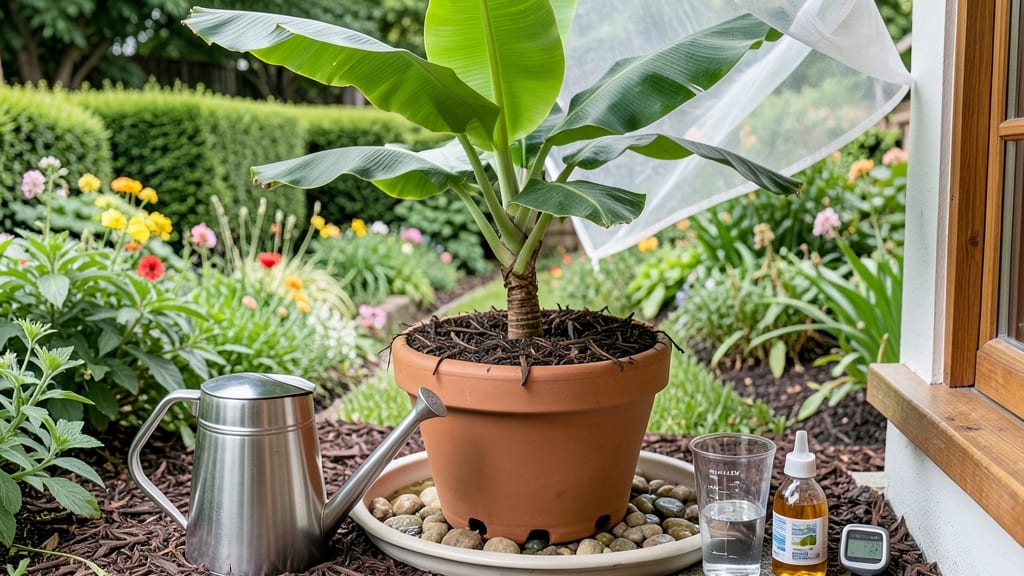
The care of your dwarf Cavendish banana tree craves sunlight like a desert craves rain—get this right, and you’ll harvest fruit year-round. 🌿 I’ve watched mine go from a sad, leggy houseplant to a productive, banana-bearing beauty by adjusting light exposure, and the difference is night and day. The key is bright, indirect light—think east-facing windows or a grow light 12–18 inches away. Direct midday sun scorches the leaves, while too little light stretches the plant and delays fruiting. My tree now gets 6–8 hours of filtered sunlight daily, and the results? Thick, glossy leaves and a second harvest in winter. You’ll also notice fewer pests and stronger stems when humidity hovers around 60–70%. A pebble tray or humidifier keeps the air tropical, just like its jungle roots. The payoff? A plant that grows 2–3 feet tall (not the 20-foot giants!) and produces 6–12 bananas per bunch twice a year. Outdoor growers in zones 10–11 can move theirs to partial shade in summer, but indoor plants need supplemental light in winter. Skip the guesswork—measure light exposure with a light meter or watch for yellowing leaves (a classic sign of too much sun).
📚 In This Guide
- What you need
- Instructions
- Tips and common mistakes
- Wrapping up and next steps
What you need
- ● Dwarf Cavendish banana plant: 1 (potted or bare-root, from a nursery or reputable seller).
- ● Well-draining potting mix: 5–10 gallons (look for a blend with perlite, coconut coir, and compost for aeration).
- ● Container: 1 large pot (at least 18–24 inches in diameter with drainage holes) or a raised bed if planting outdoors.
- ● Pruning tools: 1 pair of sterilized pruning shears (for trimming pseudostems and suckers).
- ● 1 sharp knife or pruning saw (for thicker stems, if needed).
- ● Organic fertilizer: Balanced 10-10-10 or 20-20-20 (diluted to half-strength) or a banana-specific fertilizer.
- ● Mulch: 2–3 inches of straw, wood chips, or pine bark (to retain moisture and regulate temperature).
- ● Watering can or hose with a gentle spray nozzle: For deep, even hydration.
- ● Grow lights: LED full-spectrum bulbs (if indoor growing limits natural sunlight).
- ● Banana tree support: 1–2 bamboo stakes or a trellis (to train the plant as it grows taller).
- ● Soil moisture meter: To monitor root health and prevent over/under-watering.
- ● Epsom salt: 1 tbsp (mixed into water monthly) for magnesium boosts.
- ● Neem oil or copper fungicide: For pest/disease prevention (especially in humid climates).
Step-by-Step guide to growing a thriving dwarf Cavendish banana tree
Here's the method that keeps my dwarf Cavendish producing fruit reliably—even in cooler climates.
☀️ Step 1: Position for Maximum Sunlight Exposure
The dwarf Cavendish thrives with 6-8 hours of direct sunlight daily. Place your tree within 3-5 feet of a south-facing window or under a grow light for indoor growth. I position mine on a rotating stand to ensure even exposure—banana trees grow toward the light, and uneven light causes lopsided growth.
Watch for leaf color: healthy leaves should be deep green with a slight waxy sheen. If leaves yellow or brown at the edges, your tree needs more light. In cooler months, supplement with a 12-hour photoperiod grow light to maintain flowering cycles. The key is consistency—banana trees are sensitive to light fluctuations.
💧 Step 2: Master the Watering Balance
Dwarf Cavendish trees need consistent moisture but hate soggy roots. Water when the top 2-3 inches of soil feel dry—stick your finger in to check. I water deeply until water runs through the drainage hole, then empty the saucer after 10 minutes to prevent root rot. Overwatering is the #1 killer of these tropical plants.
In summer, I water every 2-3 days, while winter slows to once a week. Look for wilting leaves as your signal—banana trees wilt quickly when thirsty but recover fast with proper watering. Always use room-temperature water to avoid shocking the roots.
🪴 Step 3: Fertilize for Fruit Production
Feed your dwarf Cavendish with a balanced 10-10-10 fertilizer every 4-6 weeks during growing season (spring through fall). I halve the recommended dose to avoid burning tender roots—banana trees are heavy feeders but sensitive to excess salts. The key is phosphorus for flowering: switch to a 5-10-10 formula when you see flower buds forming.
Watch for new growth: healthy leaves should appear within 2-3 weeks after fertilizing. Yellowing leaves between veins indicate magnesium deficiency—spray with Epsom salt solution (1 tablespoon per gallon of water) monthly during summer. Never fertilize winter-dormant plants; they absorb nutrients poorly in cooler months.
✂️ Step 4: Prune for Airflow and Fruit Development
Remove any yellow or damaged leaves at the base with clean pruners. I also trim off suction shoots (those smaller shoots at the base) unless you want to propagate new plants. These shoots steal energy from fruit production. The goal is to maintain an open canopy—this prevents fungal diseases and ensures good air circulation around developing fruit.
When fruit bunches appear, support them with a small sling or mesh bag to prevent splitting as they grow. Harvest when the fruit is mostly yellow with slight green tips—they won't ripen further off the plant. I mark my calendar 9-12 months after flowering for harvest time, as dwarf Cavendish fruit takes longer to mature than grocery store bananas.
⏰ Step 5: Manage Seasonal Care for Year-Round Growth
In winter, reduce watering and stop fertilizing. Move your tree to a cooler spot (55-65°F) if temperatures drop below 50°F. I cover mine with a lightweight frost blanket if night temps approach freezing. Banana trees are tropical and won't tolerate frost, but dwarf varieties handle indoor conditions better than outdoor extremes.
Watch for new growth in spring—the first flush of leaves signals it's time to resume regular care. This is also when I repot if needed: move up 2-4 inches in pot size every 2-3 years to accommodate root growth. The goal is to keep roots slightly root-bound, which actually encourages flowering. Never repot during flowering or fruiting stages.
Tips & tricks for perfect dwarf Cavendish banana tree care
These sunlight secrets will help your tropical plant thrive year-round—even when you can't control the weather.
Light Rotation Strategy: In Step 1, when positioning your tree for 6-8 hours of direct sunlight, I recommend rotating the pot every 3-4 days. This prevents the tree from growing lopsided toward the light source—a common issue with dwarf Cavendish. Place a small arrow on the pot to track the rotation direction. Uneven light exposure can cause one side to grow faster, leading to structural weakness and reduced fruit production.
Soil Moisture Test: For Step 2's watering balance, here's a pro tip: use a moisture meter instead of relying on finger tests. The top 2-3 inches should read "dry" before watering, but don't wait until the meter shows "very dry"—banana trees prefer consistent moisture. I've found that checking at the same time each morning creates a helpful routine. Remember, the 10-minute drainage rule is non-negotiable for preventing root rot.
Fertilizer Timing: When you see flower buds forming in Step 3, switch to the 5-10-10 formula immediately—don't wait for the next scheduled feeding. The phosphorus boost helps develop stronger flower stems that can support the weight of fruit. I also recommend applying fertilizer in the morning when the plant is actively photosynthesizing, allowing it to absorb nutrients more efficiently.
Harvesting Cues: In Step 4, when checking for harvest readiness, look beyond just the color—gently press the fruit. Ripe dwarf Cavendish bananas should yield slightly to pressure. Also, check the base of the bunch: if it starts to turn brown and dry, that's your final signal to harvest. The 9-12 month timeline is just a guideline—your tree's specific conditions may accelerate or slow this process.
Pro Tips for Dwarf Cavendish Banana Tree Care
- These sunlight secrets will help your tropical plant thrive year-round—even when you can't control the weather.
- Light Rotation Strategy: In Step 1, when positioning your tree for 6-8 hours of direct sunlight, I recommend rotating the pot every 3-4 days.
- Soil Moisture Test: For Step 2's watering balance, here's a pro tip: use a moisture meter instead of relying on finger tests.
Frequently asked questions
about growing and maintaining a Dwarf Cavendish banana tree can help clarify common challenges. Here are answers to the most pressing questions:How long does it take for a Dwarf Cavendish banana tree to bear fruit?
A healthy Dwarf Cavendish typically produces its first fruit 10–18 months after planting, depending on climate and care. With optimal conditions—warmth, consistent water, and proper nutrients—you can expect bunches of bananas within a year and a half. Patience is key, but the wait is worth it for sweet, compact fruit!
Can a Dwarf Cavendish survive winter indoors?
Yes! These tropical plants thrive indoors in USDA Zones 9–11 during winter. Move your tree to a sunny window or under grow lights, and reduce watering slightly. Keep temperatures above 55°F (13°C) to prevent cold stress. A dwarf variety is ideal for container growing, making it perfect for indoor gardening year-round.
Why aren’t my Dwarf Cavendish bananas ripening?
Bananas may fail to ripen due to lack of sunlight, cool temperatures, or nutrient deficiencies. Ensure your tree gets 6+ hours of direct sunlight daily and maintain warmth (above 60°F/15°C). If indoors, supplement with artificial grow lights. Check for yellowing leaves—a sign of overwatering or poor drainage.
Should I prune my Dwarf Cavendish banana tree?
Pruning isn’t always necessary, but you can trim dead or yellow leaves to redirect energy to fruit production. After harvesting, cut the old pseudostem (the "trunk") down to the base to encourage a new growth cycle. Avoid heavy pruning—dwarf varieties are delicate, and over-trimming can stress the plant.
Are there dwarf banana tree alternatives for smaller spaces?
If space is limited, consider these compact banana varieties:
All thrive in pots and require similar care to Dwarf Cavendish!
Wrapping up and next steps
Caring for your Dwarf Cavendish banana tree is all about balancing sunlight, water, and patience—just like nurturing any other tropical beauty! 🌿 With the right sunlight secrets, proper pruning, and a watchful eye for pests, you’ll soon enjoy a year-round harvest of sweet, homegrown bananas.
Whether you’re a beginner or a seasoned gardener, every step you take brings you closer to that first ripe bunch.
Ready to watch your tree thrive? Start by planting your Dwarf Cavendish this season—your future banana feasts will thank you! 🍌✨