
Pruning
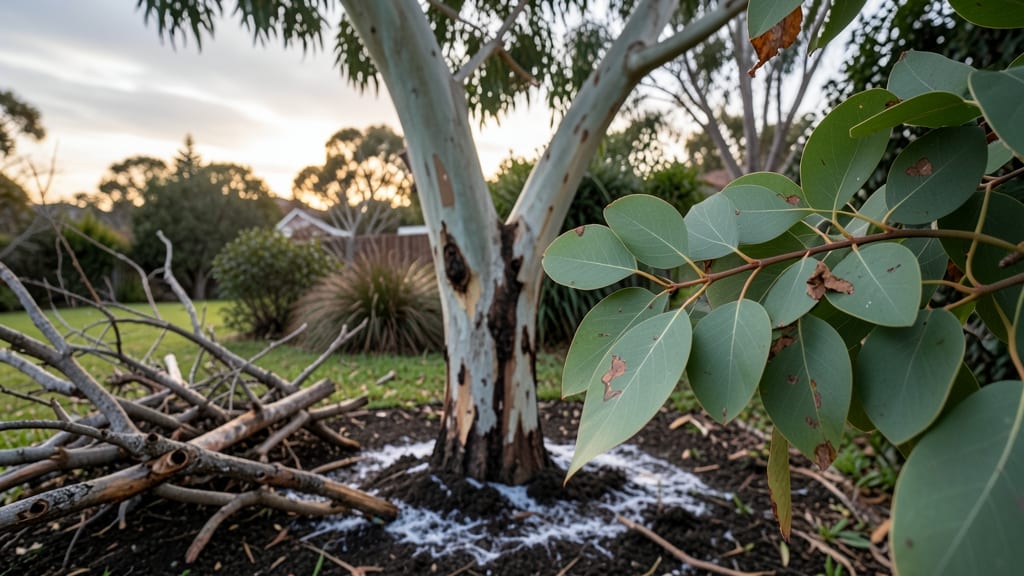
Your eucalyptus tree isn’t just wilting—it’s sending distress signals you can’t ignore. 🌿 The moment you spot yellowing leaves, oozing cankers, or brittle branches, you’re dealing with eucalyptus tree death in the making, and time is the only thing standing between you and losing it for good.
The culprits are usually hidden: root rot from overwatering, fungal infections like Phytophthora thriving in soggy soil, or environmental stress from drought or frost damage. I’ve seen healthy trees turn into skeletal shadows in weeks when these issues go unchecked. The good news?
Most cases are reversible with the right diagnosis and action. Start by inspecting the roots for rot, checking for fungal spots on stems, and assessing your watering habits. Prune dead branches immediately to stop the spread, and amend the soil with organic matter to improve drainage.
If the tree is past saving, removing it early prevents fungal spores from infecting nearby plants. This isn’t just about saving a tree—it’s about reclaiming the fresh, lemony scent of eucalyptus in your yard. Let’s get to work before it’s too late.
📚 In This Guide
- What you need
- Instructions
- Tips and common mistakes
- Wrapping up and next steps
What you need
- ● Pruning shears: Sharp, bypass pruners (for small branches, 1/4"–3/8" blade length).
- ● Loppers: For medium branches (3/8"–1" blade length).
- ● Pruning saw: A curved-tooth saw for thick branches (over 1" in diameter).
- ● Gloves: Heavy-duty, cut-resistant gloves (to protect from thorns and sap).
- ● Disinfectant: 70% isopropyl alcohol or a 10% bleach solution (to sterilize tools between cuts).
- ● Rake: A sturdy garden rake (for clearing debris and aerating soil).
- ● Watering can or hose: With a gentle spray nozzle (for hydration adjustments).
- ● Soil pH test kit: To check if nutrient deficiencies are contributing to decline.
- ● Shovel: A spade or digging fork (for inspecting roots or amending soil).
- ● Notebook & pen: To record observations (e.g., branch dieback patterns, pest sightings).
- ● Tree wound dressing: (e.g., Tanglefoot Tree Wound Pruning Sealer) for large cuts.
- ● Fungicide: Copper-based or neem oil solution (if fungal infections are suspected).
- ● Pest traps: Yellow sticky traps (to monitor for sap-sucking insects like psyllids).
- ● Mulch: Organic mulch (e.g., wood chips or pine straw) to retain moisture.
- ● Moisture meter: For precise soil hydration tracking.
- ● Camera: To document the tree’s condition before/after intervention.
How to diagnose and save a struggling eucalyptus tree
Real talk: eucalyptus trees are tough, but even they can decline. Here's how to spot the warning signs and give your tree a fighting chance.
🌿 Step 1: Identify the Warning Signs
Start by examining the tree from top to bottom. Look for yellowing or browning leaves that start at the bottom and work upward—this is the classic sign of nutrient deficiency or overwatering. Check the bark for peeling, cracks, or oozing sap, which could indicate fungal infections or pest damage. I always run my fingers along the trunk to feel for unusual textures.
Don't ignore leaf drop—sudden defoliation often means the tree is under severe stress. If you see wilting leaves that don't recover even after watering, that's a red flag for root issues or disease. Compare your tree to healthy eucalyptus nearby; subtle differences in leaf color or growth patterns matter.
💧 Step 2: Check Watering and Soil Conditions
Eucalyptus trees hate soggy roots. Stick your finger 2-3 inches into the soil—if it feels damp, you're overwatering. These trees thrive in well-draining soil and prefer dry spells between waterings. I usually wait until the top 4-6 inches of soil feel dry before watering deeply again.
If the soil is compacted or water pools around the base, that's a problem. Eucalyptus roots need oxygen, and waterlogged conditions suffocate them. Amend the soil with sand or perlite if it's heavy clay. Also, check for gopher holes or burrowing pests—they can sever roots and weaken the tree.
☀️ Step 3: Assess Light and Environmental Stress
Eucalyptus trees need full sun—at least 6-8 hours daily. If your tree is in shade, that's why it's struggling. Look for leggy growth or sparse foliage on shaded sides. Move it to a sunnier spot if possible, but do it gradually to avoid shocking the tree.
Watch for windburn on exposed branches—it causes brown, crispy edges on leaves. If your tree is near a salty road or ocean breeze, that could be the culprit. Mulch the base with 2-3 inches of organic mulch to protect roots and retain moisture, but keep it 6 inches away from the trunk to prevent rot.
✂️ Step 4: Prune Damaged Areas and Boost Health
Use sterilized pruning shears to remove dead, diseased, or crossing branches. Cut just outside the branch collar where it meets the trunk. Never leave stubs—eucalyptus trees heal poorly from improper cuts. If you see fungal growth (black spots, mold), prune those areas immediately and dispose of them in the trash, not the compost.
After pruning, feed the tree with a balanced, slow-release fertilizer (10-10-10 ratio). Apply it in early spring when new growth starts. Water deeply after fertilizing to help nutrients reach the roots. Avoid high-nitrogen fertilizers—they encourage leafy growth at the expense of root strength.
🪴 Step 5: Monitor and Adjust Long-Term Care
Keep a watering and growth journal for the next few months. Note when you water, how much, and any changes in leaf color or new growth. Eucalyptus trees often show improvement within 4-6 weeks if the issue is water or light-related. If not, dig carefully around the roots to check for rot or pest damage.
If the tree is beyond saving, remove it slowly and carefully to avoid damaging nearby roots. But if it's still standing strong after your rescue steps, give it time. Eucalyptus trees are resilient—sometimes they just need a little help to bounce back.
Tips & tricks for diagnosing and reviving a struggling eucalyptus tree
Here's what nobody tells you about eucalyptus tree care—these little details make all the difference between a sad, dying tree and a thriving one.
Leaf Color Clues: When you see those yellow or brown leaves starting at the bottom (Step 1), don't just assume it's overwatering—it could also signal iron deficiency. Test your soil pH; eucalyptus prefers slightly acidic soil (pH 5.5-6.5). If your soil is alkaline, add sulfur or composted pine needles to lower the pH gradually over several months. I've seen trees turn around completely after this simple adjustment.
Soil Test Secret: Before amending your soil (Step 2), take a sample to your local extension office for testing. They'll tell you exactly what nutrients are missing. Eucalyptus trees need low phosphorus—if your soil test shows high phosphorus, avoid bone meal fertilizers, which can make the problem worse. I once had a client whose tree was struggling until we discovered phosphorus buildup from years of using the wrong fertilizer.
Pruning Precision: When pruning (Step 4), pay special attention to the branch collar—that swollen area where branches meet the trunk. Cutting too close to the trunk can create entry points for diseases. Use a sharp, sterilized saw for larger branches to make clean cuts that heal properly. I always wipe my pruners with rubbing alcohol between cuts to prevent spreading any potential infections.
Early Spring Timing: That early spring window for fertilizing (Step 4) is crucial because new growth needs nutrients to establish strong roots. If you miss it, wait until late fall instead—never fertilize in summer heat, which stresses the tree. I fertilize mine in early March, right as the buds start swelling, and it makes all the difference in the tree's recovery.
Pro Tips for Eucalyptus Tree Death
- Here's what nobody tells you about eucalyptus tree care—these little details make all the difference between a sad, dying tree and a thriving one.
- Leaf Color Clues: When you see those yellow or brown leaves starting at the bottom (Step 1), don't just assume it's overwatering—it could also signal iron deficiency.
- Soil Test Secret: Before amending your soil (Step 2), take a sample to your local extension office for testing.
Frequently asked questions
Got questions about eucalyptus tree decline?
You’re not alone! Here are answers to the most common concerns—so you can act fast and save your tree (or at least understand what’s happening).
Why is my eucalyptus tree dying suddenly?
Sudden death often stems from root rot (from overwatering or poor drainage), pests like psyllids (which weaken leaves), or fungal/bacterial infections. Environmental stress—like extreme heat or drought—can also trigger rapid decline. Check the roots and leaves for clues: mushy roots or curled, sticky leaves are red flags.
How long do eucalyptus trees take to die if neglected?
Timing varies! A healthy eucalyptus can survive months to years with neglect, but severe cases (like root rot or pest infestations) may kill it in weeks. Act within 2–4 weeks of spotting yellowing leaves, dieback, or oozing bark—early intervention (pruning, treatment, or soil fixes) can turn things around.
Can I save a dying eucalyptus tree, or should I remove it?
It depends! If the tree is partially dead (e.g., only top branches affected), prune diseased sections, improve drainage, and treat pests/fungi. But if 90%+ is dead or the trunk is hollow/rotting, removal is safer (and cheaper long-term). Consult an arborist to assess structural risks before deciding.
What’s a good alternative if my eucalyptus keeps dying?
Try drought-tolerant, low-maintenance trees like olive trees, jacarandas, or coast live oaks. For fast-growing shade: sycamores or redwoods. If you love eucalyptus’s scent, opt for ‘Blue Gum’ varieties (hardier) or ‘Silver Dollar Gum’, which resist some pests better.
What’s the first thing I should do if my eucalyptus is sick?
Start with a visual + physical check:
- Leaves: Look for holes (psyllids), yellowing (nutrient deficiency), or black spots (fungus).
- Soil: Test drainage—stick a shovel in; if water pools after 30 mins, you’ve got poor drainage.
- Trunk: Scrape bark for sawdust-like frass (borer beetles) or oozing sap (infection).
Wrapping up and next steps
Understanding why eucalyptus trees decline—and how to act—can mean the difference between loss and revival. 🌿 From fungal infections to environmental stress, early intervention with proper pruning, soil care, and pest control often saves the day. Don’t wait for the worst: assess your tree today, take action, and give it the fighting chance it deserves!
Next step: Pick one action from this guide—whether it’s trimming dead branches, improving drainage, or consulting a local arborist—and start now. Your eucalyptus might just thank you with years of vibrant, healthy growth! 🌱