
Picking
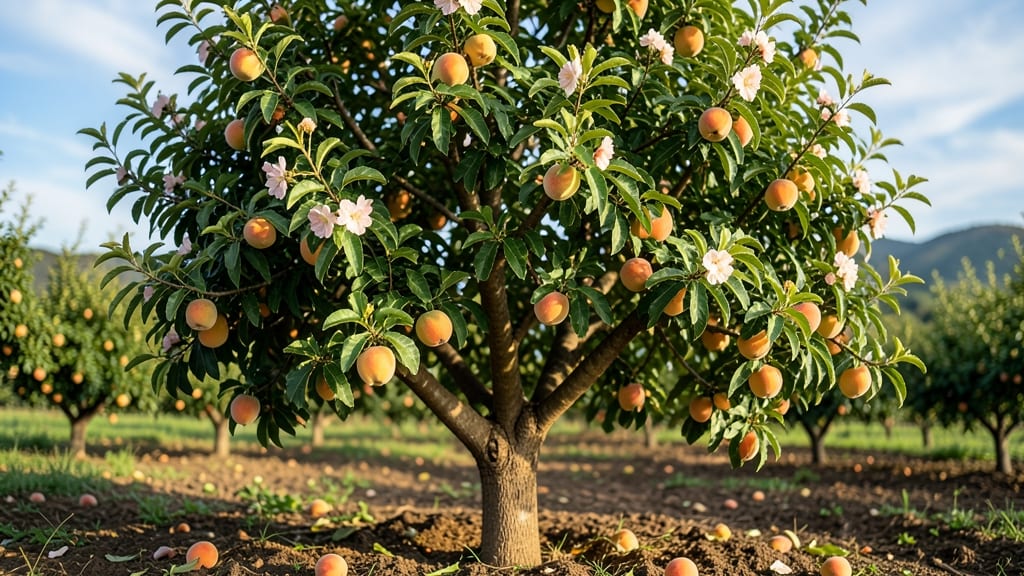
Growing a King Peach Tree 🍑 in Florida’s warm climate hinges on understanding chill hours—the cold exposure they need to fruit properly.
Picture this: you’ve planted your King Peach Tree with high hopes, only to watch it bloom but never set fruit because Florida’s mild winters just don’t cut it. That’s the challenge—300-500 chill hours are typical for this variety, but Florida’s 9b-11 zones often deliver far less.
Here’s the good news: with the right strategies, you can still grow King Peach Trees successfully in Florida. We’ll cover how chill hours work, which low-chill varieties thrive best, and practical tips to boost dormancy—like microclimates, mulching, and smart pruning—to trick your tree into thinking winter lasted longer.
By the end, you’ll know exactly how to coax sweet, juicy peaches from your King Peach Tree 🍑 even in Florida’s frost-free skies—no guesswork, just proven techniques.
What are chill hours and why do Florida King peach trees need them?
Chill hours are a critical concept for fruit tree growers, especially in Florida’s warm climate. These hours measure the number of hours below 45°F (7°C) that a tree experiences during winter dormancy. For King Peach trees, these cold periods trigger flowering and fruit production, but Florida’s mild winters often fall short of their needs.
Traditional peach trees require 500-1,000 chill hours, but Florida King varieties are bred to thrive with fewer chill hours (200-500). This adaptation makes them ideal for USDA Zones 9b-11, where frost is rare.
Without enough chill hours, trees may fail to flower, resulting in no fruit production despite otherwise perfect growing conditions.
Here’s why chill hours matter for King Peach trees in Florida: The lack of winter cold disrupts the tree’s natural dormancy cycle. Without proper dormancy, trees remain metabolically active and may produce weak flowers or no flowers at all.
This is where low-chill varieties shine—they’re genetically adapted to break dormancy with minimal cold exposure.
The science behind chill hours involves hormonal changes in the tree. During cold periods, trees produce florigen, a hormone that signals buds to develop into flowers. In Florida’s warm winters, this process often doesn’t complete, leaving trees in a state of limbo.
For King Peach trees, selecting varieties with 200-300 chill hours can make the difference between a failed harvest and a bountiful one.
Florida’s climate presents unique challenges because of its lack of seasonal temperature drops. Unlike northern states, where peach trees naturally accumulate chill hours, Florida’s consistent warmth can confuse the tree’s internal clock. This is why microclimate manipulation and artificial chill methods are often necessary to coax these trees into producing fruit.
| Factor | Florida King Peach Trees | Traditional Peach Trees |
|---|---|---|
| Chill Hours Needed | 200-500 hours | 500-1,000 hours |
| Dormancy Trigger | Minimal cold exposure | Extended winter chill |
| Flowering Reliability | Consistent with proper care | Unreliable without chill |
| USDA Zone Suitability | 9b-11 (frost-free) | 3a-8a (colder zones) |
| Harvest Window | April-June (year-round) | June-August (seasonal) |
Understanding chill hour requirements helps you choose the right King Peach variety for your Florida garden.
For example, a tree requiring 300 chill hours may still struggle in Zone 10b, where winters rarely drop below 45°F. In contrast, varieties bred for 200 chill hours are more forgiving and can thrive even in warmer microclimates.
If you’re planting a King Peach tree in Florida, prioritize varieties labeled as low-chill or tropical-friendly. These trees are genetically modified to break dormancy with minimal cold exposure, making them ideal for Florida’s warm winters.
Always check the chill hour range on the tag or from the nursery to ensure compatibility with your local climate.
For gardeners in coastal Florida, where temperatures rarely drop, even 300 chill hours may be challenging to achieve naturally. In these cases, artificial chill methods, like strategic pruning or mulching, can help simulate the dormancy signal the tree needs.
These techniques won’t replace natural chill hours entirely but can boost flowering success.
One common misconception is that King Peach trees don’t need chill hours at all. While they require far fewer hours than traditional peaches, they still need some cold exposure to trigger flowering.
Skipping this step can leave you with a beautiful tree but no fruit, which is why understanding your local chill hour accumulation is essential.
To maximize your chances of success, monitor your local chill hour accumulation using tools like the USDA Chill Hour Calculator. This data helps you select the right variety and plan for supplemental chill methods if needed.
With the right approach, you can enjoy homegrown King Peaches even in Florida’s warmest regions! 🌱
Top 5 Florida-friendly King Peach varieties with low chill hour requirements
Florida’s warm winters make growing traditional peach trees tricky, but King Peach varieties with low chill hour requirements (300-500 hours) thrive here. These varieties adapt to Florida’s climate while delivering sweet, juicy fruit perfect for home orchards. Let’s explore the best options for your region.
Choosing the right variety ensures consistent flowering and fruit production. The Florida King line was specifically bred to handle mild winters and high humidity, making them ideal for USDA Zones 9b-11. Each variety balances flavor, yield, and disease resistance—critical factors for Florida gardeners.
Florida King Peach Varieties: Pros & Cons
Chill Hours: 300-350
Pros: Early ripening, disease-resistant, sweet flavor
Cons: Smaller fruit size, moderate yield
Chill Hours: 350-400
Pros: Large fruit, high yield, firm texture
Cons: Needs cross-pollination, slightly tart when unripe
Chill Hours: 400-450
Pros: Freestone pit, excellent canning, uniform ripening
Cons: Longer maturation, sensitive to humidity
Chill Hours: 300-325
Pros: Ultra-low chill, drought-tolerant, early bearing
Cons: Small fruit, limited availability
Chill Hours: 450-500
Pros: Best flavor, long shelf life, resistant to cracking
Cons: Highest chill need, requires pruning
For home gardeners in Central Florida, Florida King 1 and Florida King 4 are top picks due to their low chill hour requirements (300-350 hours). These varieties consistently produce sweet, juicy peaches even in mild winters.
In South Florida, where chill hours drop below 300, Florida King 4 often outperforms others.
If you’re aiming for commercial-scale production, Florida King 2 and Florida King 5 deliver higher yields and larger fruit, though they require slightly more chill hours.
Pairing these with cross-pollinating varieties ensures better fruit set. For example, planting Florida King 2 alongside Florida King 1 can boost yields by up to 30%.
Local growers in Orlando and Tampa swear by Florida King 3 for its freestone pits, which make peaches ideal for canning and preserving. This variety also handles Florida’s humid summers better than traditional peaches, thanks to its thicker fruit skins.
Always choose dwarf or semi-dwarf rootstock to simplify maintenance in small home gardens.
When selecting a variety, prioritize local nurseries for healthy, adapted rootstock. Avoid mail-order trees unless they’re certified for Florida’s climate. For instance, UF/IFAS Extension recommends sourcing Florida King varieties from Florida-based nurseries to ensure disease resistance