
Pruning
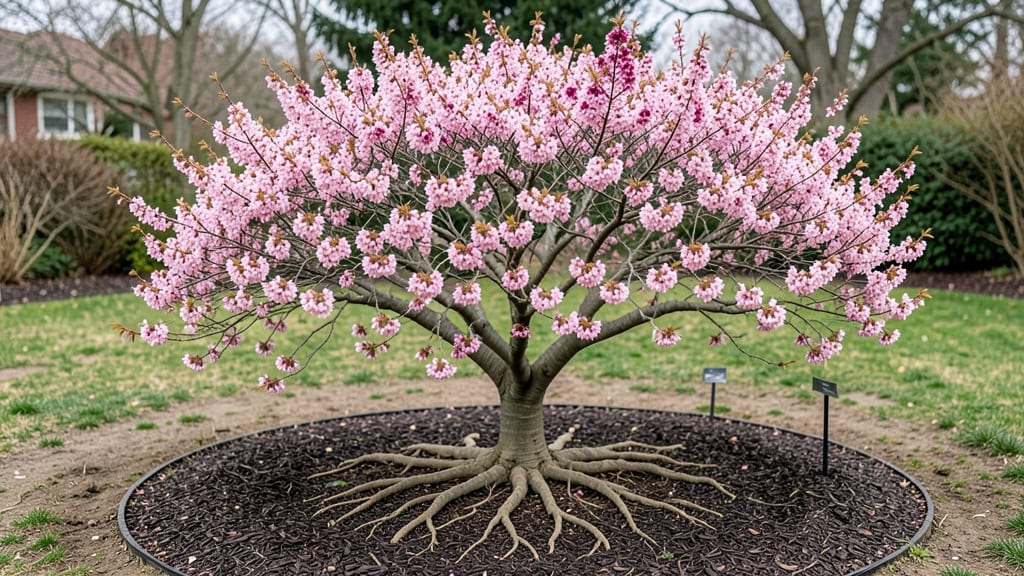
Flowering cherry tree roots spread 1.5 to 2 times wider than the tree’s canopy and penetrate 3 to 5 feet deep, though some may reach deeper for stability. Planting them too close to sidewalks, foundations, or underground utilities risks root damage and structural problems.
Understanding how flowering cherry tree roots behave helps you plan their placement wisely. 🌳 These trees develop a mix of shallow lateral roots (spreading horizontally) and a moderate taproot, which explains why they can lift pavement or crack foundations if planted too near structures.
Sandy soils encourage deeper root growth, while clay soils may force roots to spread wider near the surface. Seasonal growth peaks in spring and early summer, so monitoring root expansion during these periods is key to preventing conflicts with hardscapes or utilities.
When selecting a planting spot, aim to keep the tree at least 15 to 20 feet away from driveways and 25 feet from foundations to give roots room to grow without causing issues.
For urban gardens, consider using root barriers (buried plastic or metal sheets) to guide growth away from vulnerable areas. Regular soil checks and pruning back aggressive roots can also help maintain harmony between your tree and its surroundings.
💡 In This Article
- How Flowering Cherry Tree Roots Grow and Impact Surroundings
- Best Practices for Planting Near Structures and Utilities
How flowering cherry tree roots grow and impact surroundings
Flowering cherry trees develop a fibrous root system with two main components: shallow lateral roots that spread horizontally and a moderate taproot that anchors the tree vertically.
The lateral roots account for about 70-80% of the tree's water and nutrient absorption, which is why they expand aggressively—often 1.5 to 2 times wider than the tree's canopy.
For a mature flowering cherry with a 20-foot canopy, that means roots could spread 30 to 40 feet outward, creating a massive underground footprint. 🌱
The depth of these roots varies based on soil conditions. In sandy soils, the taproot can extend 5 to 7 feet deep as roots seek moisture and stability.
However, in clay-heavy soils, roots often stay shallower (around 3 to 5 feet) but spread wider near the surface, increasing the risk of lifting sidewalks or cracking foundations.
Water absorption also plays a role—drought conditions force roots to grow deeper and wider in search of moisture, while consistent irrigation can encourage more even, controlled growth.
Seasonal growth patterns further complicate root management. Most lateral root expansion occurs in spring and early summer, when the tree is actively blooming and leafing out. During this time, roots can grow 6 to 12 inches per year, depending on soil fertility and water availability.
This rapid growth is why planting near hardscapes or utilities during these seasons can lead to conflicts within just a few years. The tree’s natural tendency to seek stability also means roots will follow the path of least resistance, often growing toward underground structures like pipes or foundations.
One often-overlooked factor is the root-to-shoot ratio—for flowering cherry trees, roots can weigh 2 to 3 times more than the above-ground foliage.
This heavy root mass exerts significant pressure on surrounding soil, which is why even well-established trees can lift concrete slabs or displace drainage systems if planted too close.
The combination of shallow lateral roots and seasonal growth surges makes proactive planning essential for long-term coexistence with your tree and its surroundings. 🌿
Consider this real-world example: A flowering cherry planted 10 feet from a driveway in clay soil may see its roots encroach within 3 to 5 years, causing uneven pavement.
In contrast, the same tree in sandy soil might take 5 to 7 years to reach the same point but could extend roots 2 feet deeper, increasing the risk of damaging underground utilities.
These differences highlight why soil testing and strategic planting distances are critical before installing a flowering cherry.
To mitigate these risks, observe how roots behave in your specific soil type. In clay soils, monitor for surface root mats (visible as raised soil or cracked pavement), while in sandy soils, watch for sudden drainage issues caused by deep-root penetration.
Understanding these patterns allows you to intervene early—whether through root pruning, soil aeration, or adjusting irrigation practices—to protect both your tree and your property.