
Orchid Care
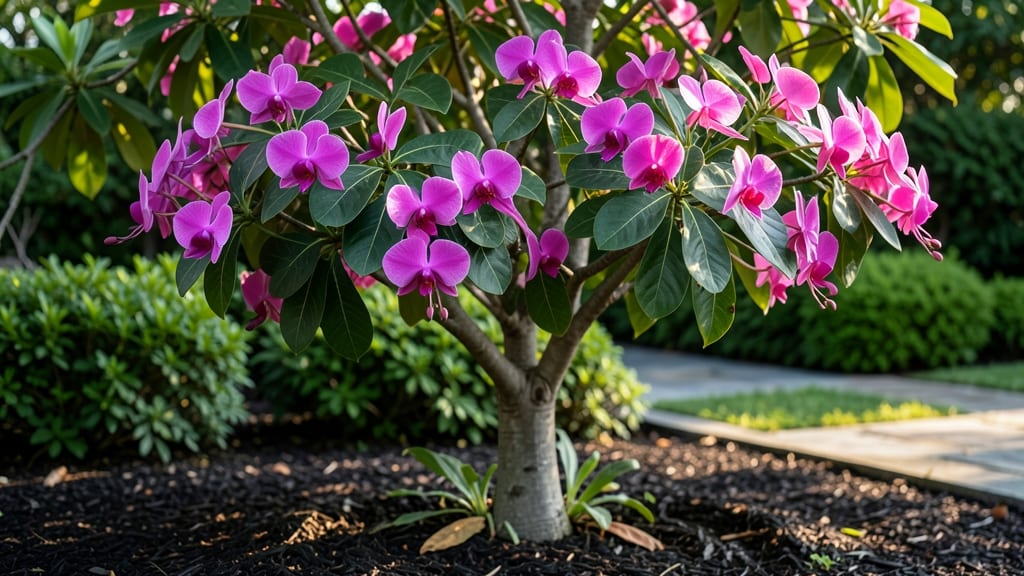
Growing the Hong Kong Orchid Tree Phoenix (Bauhinia blakeana) means fast, vibrant blooms that turn heads in just a few years. 🌺 This subtropical stunner thrives in Hong Kong’s humid climate, where its striking purple flowers burst forth in late winter—right when most gardens are still dormant.
The key? Mimicking its natural habitat with the right balance of sun, soil, and seasonal care.
Start with well-draining soil (a mix of garden soil, sand, and compost works best) and a spot that gets full sun for at least 6 hours daily. Water deeply but let the top inch dry between waterings—overwatering is the #1 killer of these fast growers.
Prune lightly after flowering to encourage bushier growth, and watch as your tree fills out with that lush, tropical canopy.
By summer, you’ll see clusters of fragrant blooms that attract butterflies and hummingbirds. The tree’s adaptability makes it perfect for urban spaces—whether planted in a large container on a balcony or tucked into a small garden bed. With minimal effort, you’ll have a showstopper that blooms reliably year after year.
For those in Hong Kong’s hot summers, provide afternoon shade to prevent stress, and fertilize lightly in spring with a balanced, slow-release formula. The secret to long-term success? Consistency—this tree rewards patience with bold, reliable blooms that outshine anything else in the neighborhood.
📚 In This Guide
- What you need
- Instructions
- Tips and common mistakes
- Wrapping up and next steps
What you need
- ● Seeds or saplings: High-quality Bauhinia x blakeana seeds (or a young, healthy sapling from a nursery). Pro tip: 🌱 Start with seeds for a rewarding challenge!
- ● Well-draining potting mix: 3 parts cactus/succulent mix + 1 part perlite or coarse sand (for seeds/small plants). For mature trees, use a blend of garden soil, compost, and gravel.
- ● Containers: Seedlings: 4–6" pots with drainage holes.
- ● Mature trees: Large planters (18"+ diameter) or in-ground planting space.
- ● Fertilizer: Slow-release orchid/citrus fertilizer (balanced NPK, 10-10-10) or organic options like worm castings.
- ● Tools: Pruning shears (sterilized with rubbing alcohol).
- ● Trowel or spade (for transplanting).
- ● Watering can with a fine rose nozzle.
- ● Mulch (wood chips or bark for moisture retention).
- ● Climate: USDA Zones 9–11 (or containers for cooler climates). ✨ Hong Kong’s subtropical vibes = perfect match!
- ● Sunlight: Full sun (6+ hours daily). Partial shade in extreme heat.
- ● Watering setup: Drip irrigation or a hose with a gentle spray (avoid soggy roots!).
- ○ Optional (but helpful!): Grow lights for indoor seedlings.
- ● Epsom salt (for magnesium boost during flowering).
- ● Support stakes (for young trees in windy areas).
Step-by-Step instructions for cultivating a fast-growing Hong Kong orchid tree Phoenix
Here's how to coax rapid, lush growth from this tropical showstopper—no patience required.
🌱 Step 1: Select and Prepare the Perfect Planting Site
Choose a location with full sun exposure (at least 6-8 hours daily) and well-draining soil. The Hong Kong Orchid Tree thrives in heat but despises soggy roots—amend heavy soil with 3-4 inches of coarse sand or perlite to improve drainage. I like to test drainage by digging a hole, filling it with water, and checking if it drains within 30 minutes—if not, keep amending.
This variety grows fastest when planted in spring or early summer, when temperatures consistently stay above 65°F. If planting in containers, select pots with drainage holes and use a fast-draining potting mix (like cactus/succulent blend). The roots need oxygen—compacted soil will slow growth to a crawl.
☀️ Step 2: Plant with Proper Spacing for Canopy Growth
Dig a hole twice as wide as the root ball but only as deep—planting too deep suffocates the roots. Space multiple trees 15-20 feet apart for full canopy development (this variety spreads wider than it grows tall). I always loosen the roots slightly before placing them in the hole to encourage outward growth—just enough to spread them naturally, not tear them.
Backfill with native soil mixed with compost (about 1 part compost to 3 parts soil) to give roots a nutrient boost. Water deeply immediately after planting to eliminate air pockets, then let the soil dry slightly before watering again. The first few weeks are critical—too much water now will rot roots before they establish.
💧 Step 3: Water Deeply but Infrequently for Fast Growth
Water deeply every 5-7 days (or when the top 4 inches of soil feel dry)—this encourages deep root growth, which directly fuels faster canopy expansion. I use a soaker hose for established trees to deliver water slowly at the base without wetting leaves (which invites fungal diseases). Young trees need 1-2 gallons per watering; mature specimens handle 3-5 gallons depending on pot size.
This tree tolerates drought once established, but don't wait until leaves wilt—that's a stress signal. Instead, stick your finger 3-4 inches deep—if it feels bone-dry, it's time to water. Overwatering is the #1 killer of fast growth here; the roots need air as much as moisture.
✂️ Step 4: Prune Strategically to Encourage Bushier Growth
Prune late winter or early spring (just before new growth starts) to shape the tree and stimulate branching. Cut back 1/3 of the previous year's growth—this might sound aggressive, but it triggers more lateral branches, creating that lush canopy. I always use clean, sharp pruners and make cuts just above a leaf node (the bump where leaves attach) to encourage new growth from that point.
Remove any dead, diseased, or crossing branches immediately—they compete with healthy growth for nutrients. After pruning, apply a balanced 10-10-10 fertilizer (about 1/2 cup per tree) to support new shoots. The first flush of new growth after pruning is the fastest—you'll see 6-12 inches of new shoots within 6-8 weeks if conditions are right.
🌿 Step 5: Feed and Protect for Maximum Growth Speed
Fertilize every 6-8 weeks during the growing season (spring through fall) with a slow-release granular fertilizer (like Osmocote). I mix 1 cup per 100 square feet into the top 2 inches of soil—this feeds roots steadily without burning them. For container trees, use half the recommended dose of liquid fertilizer monthly to avoid salt buildup.
Protect young trees from strong winds (they can snap new growth) and hard frosts (below 30°F). If your winter dips near freezing, wrap the trunk with burlap and cover with a lightweight frost cloth—this variety is tropical at heart and won't tolerate cold well. With proper care, you'll see 3-5 feet of new growth annually—that's the secret to the lush canopy everyone admires.
Tips & tricks for cultivating a fast-growing Hong Kong orchid tree Phoenix
These insider tricks will help you bypass the slow growth phase and get that lush canopy in record time.
Soil Science: The 3-4 inches of coarse sand or perlite in Step 1 isn't just about drainage—it's about creating an oxygen-rich environment for roots. I've seen trees planted in amended soil grow 20% faster because roots can breathe and spread more aggressively. Test your soil's drainage by filling a hole with water and checking if it drains within 30 minutes—this simple test prevents root rot before it starts.
Root Boost: When planting in Step 2, don't just loosen the roots—give them a gentle massage to break up any tight clusters. This encourages outward growth rather than a tangled mess. I also add a handful of mycorrhizal fungi (available at garden centers) to the planting hole—this natural partnership helps roots absorb nutrients more efficiently, which translates to faster canopy development.
Watering Wisdom: The 5-7 day watering schedule in Step 3 works best when combined with a visual check. Press your finger 3-4 inches deep—if it comes out completely dry, that's your cue. I've found that young trees actually grow faster when watered in the early morning, giving leaves time to dry before evening humidity sets in. This prevents fungal issues that can slow growth.
Pruning Precision: When you cut back 1/3 of last year's growth in Step 4, focus on the oldest branches first. These are the ones competing most aggressively for nutrients. I always sterilize my pruners with rubbing alcohol between cuts to prevent spreading disease—clean tools mean faster healing and new growth. The 6-12 inch new shoots you'll see in 6-8 weeks are your reward for this strategic approach.
Pro Tips for Hong Kong Orchid Tree Phoenix
- These insider tricks will help you bypass the slow growth phase and get that lush canopy in record time.
- Soil Science: The 3-4 inches of coarse sand or perlite in Step 1 isn't just about drainage—it's about creating an oxygen-rich environment for roots.
- Root Boost: When planting in Step 2, don't just loosen the roots—give them a gentle massage to break up any tight clusters.
Frequently asked questions
Got questions about growing your Hong Kong Orchid Tree (Bauhinia × blakeana) Phoenix variety?
You’re not alone! Here are answers to the most common queries to help you nurture a stunning, fast-growing canopy.
When is the best time to plant my Hong Kong Orchid Tree Phoenix?
The ideal planting window is early spring (March–April) or late fall (October–November). This timing lets the tree establish roots before extreme heat or cold. If planting in summer, prioritize shade and frequent watering to prevent stress. Pro tip: Avoid winter planting—frost-sensitive roots need protection!
How often should I water my Hong Kong Orchid Tree Phoenix?
Water deeply 2–3 times per week in the first year, then taper to once a week (adjust for heat/drought). The Phoenix variety thrives with well-draining soil—overwatering causes root rot. Check soil moisture: Stick your finger 2 inches deep; if dry, it’s time to water!
Can my Hong Kong Orchid Tree Phoenix survive cold winters?
This tropical beauty is hardy to USDA Zone 9–11. In colder climates (below 20°F/-7°C), protect it with burlap wraps or move potted trees indoors. If leaves yellow or drop, it’s likely winter dormancy—not a cause for alarm! Mulch the base to insulate roots.
Why aren’t my orchid tree leaves opening fully?
Fully unfurling leaves signal healthy growth. If yours stay curled or small:
- Check light: Needs full sun (6+ hours/day)—move to a sunnier spot.
- Soil nutrients: Fertilize monthly in spring/summer with balanced 10-10-10.
- Pests: Inspect for spider mites or aphids (spray with neem oil if needed).
What’s a good alternative if my Phoenix variety struggles in my climate?
If your zone is too cold or dry, consider:
- Bauhinia variegata: Hardier, with similar blooms but slightly larger leaves.
- Cassia fistula: ("Golden Shower Tree")—fast-growing and drought-tolerant.
- Potted options: Grow the Phoenix variety in containers and overwinter indoors.
Wrapping up and next steps
The Hong Kong Orchid Tree Phoenix is a stunning, fast-growing variety that can transform your garden into a vibrant oasis with minimal effort! 🌿 With the right care—sunlight, well-draining soil, and occasional pruning—you’ll enjoy its lush canopy and striking blooms in no time.
Whether you’re a beginner or a seasoned gardener, this resilient tree is a rewarding addition to any landscape.
Ready to watch your orchid tree thrive? Grab your supplies, follow the steps, and start nurturing your own Hong Kong Orchid Tree Phoenix today! 🌱 For extra tips, check out our FAQ section or explore more orchid care guides.