
Watering
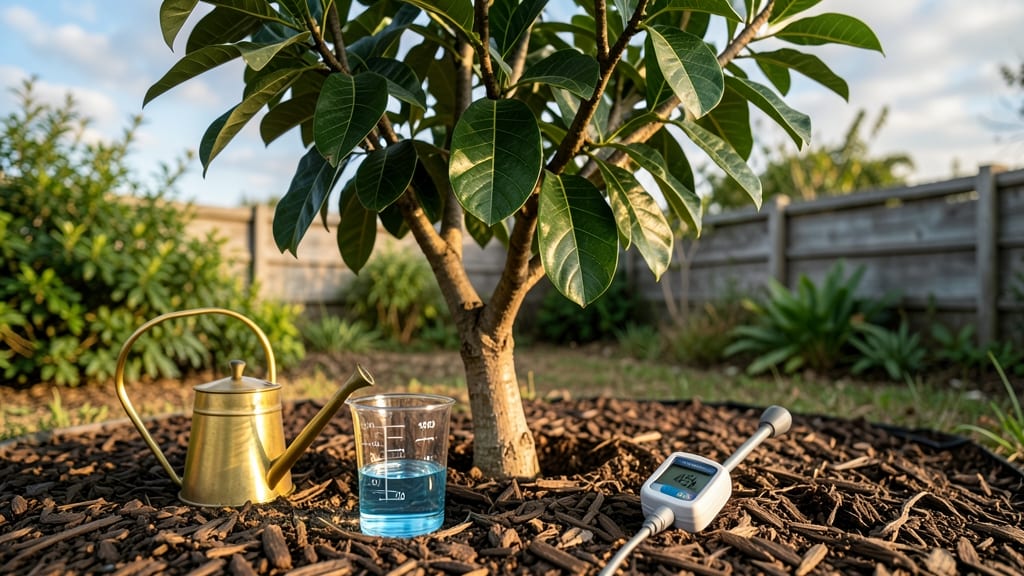
A mango tree needs deep, infrequent watering—about 10-15 gallons every 7-10 days—to thrive, but getting it right can feel like guessing whether to drown or starve your 🥭.
Picture this: your mango tree’s leaves curl at the edges, and no matter how much you water, they stay limp. Or worse, the soil stays soggy for weeks, and the roots start to rot.
The truth? Mango trees hate inconsistency—they need moisture to reach deep roots, but they’ll drown if you water lightly every day.
Young mango trees, still establishing their root systems, need more frequent watering, while mature trees can handle longer dry spells. But here’s the catch: climate, soil type, and even the season change the rules. A summer drought demands extra care, while winter slows water needs almost to a trickle.
Below, I break down the exact watering schedule for every growth stage, seasonal tweaks, and how to spot when you’re overdoing or underdoing it—so your mango tree stays lush, fruitful, and stress-free.


Mango tree watering requirements by growth stage: seedling to mature tree
Watering a mango tree isn't one-size-fits-all—its needs change dramatically from a seedling to a mature fruit-bearing tree. Young trees develop delicate root systems that demand consistent moisture, while established trees store water and prefer deep, infrequent watering.
Understanding these stages helps prevent transplant shock and maximizes fruit production. Let's break down the science-backed watering schedule for each phase.
Your mango seedling (first 12 months) requires the most attention. During this critical period, roots spread aggressively but are shallow, making them vulnerable to drying out. Overwatering here causes root rot, while underwatering stunts growth.
The key is maintaining even soil moisture—never letting the top 2 inches dry out. I recommend watering every 3-4 days in hot climates or daily in containers during peak summer heat.
| Growth Stage | Water Frequency | Amount per Session | Key Considerations |
|---|---|---|---|
| Seedling (0-12 months) | Every 3-4 days | 2-3 gallons | Shallow roots; keep top 2" moist |
| Young Tree (1-3 years) | Every 5-7 days | 5-8 gallons | Deeper roots; water to 12" depth |
| Mature Tree (4+ years) | Every 10-14 days | 15-25 gallons | Established roots; deep watering |
| Note: Adjust for climate—doubling in summer, halving in winter | |||
When your mango tree reaches the young tree stage (years 1-3), its roots begin extending deeper—sometimes reaching 3-4 feet by year 3. This means you can gradually reduce frequency but increase volume per watering.
Aim to water every 5-7 days, delivering 5-8 gallons per session. The goal is to encourage roots to seek moisture deeper in the soil, building resilience against drought.
During the flowering phase (typically years 3-5), your mango tree becomes more sensitive to water stress. Sudden changes in moisture can cause blossom drop, reducing fruit set. I've found that maintaining a consistent schedule—watering at the same time each week—helps stabilize flowering.
Increase water slightly during this period, as the tree needs energy for fruit development.
The fruiting stage (years 5+) is when your mango tree's water needs stabilize. With a mature root system, it can store moisture and withstand short dry periods. However, during fruit development, deep watering every 10-14 days ensures juicy, high-quality mangoes.
I recommend using a soaker hose or drip irrigation to deliver water directly to the root zone, minimizing evaporation.
One common mistake I see is overwatering mature trees. While they need more total water, frequent shallow watering encourages weak, surface roots. Instead, focus on deep watering sessions that penetrate 12-18 inches into the soil.
Use a soil moisture meter to check—water only when the top 6 inches are dry. This mimics natural rainfall patterns and strengthens the tree's drought resistance.
Seasonal adjustments are critical. In summer months, increase watering frequency by 30-50% to compensate for higher evaporation rates. Conversely, during winter dormancy, reduce watering to once every 3-4 weeks unless your region experiences freezing temperatures.
Always water in the early morning to prevent fungal diseases that thrive in wet foliage.
Pro tip: Mulch around your mango tree with 3-4 inches of organic mulch (like wood chips) to retain moisture and regulate soil temperature. This reduces watering needs by 20-30% while also suppressing weeds.
Just keep mulch 6 inches away from the trunk to prevent rot. For container-grown mango trees, water every 5-7 days regardless of stage, as pots dry out faster.
Remember, every mango tree is unique. Observe your tree's leaf color, growth rate, and fruit development to fine-tune your watering approach. A healthy mango tree will have deep green leaves and firm, glossy fruit—these are your best indicators of proper hydration.
With the right watering strategy, your mango tree will thrive from seedling to fruit-bearing giant! 🥭💧
Seasonal watering schedule for mango trees: what changes each month
Your mango tree thrives on consistency, but its water needs shift dramatically with the seasons. In tropical climates, monsoons demand drainage solutions, while temperate zones face winter dormancy challenges. The key? Adjusting water volume and frequency based on soil moisture, temperature, and growth phases.
Too much water in winter can rot roots, while summer drought stress causes leaf curl and fruit drop.
Start by testing your soil moisture 2-3 inches deep—stick your finger in; if it feels dry, it's time to water. Young trees need more frequent hydration, while mature trees prefer deep watering every 7-10 days.
Let’s break down the monthly adjustments for each climate type to keep your tree healthy year-round.
- Spring (March-May): Increase water as new leaves emerge. Water 2-3x weekly in pots, deep soak weekly for ground-planted trees. Focus on root zone hydration to support flowering.
- Summer (June-August): Daily deep watering in extreme heat (10-15 gallons). Mulch heavily to retain moisture. Watch for leaf curl—sign of drought stress.
- Monsoon Season (varies): Reduce watering to prevent root rot. Ensure well-draining soil with raised beds or gravel layers if needed.
- Fall (September-November): Taper to bi-weekly watering as temps drop. Focus on fruit maturation—avoid overwatering before harvest.
- Winter (December-February): Minimal watering (monthly). Let soil dry slightly between waterings. Protect roots with mulch in frost-prone areas.
In tropical climates, summer watering might require daily checks, especially during fruit development. Use a moisture meter to avoid guesswork—mango roots hate soggy soil. For subtropical zones, adjust for cooler winters: reduce watering when nights dip below 50°F.
In temperate climates, winter care is critical—overwatering can kill semi-dormant roots.
Always water at the base of the tree, not the leaves, to prevent fungal diseases like anthracnose. A drip irrigation system 6 inches from the trunk delivers water efficiently.
For container-grown mangoes, empty saucers after watering to mimic outdoor drainage. These adjustments will keep your tree fruitful and resilient through every season.
Pro tip: Mulch with wood chips (3-4 inches deep) to regulate soil temperature and moisture. Replenish mulch annually—it breaks down and loses effectiveness. Pair this with seasonal pruning to improve airflow and reduce water waste on dense foliage.
Watch your mango tree’s leaves for clues: Yellowing edges signal underwatering, while dark, mushy spots mean overwatering. Adjust your schedule monthly based on these visual cues—your tree will reward you with sweeter fruit and lusher growth. 🌿💧🥭