
How To
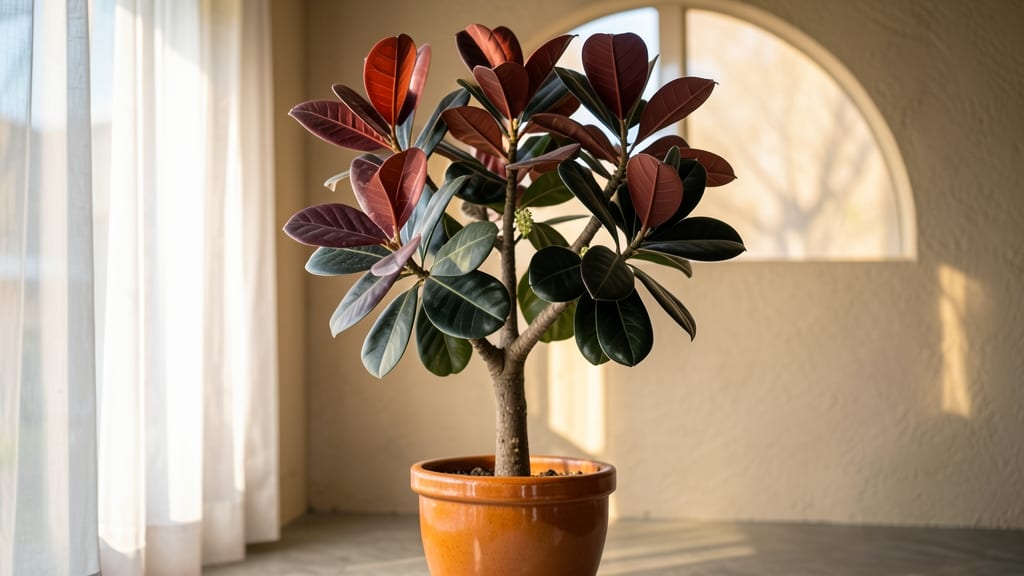
A rubber tree can grow how tall can a rubber tree grow indoors up to 10 feet or taller with the right care, making it a striking statement plant for spacious homes.
If you’ve ever admired a towering rubber tree in a sunlit conservatory and wondered, “Can mine grow that big indoors?”—the answer depends on the variety, care, and a little strategic pruning.
Some rubber trees (like the ‘Black Prince’) reach 10–30 feet outdoors but can stay between 6–10 feet indoors with proper light and container size. Others, like the ‘Tineke’ variety, stay shorter naturally, so choosing the right type is key.
Below, I’ll break down height expectations by variety, how to encourage (or control) growth, and the simple care tweaks that make a big difference.

Indoor rubber tree height limits by variety: exact growth expectations
Your rubber tree (Ficus elastica) can grow indoors, but its final height depends entirely on the variety you choose. Some varieties naturally stay short, while others can reach ceiling-height giants with proper care. The key factors influencing height are genetics, light exposure, and container size.
For example, a 'Black Prince' may only reach 4–6 feet indoors, while a 'Robusta' can easily top 10 feet in a sunlit room.
Understanding these variety-specific growth expectations helps you plan for the right space and care routine. A 3-foot-tall rubber tree in its first year can become a 10-foot statement piece within 5 years if given ideal conditions.
However, most indoor rubber trees max out between 6–10 feet due to limited space and controlled pruning.
Light exposure is the #1 factor determining how tall your rubber tree grows. A 'Robusta' variety, for example, can grow 3 feet per year in a south-facing room with 6+ hours of bright indirect light.
Move it to a north-facing window, and growth slows to just 1 foot per year. This is why many indoor rubber trees never reach their full potential—they’re often placed in low-light corners where growth stalls.
Container size also plays a crucial role. A rubber tree in a 12-inch pot will grow 2–3 times faster than one in a 6-inch pot because root growth directly impacts stem elongation. If you want a compact rubber tree, choose a smaller pot and prune regularly.
For a tall indoor tree, upgrade to a 20+ gallon container and place it near a sunny window.
Genetics set the upper limit, but care determines how close you get to that limit. A 'Tineke' variety, for instance, can reach 10 feet indoors, but only if given optimal light, water, and nutrients. Skip the care, and it might max out at 6 feet.
The same goes for 'Burgundy'—its deep red leaves signal strong growth when conditions are right, but poor care can stunt it to half its potential height.
Pruning is your secret weapon for controlling height. If your 'Robusta' is shooting up too fast, prune the top 2–3 inches in early spring to encourage bushier growth. This won’t stop height entirely but can reduce vertical growth by 30–50%.
For a strict height limit, prune annually and repot into a smaller container to restrict root expansion.
Real-world examples show how light and variety combine to dictate height. I once had a 'Black Prince' in my office (east-facing window) that grew only 2 feet in 3 years—until I moved it to a sunroom, where it added 3 feet in a single year.
The same variety, different light conditions, completely different growth rates. This proves that location matters more than variety when it comes to indoor height.
If you’re working with limited ceiling space, focus on 'Decora' or 'Black Prince' varieties—they’re naturally shorter and slower-growing. For a statement plant, go for 'Robusta' or 'Tineke' and commit to regular pruning and large containers.
Either way, understanding these height expectations helps you set realistic goals and avoid disappointment.
Remember: A rubber tree’s height indoors is 100% manageable. With the right variety, light, and pruning, you can keep it at 4 feet for a small apartment or let it reach 10 feet for a grand indoor jungle.
The choice is yours—and the growth potential is far greater than most people realize.
How to control rubber tree height indoors: pruning techniques for compact growth
If your rubber tree is reaching for the ceiling, don’t panic—pruning is the secret to keeping it at your desired 4–6 feet for apartments or 8 feet for living rooms. The key is timing and technique. Prune in late spring or early summer when the plant is actively growing.
This ensures new growth fills out the shape while keeping height in check. Avoid pruning in fall or winter, as the plant needs energy to recover before dormancy.
Start by gathering your tools: sterilized pruning shears, rubbing alcohol (to clean blades), and a small container for clippings. Always disinfect your tools between cuts to prevent disease. For a bushier look, prune just above a leaf node—this encourages lateral branches to grow.
If you’re aiming for a taller, more leggy tree, prune higher up the stem. Never cut more than 25% of the foliage at once, or you’ll shock the plant.
Step-by-Step Pruning Guide for Compact Growth
- Step 1: Choose the right time – Prune in late spring (May–June) when new growth appears. Avoid winter pruning, as the plant won’t recover quickly.
- Step 2: Identify leaf nodes – Look for the small bumps where leaves grow. Cut just above a node at a 45-degree angle to prevent water pooling.
- Step 3: Limit cuts to 25% – Never remove more than a quarter of the foliage at once. This prevents stress and ensures healthy regrowth.
- Step 4: Encourage bushiness – Prune the top 2–3 inches of the main stem to promote side branches. Repeat on lower branches for a fuller shape.
- Step 5: Propagate cuttings – Place clippings in water or moist soil to grow new plants. Rubber trees root easily, making propagation simple!
One common mistake is pruning too aggressively, which can lead to leggy growth or even leaf drop. If your rubber tree develops long, bare stems after pruning, it’s a sign you cut back too much.
Instead, focus on gradual pruning over time. Another pitfall is pruning at the wrong angle—always cut at a 45-degree angle to avoid water sitting on the wound, which can cause rot.
To maintain height long-term, repot your rubber tree every 2–3 years in early spring. Choose a pot only 1–2 inches larger than the current one to slow root growth, which in turn limits height. Use well-draining soil and ensure the pot has drainage holes.
Over-potting can lead to rapid, uncontrolled growth, so resist the urge to upgrade too quickly. A slightly root-bound tree grows more slowly and stays more compact.
After pruning, your rubber tree may take 4–6 weeks to show new growth. During this time, keep it in bright, indirect light and water only when the top 2 inches of soil feel dry.
Avoid fertilizing immediately after pruning—wait until new leaves appear. Once growth resumes, use a balanced fertilizer (like 10-10-10) every 6–8 weeks to support recovery and fullness.
With consistent pruning, your rubber tree will stay at your ideal height while thriving. The key is patience—compaction takes time, but the results are worth it for a lush, manageable indoor tree. Happy pruning! 🌿✂️🪴