
How To
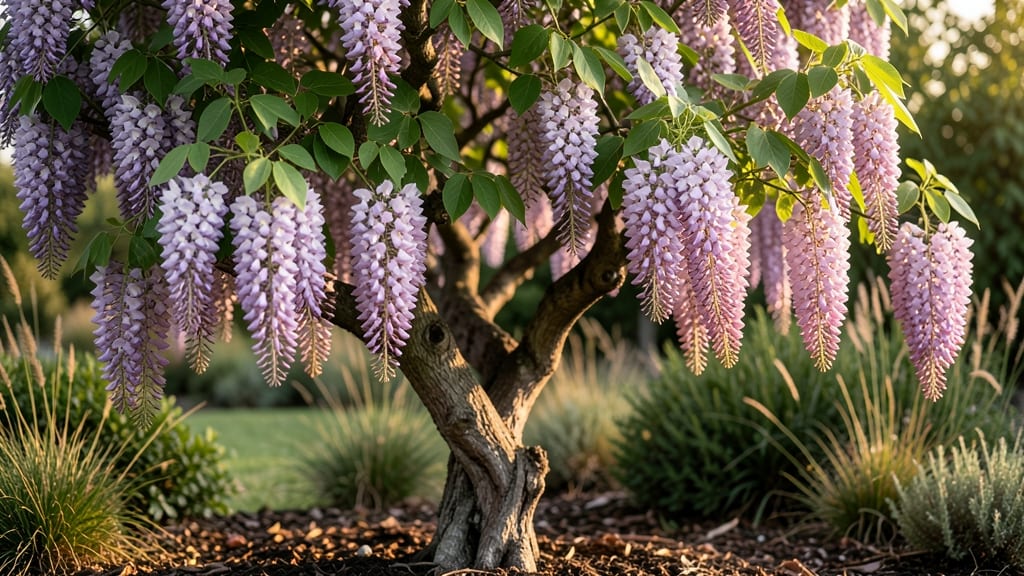
Wisteria tree height by variety: from dwarf to giant climbers
If you're planning to add wisteria to your garden, understanding wisteria tree height by variety is essential. These stunning climbers can transform your outdoor space with their fragrant blooms, but their mature sizes vary dramatically—from compact vines to 30-foot giants.
Choosing the right variety ensures your garden design stays balanced and manageable. Let’s explore the height ranges of the most popular wisteria types so you can pick the perfect fit for your space.
Wisteria varieties fall into three main categories based on origin: Chinese wisteria (Wisteria sinensis), Japanese wisteria (Wisteria floribunda), and American wisteria (Wisteria frutescens). Each group has distinct growth habits, with some varieties staying relatively tame while others become architectural giants.
For example, the Chinese wisteria often grows taller than its Japanese counterparts, while American wisteria tends to be more manageable in height but can still sprawl widely. Let’s dive into the specifics.
🌸
| Variety | Mature Height | Growth Rate | Best For |
|---|---|---|---|
| Chinese Wisteria (Wisteria sinensis) | 20-30 ft | Fast (3-5 ft/year) | Large arbors, pergolas |
| Japanese Wisteria (Wisteria floribunda) | 15-25 ft | Moderate (2-4 ft/year) | Trellises, fences, large trees |
| Amethyst Falls (Wisteria floribunda) | 10-15 ft | Moderate (1-3 ft/year) | Small gardens, containers |
| Black Dragon (Wisteria floribunda) | 15-20 ft | Fast (3-4 ft/year) | Large trellises, pergolas |
| Royal Purple (Wisteria floribunda) | 12-18 ft | Moderate (2 ft/year) | Arbors, patio covers |
| American Wisteria (Wisteria frutescens) | 10-20 ft | Slow to moderate (1-2 ft/year) | Native gardens, fences |
| Prolific (Wisteria floribunda) | 15-25 ft | Fast (3-5 ft/year) | Large structures, privacy screens |
| Jako (Wisteria floribunda) | 10-15 ft | Moderate (1-2 ft/year) | Small spaces, containers |
| Longissima (Wisteria sinensis) | 25-30 ft |
How fast does wisteria grow? Height progression by yearIf you're planning to add wisteria to your garden, understanding its growth rate is crucial. Wisteria is a fast-growing vine, but its speed and final height vary dramatically by variety. In just 5 years, some types can reach heights that will dwarf your patio or climb your house! Let’s break down what to expect year by year. Most wisteria varieties start slow but gain momentum after the first year. By year 3, you’ll see dramatic changes in height, especially if you’re growing Wisteria floribunda (Japanese wisteria) or Wisteria sinensis (Chinese wisteria). Without proper pruning, these vines can become unmanageable quickly. Let’s explore the timeline so you can plan accordingly.
If you’re growing wisteria in a small garden, don’t panic! With regular pruning and proper support, you can keep it at a manageable size. For example, Wisteria brachybotrys (American wisteria) grows slower and stays more compact, making it ideal for patio trellises. Always prune in late winter before new growth begins to avoid cutting off potential blooms. Remember, wisteria’s growth rate depends on climate, soil quality, and sunlight exposure. In USDA zones 6-9, it thrives with 6-8 hours of sun daily. If you’re in a cooler zone, growth may slow slightly, but it will still reach impressive heights over time. Plan your garden layout with these expectations in mind! For those with limited space, consider training your wisteria to climb a vertical trellis or arbor instead of letting it sprawl. This not only controls height but also creates a stunning vertical display of fragrant blooms. With the right approach, you can enjoy wisteria’s beauty without sacrificing your garden’s layout. 🌿 |