
Trees
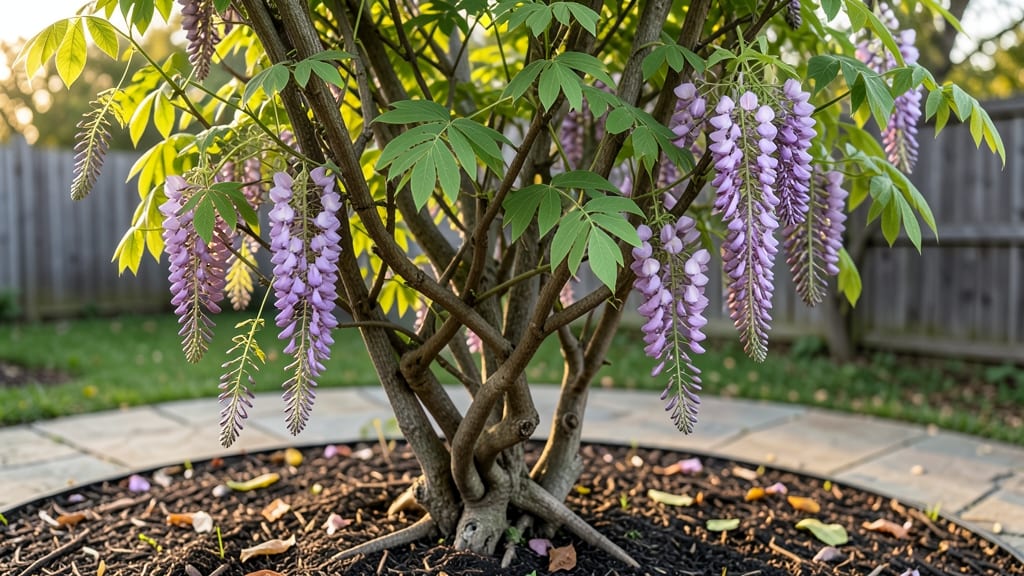
The growth rate of a wisteria tree is nothing short of breathtaking—these vines can shoot up 10 feet or more per year once established, surprising even the most experienced gardeners.
Picture this: You plant a wisteria vine in spring, and by summer, it’s already scaling your trellis like a ninja 🌸.
The first few years are slow, but by year three, those vines can climb 30 feet if given the right conditions—and that’s why timing your pruning becomes the key to keeping it under control.
Whether you’re dreaming of a fragrant purple canopy or worried about unruly growth, understanding how fast wisteria climbs—and what factors speed it up or slow it down—will help you shape it into the showstopper you want.
In this guide, I’ll break down the year-by-year growth, the secrets to encouraging (or controlling) its rapid expansion, and exactly when you can expect those first breathtaking blooms.


Wisteria growth rate by year: how fast does it climb and spread?
Wisteria is one of the fastest-growing vines you can plant, capable of climbing 10-15 feet per year under ideal conditions. Its aggressive growth makes it perfect for quick trellis coverage, but this speed can overwhelm unprepared gardeners.
The Chinese wisteria (Wisteria sinensis) grows the fastest, while Japanese wisteria (Wisteria floribunda) and American wisteria (Wisteria frutescens) mature slightly slower but still impress with their rapid expansion.
In its first year, expect your wisteria to grow 2-3 feet if planted in spring. By year two, it can double that, reaching 6-10 feet with proper support and care.
The real magic happens in years three to five, when vines can extend 15-25 feet annually if given full sun and regular pruning. Many gardeners report their wisterias outgrowing their trellises within 3-4 years if left unchecked!
Here's a quick look at what to expect each year with proper care and support:
One of my favorite gardening memories is watching a Chinese wisteria I planted as a sapling completely cover a 12-foot arbor in just 3 years. The sheer volume of fragrant purple blooms in spring made it worth every inch of growth!
However, I quickly learned that regular pruning is essential—otherwise, the vines can become unmanageable and even damage structures.
The Japanese wisteria tends to grow slightly slower but produces longer, more abundant flower racemes (up to 20 inches!). Gardeners often report their Japanese varieties take 4-5 years to reach full bloom potential, but the payoff is worth the wait.
I've seen stunning 15-foot cascades of lavender flowers that transform any garden into a romantic retreat.
American wisteria is the most hardy of the three and grows well in USDA zones 5-9. While it climbs at a moderate pace compared to its Asian cousins, it's more drought-tolerant and requires less maintenance. Many gardeners in drier climates prefer it because it doesn't demand as much water once established. That said, it still needs 6+ hours of sunlight daily to reach its full growth potential.
One common mistake I see is assuming wisteria will climb anything. While it's a vigorous vine, it needs proper support from day one. I recommend installing a strong trellis, arbor, or pergola at planting time.
Without support, the vines will sprawl along the ground, becoming a tangled mess. Even worse, they can strangle nearby trees or shrubs if given the chance!
For maximum growth, plant your wisteria in well-draining soil with a pH between 6.0-7.0. Amend heavy clay with compost to improve aeration, and avoid planting in low-lying areas where
When will your wisteria bloom? Factors that speed up or delay flowering
Wisteria is famous for its breathtaking cascades of flowers, but patience is key—some varieties take 3 years to bloom, while others need 5+ years of careful nurturing. The difference often comes down to sunlight exposure, pruning techniques, and even the soil type you're growing in.
Let's break down the critical factors that determine when your wisteria will finally reward you with those fragrant clusters.
First, understand that wisteria flowers only appear on old wood, meaning last year's growth.
If you prune too aggressively in the wrong season, you might remove next year's blooms before they even form. Japanese wisteria often blooms earlier than Chinese wisteria, sometimes as early as Year 2 with ideal conditions.
But even then, delays can happen if the plant isn't getting what it needs.
If your wisteria isn't blooming by Year 4, don't panic—it might just need a soil boost. Amend heavy soil with compost or sand to improve drainage, and consider a balanced fertilizer (like 10-10-10) in early spring.
I once had a wisteria that refused to bloom for 6 years until I switched to a south-facing trellis and added organic matter to the soil. The difference was dramatic!
Another common mistake is over-pruning. Wisteria needs strong, established branches to produce flowers. Limit pruning to 1/3 of the plant annually, and always keep at least 3-4 main stems to support future blooms. Thin out crowded vines in late winter to improve airflow and sunlight penetration.
For faster results, choose a pre-trained wisteria from a nursery—these plants often bloom within 1-2 years of planting because they already have established wood. If you're starting from seed, expect a 5+ year wait for flowers, as seedlings need time to mature.
Patience pays off, but the right conditions can cut that timeline significantly.
Remember, wisteria is a long-term investment. With the right sunlight, soil, and pruning care, you'll be enjoying those iconic purple cascades in no time. And once they bloom, the fragrance alone makes the wait worthwhile! 🌸