
How To
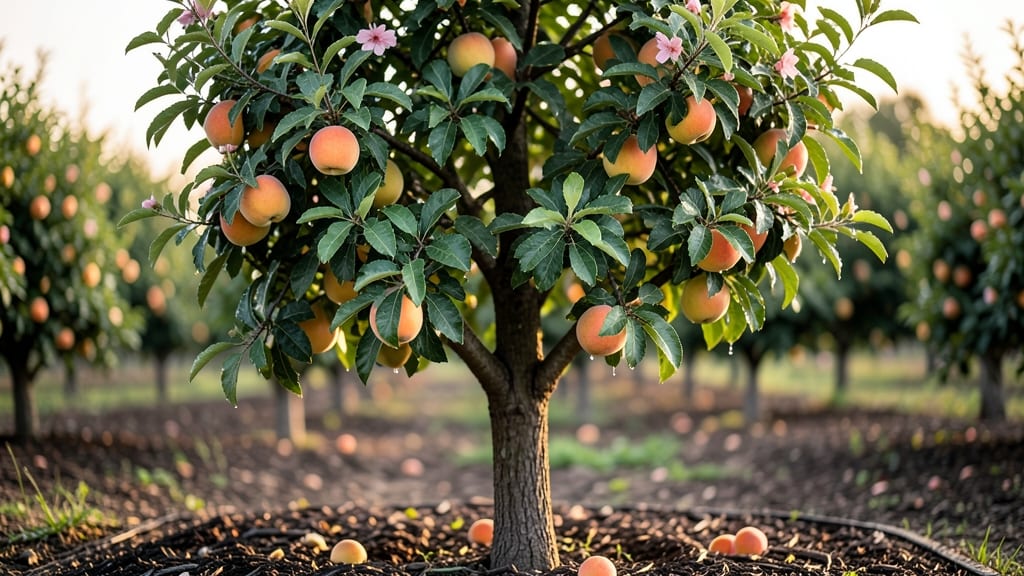
A peach tree can grow anywhere from 6 feet to over 25 feet tall, depending on the variety and care you provide.
If you’ve ever dreamed of picking fresh peaches but worried about space, don’t rule out these fruit-bearing trees just yet. The right variety—whether a compact dwarf or a standard—can fit perfectly into your yard, patio, or even a large container.
Knowing the exact height range upfront saves you from overestimating or underestimating your space.
Standard peach trees reach their full height of 20 to 30 feet within a few years, while dwarf varieties stay manageable at 6 to 12 feet. The key to controlling their growth lies in pruning, spacing, and choosing the right cultivar for your climate and container size.
In this guide, I’ll break down the height differences between varieties, share pruning tips to keep your tree in check, and recommend the best compact options for small spaces. You’ll also learn how sunlight, water, and seasonal care influence how tall—or short—your peach tree grows.

Peach tree height by variety: standard, semi-dwarf, and dwarf sizes explained
Choosing a peach tree for your garden isn’t just about flavor—it’s about space planning. Standard varieties can reach 20 feet tall, while dwarf varieties stay under 8 feet. Understanding these differences helps you select the perfect tree for your backyard, patio, or even containers.
Let’s break down the mature heights of popular peach varieties so you can make an informed choice.
The height of a peach tree depends on its rootstock type and variety. Standard trees grow the tallest, reaching 15–25 feet at maturity, while semi-dwarf trees typically stay between 10–15 feet.
Dwarf varieties are the smallest, ideal for small spaces, with mature heights of 6–10 feet. Some varieties, like the 'Bonanza' dwarf peach, can even thrive in 5-gallon containers.
| Variety | Rootstock Type | Mature Height (ft) | Growth Rate (ft/year) | Best For |
|---|---|---|---|---|
| Elberta | Standard | 18–22 | 2–3 | Large yards, orchards |
| Redhaven | Standard | 20–25 | 2–3 | Rural properties |
| Sanguinole | Semi-Dwarf | 12–15 | 1.5–2.5 | Suburban yards |
| Bonanza | Dwarf | 6–8 | 1–1.5 | Containers, patios |
| Flavor Grenade | Dwarf | 8–10 | 1–1.5 | Urban gardens |
| Contender | Semi-Dwarf | 10–12 | 1.5–2 | Small backyards |
The growth rate of peach trees also varies by variety. Standard trees like 'Redhaven' grow 2–3 feet per year, while dwarf varieties like 'Bonanza' grow more slowly, adding only 1–1.5 feet annually.
This slower growth makes dwarf trees ideal for container gardening or small spaces where you need fruit quickly without sacrificing long-term space.
If you’re wondering how fast peach trees grow, know that most varieties take 3–5 years to bear fruit. Dwarf trees may fruit slightly earlier due to their compact size and focused energy.
For example, a 'Flavor Grenade' dwarf peach can produce fruit in as few as 2–3 years, while a standard tree might take 5+ years to reach full production.
Another key factor is pruning and training. Even standard trees can be kept smaller with regular pruning, while dwarf trees benefit from espalier techniques to maximize fruit production in tight spaces.
Proper spacing also plays a role—standard trees need 15–20 feet between them, while dwarf trees can thrive with just 8–10 feet of space.
For
How to control peach tree height naturally: pruning, spacing, and training tips
Peach trees can reach impressive heights—some varieties soaring to 20+ feet—but with the right techniques, you can keep them at a manageable size while maximizing fruit production. The key lies in strategic pruning, proper spacing, and smart training methods like espalier.
These methods not only control height but also improve air circulation and sunlight exposure, which are critical for healthy fruit development.
For standard peach trees, maintaining a height of 15–20 feet requires regular pruning, especially during the dormant season (late winter). Meanwhile, dwarf varieties (6–10 feet) thrive with minimal pruning but benefit from annual shaping to encourage bushier growth.
Whether you're working with a backyard orchard or a container-grown tree, these techniques will help you tailor your peach tree’s height to your space.
- Prune standard trees to 15–20 ft in late winter (before buds swell) to remove dead or crossing branches.
- Space standard trees 15–20 ft apart for optimal airflow and sunlight, while dwarfs need only 10–12 ft.
- Use espalier training to grow trees horizontally along fences/walls, reducing height to 6–8 ft while boosting fruit access.
- Thin suckers and water sprouts annually to redirect energy to fruit-bearing branches and prevent overgrowth.
- Fertilize with balanced NPK (10-10-10) in spring and summer to support controlled, healthy growth.
One of the most effective ways to control height is through winter pruning. This is the best time to remove up to 25% of the tree’s canopy, focusing on branches that grow inward or upward.
By opening up the center of the tree, you improve sunlight penetration and reduce the risk of disease from poor air circulation. For young trees, prune to encourage a strong central leader, while mature trees benefit from selective thinning to maintain an open, fruit-bearing structure.
If space is limited, consider espalier training, a method where you train branches to grow flat against a wall or fence. This technique can reduce a peach tree’s height to as little as 6–8 feet while increasing fruit production per square foot.
Start by selecting 3–4 main branches and tying them to a support structure. Over time, you’ll create a fruit-bearing wall that’s perfect for small yards or urban gardens.
Proper spacing is another critical factor in controlling height. Plant standard peach trees 15–20 feet apart to allow for their full growth potential without overcrowding. For dwarf varieties, a spacing of 10–12 feet is ideal, as they naturally stay compact.
Overcrowding leads to competition for nutrients, which can stunt growth and reduce fruit quality. Always plant in well-draining soil with full sun exposure to support healthy development.
Finally, don’t forget about fertilization and watering. A balanced fertilizer (like 10-10-10) applied in spring and summer encourages controlled growth, while deep watering (15–20 gallons weekly) keeps the tree hydrated without promoting excessive height.
By combining these techniques, you’ll have a peach tree that’s both manageable in size and productive in fruit. 🍑