
How To
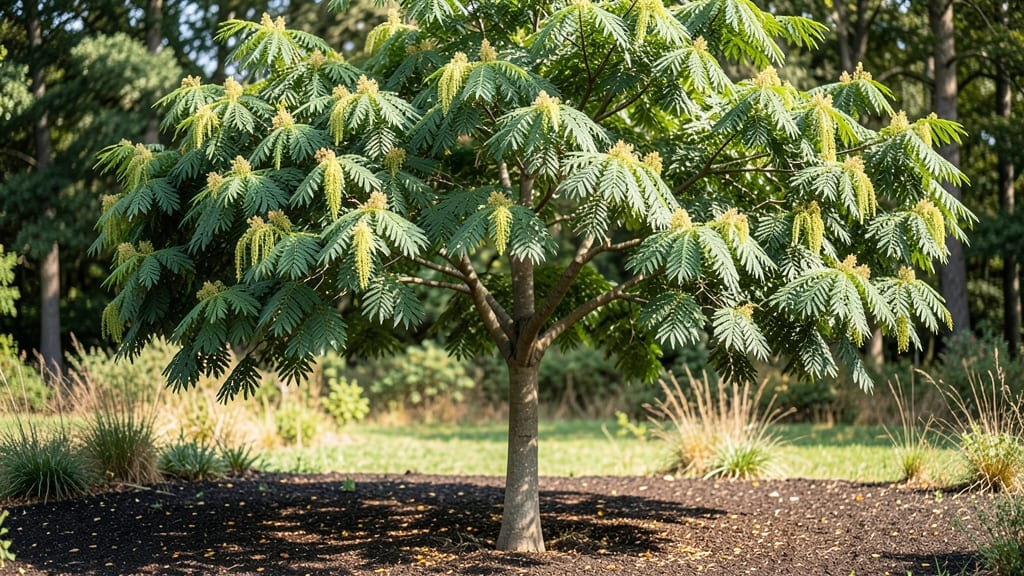
The Tree of Heaven 🌳 can grow to 40–65 feet tall—and it does so with alarming speed, often outpacing even the fastest native trees.
Picture this: a sapling you planted last spring now towers over your garage by summer’s end. That’s the Tree of Heaven’s signature move—rapid vertical growth that leaves gardeners scrambling to contain it before it dominates the landscape.
But here’s the catch: its height isn’t just about genetics. Soil quality, regional climate, and even your local ecosystem play a huge role in how tall it gets.
In humid zones like the Southeast, it can hit 60+ feet, while drier Western regions might cap it at 40 feet.
Below, I’ll break down the exact height ranges by U.S. zone, how fast it grows each year, and the most effective ways to manage its size—whether you’re dealing with an existing tree or just curious before planting.

Tree of Heaven height by region: exact growth limits and climate influence
The Tree of Heaven (Ailanthus altissima) can reach staggering heights, but its mature size depends heavily on your USDA hardiness zone and local climate.
In ideal conditions, this invasive tree often surpasses 60 feet tall, while in cooler or constrained environments, it may max out around 30–40 feet. Understanding these regional variations is key to predicting its spread and managing its impact on your property.
Southern states like Florida and Texas see the most dramatic growth, where humidity and warm winters allow Tree of Heaven to thrive. Meanwhile, in northern zones (USDA 5 and below), growth slows significantly, rarely exceeding 40 feet even at maturity.
Urban environments also play a role—trees in compacted city soil often grow taller and thinner compared to their rural counterparts.
Here’s how the Tree of Heaven’s height varies across key U.S. regions, along with climate factors that influence its growth:
Soil fertility also affects height—nutrient-rich urban soils often produce taller, faster-growing specimens, while poorly drained or rocky soil can stunt growth. In comparison, the Bradford pear, another invasive tree, typically reaches 30–50 feet, making Tree of Heaven’s height a greater challenge for containment.
If you’re in a humid climate like Florida, expect rapid vertical growth, while drier regions like Arizona may see slower, more stunted development. Always consider these factors when assessing whether a Tree of Heaven is right for your landscape—or how to control an existing one.
For gardeners in USDA zones 6–9, the Tree of Heaven’s height can become a liability, especially in urban areas where space is limited.
Its aggressive root system and rapid growth make it difficult to manage once established, so pruning early or removing seedlings is essential to prevent it from reaching its full 60+ foot potential.
One common misconception is that Tree of Heaven grows uniformly across regions. In reality, its height can vary by 20+ feet depending on climate and soil conditions. For example, a tree in Texas may tower over 60 feet, while one in New York might only reach 35 feet.
If you’re dealing with an existing Tree of Heaven, monitor its growth closely—especially in urban environments where it can outcompete native species. Regular pruning and root barrier installation can help limit its height and spread, but removal is often the most effective long-term solution.
🌳
How fast does Tree of Heaven grow? Annual growth rate and early development stages
The Tree of Heaven (Ailanthus altissima) doesn’t just grow—it explodes upward, often adding 3–5 feet per year in ideal conditions. That means a 10-foot sapling can become a 30-foot giant in just three years, outpacing even the fastest-growing native trees like silver maple.
This rapid vertical growth is what makes it such a formidable (and often unwelcome) presence in landscapes.
What’s even more alarming is its root system, which spreads aggressively underground, sometimes 10–15 feet beyond the tree’s canopy. This makes removal difficult, as roots can regenerate from even small fragments left in the soil.
If you’re dealing with a young Tree of Heaven, understanding its growth rate is your best defense against a future headache.
Here’s the breakdown of its year-by-year growth and how pruning or removal can alter its trajectory:
- Year 1: 10–15 feet tall with aggressive root spread—already outcompeting nearby plants.
- Year 2: 20–30 feet—rapid vertical growth accelerates, especially in humid climates.
- Year 3: 30–40 feet—now surpassing many native shade trees like oak or maple.
- Year 5+: 50–65 feet in ideal conditions—taller than a 4-story building.
🌱 Key Factor: Pruning early can reduce height by 20–30%, but roots will still spread.
Many gardeners assume Tree of Heaven grows at a steady pace, but its early years are the most critical. A sapling planted in spring can gain 5 feet by summer if conditions are right—full sun, rich soil, and consistent moisture.
In contrast, a silver maple, a native alternative, typically grows 2–3 feet per year, making Tree of Heaven nearly twice as fast.
Pruning isn’t just about aesthetics—it’s a growth management tool. If you cut back a young Tree of Heaven by 30% in early spring, you can slow its height gain to 2–3 feet per year, but this requires annual maintenance.
Removal is often the only permanent solution, especially if the tree is already 15+ feet tall, as stump regrowth is nearly inevitable without proper treatment.
One common misconception is that Tree of Heaven’s growth slows significantly after maturity. In reality, it continues to add height and width throughout its lifespan, though the rate may decrease slightly in older trees (10+ years).
This is why early intervention is key—once it reaches 20 feet, controlling its size becomes exponentially harder.
For gardeners in USDA zones 6–9, where growth is most aggressive, I recommend monitoring young trees closely. If you’re considering planting one (perhaps for erosion control or shade), be prepared for aggressive pruning or removal within 3–5 years to prevent it from dominating your landscape.
Native alternatives like black walnut or sycamore grow more slowly but offer similar benefits without the invasive risks.
🪴