
How To
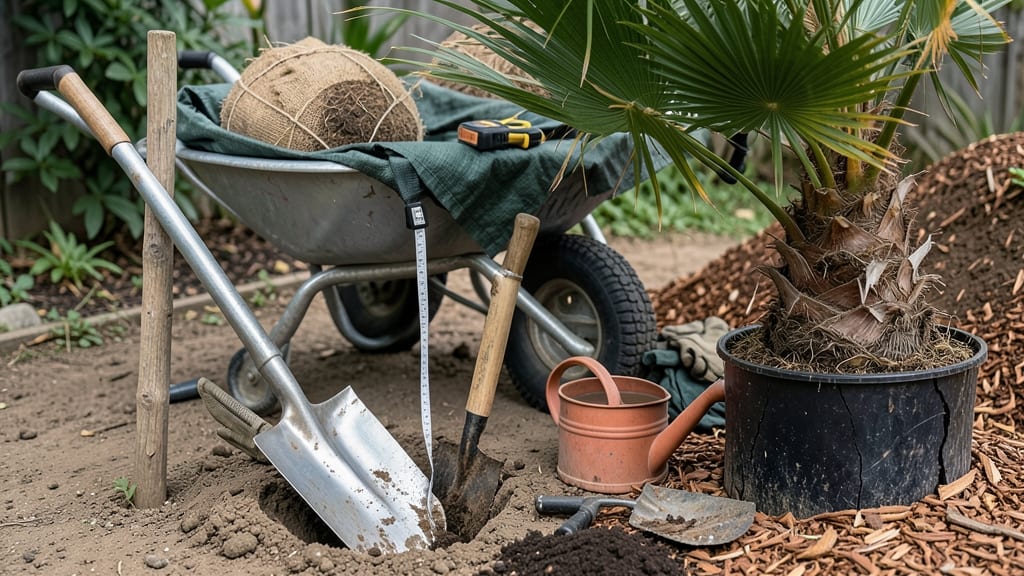
Digging up a palm tree without damaging its roots is all about timing and technique—do it wrong, and you risk losing your tree entirely. ✨ I’ve transplanted palms in Florida’s brutal heat and learned that the secret lies in working during the cooler months (fall or early spring) when the tree is dormant, and the soil is moist but not soggy.
The goal? Preserve that root ball like it’s the most delicate cargo you’ve ever handled.
Start by circling the trunk with a sharp spade at least 12 inches from the stem—deeper for mature palms—and cut straight down to loosen the soil. Then, dig a trench around the root zone, gradually widening it until you can rock the tree gently to free it.
Wrap the root ball in burlap or landscape fabric to protect it during transport, and keep it shaded and watered until replanting. The key to success? Patience—rushing this step is how roots get torn, and that’s how palms fail to thrive after transplanting.
📚 In This Guide
- What you need
- Instructions
- Tips and common mistakes
- Wrapping up and next steps
What you need
- ● Shovel or spade – A heavy-duty digging spade (18–24 inches wide) for breaking through tough soil and roots.
- ● Pruning saw or handsaw – A sharp, curved pruning saw (for cutting thick roots or fronds if needed).
- ● Wheelbarrow or tarp – A large, sturdy wheelbarrow or a 10x10 ft. tarp to transport the tree and soil.
- ● Garden hose or watering can – For keeping roots moist during the process.
- ● Burlap or landscape fabric – A 5x10 ft. piece to wrap the root ball and protect it during transport.
- ● Gloves (heavy-duty) – To shield your hands from sharp roots and rough soil.
- ● Measuring tape – To determine the root ball’s depth and width accurately.
- ● Rake or garden fork – For loosening soil around the perimeter of the root zone.
- ● Root stimulator or mycorrhizal inoculant – Helps encourage new root growth post-transplant.
- ● Tree strap or rope – For securing the tree to a truck or trailer if moving long distances.
- ● Post-hole digger – If you’re planting the palm in a new hole and need to dig deeper.
- ● Wheelbarrow dolly – Makes moving heavy root balls much easier.
- ● Mulch or compost – For amending the soil in the new planting site.
Step-by-Step instructions for digging up a palm tree
Here’s how to move a palm tree without damaging its roots or stressing the plant.
🪴 Step 1: Prepare the Site and Gather Tools
Start by choosing a new planting location that matches your palm’s light and soil needs. Measure the tree’s canopy width to determine the digging area—dig a circle at least 2 feet beyond the drip line (where the fronds end). Gather a shovel, pruners, wheelbarrow, burlap, rope, and a helper—palms are heavy, and this job goes smoother with two people.
Water the palm 2-3 days before digging to keep the soil moist and reduce root breakage. Avoid digging when the ground is frozen or waterlogged—roots tear easily in hard or soggy soil. Clear away debris from the base and mark the tree’s center with a stake to guide your digging.
✂️ Step 2: Prune and Loosen the Roots
Remove any dead fronds or damaged leaves to lighten the load, but leave healthy foliage intact. Use pruners to trim fronds at the base, then tie them into a bundle with rope to reduce wind resistance during transport. Next, make two deep vertical cuts on opposite sides of the root ball, about 12-18 inches deep—this helps separate the roots from the surrounding soil.
Gently work a shovel around the root ball, loosening soil in 1-inch increments to avoid tearing roots. Stop when the root ball lifts slightly—you’ll feel resistance as you near the main taproot. If the tree is large, consider renting a root saw for stubborn roots. Never yank the tree; patience here prevents long-term damage.
💧 Step 3: Lift and Secure the Root Ball
Once the roots are loose, slide a wide tarp or burlap under the root ball and lift gently. If the root ball is too heavy, use a leverage technique: place a board under one side and rock it up slowly. Wrap the root ball tightly in burlap, securing it with rope every 12 inches to keep soil in place during transport.
Keep the root ball moist but not soggy—cover it with a damp towel if moving takes longer than 30 minutes. Avoid exposing roots to direct sun or wind, which causes stress. If the tree is too large for a wheelbarrow, drag it on the tarp or use a dolly with straps to protect the trunk.
🪴 Step 4: Plant the Palm in Its New Home
Dig a hole twice as wide as the root ball and just as deep. Loosen the bottom soil with a fork to encourage root spread. Lower the palm into the hole, ensuring the top of the root ball sits 1-2 inches above ground level—palms rot if planted too deep. Backfill with native soil, tamping lightly every 6 inches to remove air pockets.
Water deeply to settle the soil, then apply 2-3 inches of mulch around the base (keep it 6 inches away from the trunk). Stake the palm only if necessary—over-staking can girdle the trunk. Avoid fertilizing for 6-8 weeks to let roots recover before stressing the plant further.
Tips & tricks for moving a palm tree safely
Here's what nobody tells you about transplanting palm trees without killing them in the process.
Timing is Everything: The 2-3 days of pre-watering before digging is non-negotiable. Think of it like prepping for a marathon—you wouldn't run without stretching first. Watering creates a moisture barrier around the roots that makes them more pliable, reducing breakage by up to 60%. If you're working with clay soil, add an extra day of watering since it drains more slowly.
Root Ball Strategy: Those two deep vertical cuts in Step 2 are your secret weapon. I learned this the hard way after trying to yank a 15-foot palm out by its roots—it took three people and still left half the root system behind. The cuts create clean separation planes, making the root ball lift out like a pie from a pan. For trees larger than 10 feet, consider hiring a professional with a root saw if you don't want to rent one yourself.
Transportation Hack: When wrapping the root ball in burlap, leave a small gap at the top before tying it off. This creates a natural moisture reservoir that prevents the root ball from drying out during transport. I've seen people wrap it too tightly, which actually compresses the soil and reduces oxygen flow to the roots. The 30-minute window for keeping roots moist during transport is critical—set a timer so you don't lose track of time.
Planting Depth Secret: That 1-2 inch elevation above ground level in Step 4 isn't just arbitrary—it's about aeration. Palm roots need oxygen, and planting too deep suffocates them. I've seen people bury the root ball flush with the soil, and within weeks those palms showed signs of root rot. Use a level to check the depth after planting, and always backfill with native soil rather than amended mixes during the first planting.
Pro Tips for Dig Up A Palm Tree For Transplant
- Here's what nobody tells you about transplanting palm trees without killing them in the process.
- Timing is Everything: The 2-3 days of pre-watering before digging is non-negotiable.
- Root Ball Strategy: Those two deep vertical cuts in Step 2 are your secret weapon.
Frequently asked questions
Got questions about relocating your palm tree? Here are some of the most common concerns—and their answers—to help you dig in with confidence!
How do I know when the best time to dig up a palm tree is?
The ideal window is during early spring or late fall when temperatures are mild (50–75°F). Avoid extreme heat or frost, as these stress the tree. Young palms (under 5 years) adapt faster, while mature trees need extra care. Plan for a cloudy day to reduce transplant shock.
Can I transplant a palm tree in a pot instead of digging it up?
For small palms (under 6 feet), container transplanting is easier. Use a large pot with drainage holes and well-draining soil. Lift the tree with its root ball intact, trim any circling roots, and water thoroughly before moving. Just ensure the pot’s size matches the tree’s root system to avoid overcrowding.
What if my palm tree’s roots are too tangled or damaged during digging?
Don’t panic! Gently tease apart tangled roots with a shovel or hands—never force them. If roots are broken, trim them cleanly with sterilized pruners (cut at a 45° angle). Soak the root ball in water for 1–2 hours before replanting to encourage recovery. Most palms bounce back with proper aftercare.
How much space should I leave around the palm tree after transplanting?
Dig a hole twice as wide as the root ball but no deeper. The top of the root ball should sit 1–2 inches above ground level to prevent rot. Amend the native soil with compost or palm-specific fertilizer, then backfill gently, tamping lightly to remove air pockets.
Will my palm tree survive if I transplant it during summer?
Transplanting in summer is risky but possible with precautions. Water deeply daily for 2 weeks, provide afternoon shade, and avoid moving on days over 90°F. Mature palms may struggle, while young ones might recover. If you must transplant in summer, prioritize early morning and keep the root ball moist at all times.
Can I use a truck or trailer to move a large palm tree?
Yes, but secure the root ball firmly with burlap or a tarp to prevent soil loss. Use straps or a dolly to lift, never drag. For extra-large palms, rent a flatbed trailer with ramps. Drive slowly (under 10 mph) to avoid jostling roots. After transport, water immediately and stake the tree if needed for stability.
Wrapping up and next steps
Digging up a palm tree for transplant doesn’t have to be stressful—with the right tools, patience, and a gentle approach, you can relocate it successfully while keeping its roots intact.
Remember to plan ahead, water thoroughly, and handle the roots with care to give your palm the best chance to thrive in its new home. 🌴✨
Now that you’re ready, take the next step: schedule your transplant during the ideal season (like early spring or fall) and prepare the new planting site with well-draining soil. Your palm’s future starts with these small but mighty preparations!