
Pruning
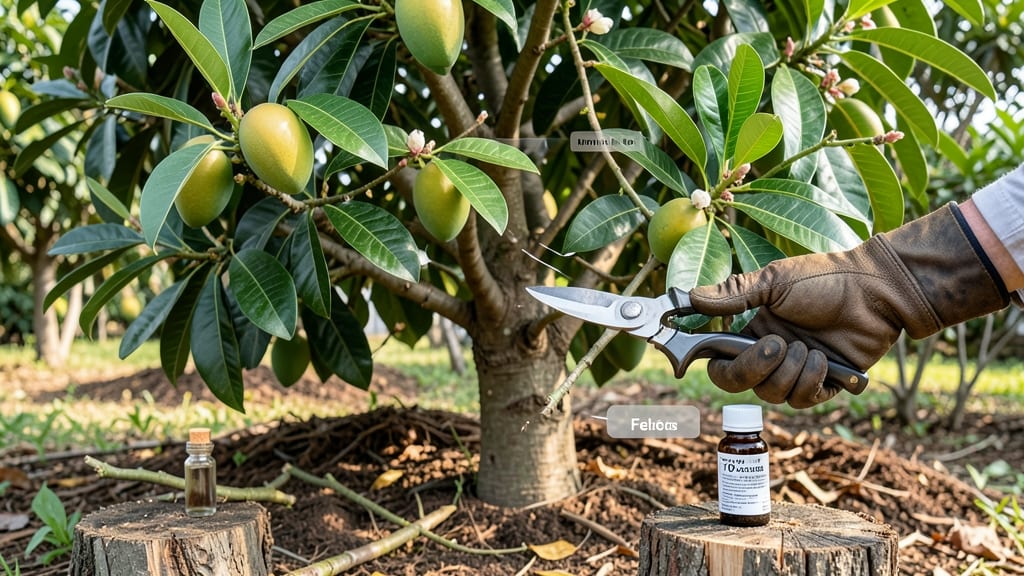
Pruning a mango tree for fruit isn't just about cutting branches—it's about unlocking the tree's potential to produce year-round bounty with every strategic cut. 🌱 I learned the hard way that skipping pruning means fewer fruits, smaller harvests, and a tree that struggles to support its own weight.
The right cuts at the right time transform a struggling mango tree into a productive powerhouse, with fruit clusters that rival the ones you see in tropical groves.
The key is timing: prune lightly during the dormant season (late winter or early spring) to shape the tree and remove dead wood, then focus on fruit-bearing branches just before flowering. You’ll need sharp pruners, a saw for thicker branches, and a clear plan—because every cut affects next year’s harvest.
Most gardeners stop after one season, but the real magic happens when you repeat this process for 3-5 years, watching the tree’s structure strengthen and fruit production skyrocket.
What you’ll end up with is a mango tree that’s easier to harvest, produces larger fruits, and resists disease better than unpruned trees. The branches become more accessible, sunlight reaches every fruit cluster, and you avoid the heartbreak of dropped mangoes before they ripen.
Even in subtropical climates where mangoes fruit twice a year, the right pruning schedule ensures both harvests are abundant.
Fair warning: this isn’t a one-time task. Pruning mango trees is an ongoing conversation with your tree—listening to how it responds, adjusting your cuts each season, and always prioritizing health over quick results.
But once you see that first heavy branch bending under ripe mangoes, you’ll never go back to neglecting your tree again.
📚 In This Guide
- What you need
- Instructions
- Tips and common mistakes
- Wrapping up and next steps
What you need
- ● Pruning shears (bypass pruners) – Sharp, clean shears (10-12 inch blades) for small branches (up to ½ inch thick). Pro tip: 💡 Sanitize with rubbing alcohol before and after use to prevent disease spread!
- ● Lopper shears – For medium branches (½ to 1½ inches thick). Look for bypass-style loppers for cleaner cuts.
- ● Pruning saw – A curved-tooth saw (8-10 inches) for thicker branches (1½+ inches). Avoid cheap saws—they can tear wood.
- ● Gloves – Heavy-duty, cut-resistant gloves (e.g., Mechanix or similar) to protect against thorns and sap.
- ● Ladder or step stool – A stable 6-10 ft ladder (or a sturdy stool for dwarf varieties). Safety first! 🚧
- ● Disinfectant (rubbing alcohol or 10% bleach solution) – To sterilize tools between cuts and prevent bacterial/fungal infections.
- ● Heavy-duty trash bags or bucket – For collecting pruned branches (10+ gallon capacity recommended).
- ○ Permanent marker – For marking branches to prune (optional but helpful for complex trees).
- ● Hand pruners with ratcheting mechanism – Makes cutting thicker branches easier without over-exertion.
- ○ Tree wound dressing (optional) – Products like Tanglefoot Tree Wound Pruning Sealer (controversial but some swear by it for large cuts).
- ● Extension pole pruners – For high branches (10-20 ft reach), if you’re not climbing.
- ● Work gloves with wrist support – Extra cushioning for long pruning sessions.
- ● Safety glasses – Protects eyes from debris, especially when using a saw.
Step-by-Step instructions for pruning a mango tree for fruit
Here's the method I've used to transform wild, unproductive mango growth into heavy-bearing trees.
✂️ Step 1: Identify and Remove Weak or Crossing Branches
Start by examining the tree's structure. Look for branches that grow inward at sharp angles—these compete for sunlight and nutrients, crowding out fruit production. Use your pruning shears to make clean cuts just above a bud or outward-facing leaf, never leaving stubs. I always remove any branches that are thinner than a pencil or show signs of disease, like black spots or oozing sap.
Real talk: This is the moment that matters. Weak branches never bear fruit, and crossing limbs create wounds that invite pests. If you're unsure, snap the branch—if it bends without breaking, it's too weak to keep. Aim to open up the center of the tree so light reaches all sides. You'll see new growth filling in gaps within 6-8 weeks if you've pruned correctly.
✂️ Step 2: Trim Back Overly Long or Leggy Branches
Next, focus on branches that extend too far outward or grow vertically like poles. These "water sprouts" or "suckers" drain energy from fruit-bearing limbs. Cut them back to a side branch or lateral bud that grows at a 45-degree angle—this encourages bushier, fruit-producing growth. For branches longer than 3 feet, make the cut at a 45-degree angle to prevent water pooling.
Here's the thing—mango trees naturally grow tall and leggy, but you're training them to focus energy on fruit. After pruning, you'll notice new shoots emerging from the cut points within 2-3 weeks. These will develop into stronger, fruit-bearing limbs if given proper sunlight and water. Never trim more than 25% of the tree's canopy in one session—this stresses the tree and reduces fruit production.
☀️ Step 3: Shape the Canopy for Optimal Sunlight and Airflow
Step back and visualize the tree's shape. The goal is a rounded, open canopy that allows sunlight to penetrate to the center. Prune the top branches to create a dome-like structure, gradually lowering the tree's height over time. Remove any upward-growing branches—these create weak, shaded limbs that rarely bear fruit. For horizontal branches, trim the tips to encourage branching outward.
You'll know you've done this right when the inner branches receive direct sunlight for at least 4-6 hours daily. Airflow is just as critical—pruned trees suffer less from fungal diseases like anthracnose. After shaping, apply a copper fungicide spray as a preventative measure, especially in humid climates. New growth will thicken within 8-12 weeks, filling in the gaps you created.
⏰ Step 4: Time Your Pruning for Maximum Fruit Production
Timing is everything with mango trees. The best time to prune is late winter or early spring, just as new growth begins but before the flowering season. Avoid pruning during summer heat or heavy fruit production—this stresses the tree and reduces yields. In tropical climates, prune after the monsoon season when the tree enters a natural dormant phase.
If you must prune during the fruiting season, limit cuts to only essential structural pruning—never remove more than 10% of the canopy. After pruning, fertilize with a balanced citrus/mango fertilizer to support new growth. You'll see flower buds forming within 3-4 months if the timing and cuts were correct. I always mark the pruning date on my calendar to avoid repeating mistakes.
🌱 Step 5: Maintain and Monitor for Continuous Bounty
Pruning isn't a one-time task—it's an ongoing dialogue with your tree. Every 6-12 months, revisit the tree to remove dead wood, water sprouts, and any branches growing toward the center. Thin out clusters of fruit to 6-8 per branch—this ensures larger, higher-quality mangoes. Use sharp, sterilized tools to make clean cuts, and always disinfect your shears with rubbing alcohol between cuts to prevent disease spread.
Watch for new shoots emerging from old cuts—these are your tree's way of telling you it's thriving. If you notice yellowing leaves, stunted growth, or excessive fruit drop, you've likely over-pruned. Adjust your approach next time by removing only 10-15% of the canopy. With consistent care, your mango tree will reward you with year-round fruit production and a stronger, healthier structure.
Tips & tricks for pruning a mango tree for fruit
Transforming a wild mango tree into a fruitful powerhouse takes precision—and these tips will help you avoid common pitfalls while maximizing your harvest.
Tool Selection: Invest in a sharp pair of pruning shears and a pruning saw for thicker branches. Dull tools crush stems instead of making clean cuts, which slows healing and invites disease. I sterilize my tools with rubbing alcohol between cuts to prevent spreading pathogens—this is especially critical when working with tropical trees prone to fungal infections. Always cut at a 45-degree angle for branches over 3 feet long to prevent water pooling, which can lead to rot.
Visual Cues for Success: In Step 3, when shaping the canopy, look for branches that cast shadows on other limbs—these are the ones to trim. The goal is to create a rounded dome shape where sunlight reaches the center. I test this by standing under the tree at midday and checking if the inner branches receive at least 4-6 hours of direct sunlight. If they don't, you'll need to make additional cuts to open up the canopy further. This sunlight exposure is what triggers the chemical processes that lead to flower bud formation.
Seasonal Adjustments: The late winter/early spring timing in Step 4 is non-negotiable for most climates, but tropical regions have slightly different rules. If you're in a monsoon-prone area, prune immediately after the rainy season ends—this aligns with the tree's natural dormant phase. I've seen trees in Florida that produce two harvests a year when pruned strategically after each monsoon cycle. Just remember: never remove more than 25% of the canopy in one session, even in tropical climates where trees recover faster.
Post-Pruning Care: After making your cuts, don't just walk away—give your tree a post-pruning boost. Apply a copper fungicide spray (as mentioned in Step 3) to prevent anthracnose, especially in humid areas. I also recommend sealing larger cuts with pruning sealant to reduce moisture loss and protect against pests. Within 2-3 weeks, you should see new shoots emerging from the cut points—these are your tree's way of telling you it's ready to focus on fruit production.
Pro Tips for Prune A Mango Tree For Fruit
- Transforming a wild mango tree into a fruitful powerhouse takes precision—and these tips will help you avoid common pitfalls while maximizing your harvest.
- Tool Selection: Invest in a sharp pair of pruning shears and a pruning saw for thicker branches.
- Visual Cues for Success: In Step 3, when shaping the canopy, look for branches that cast shadows on other limbs—these are the ones to trim.
Frequently asked questions
Got questions about pruning your mango tree for maximum fruit? Here are some of the most common concerns—and their answers—to help you grow a thriving, productive tree!
When is the best time to prune a mango tree?
The ideal time is late winter or early spring (just before new growth starts), but you can also do light pruning after harvest to improve airflow. Avoid heavy pruning during fruiting season—it can stress the tree and reduce yield.
How much can I prune without harming the tree?
For young trees, limit pruning to 20-30% of the canopy per year to avoid shock. Mature trees can handle up to 30-40%, but never remove more than 1/3 of the foliage in a single session. Focus on selective cuts to shape and open the tree.
What if my mango tree isn’t fruiting after pruning?
If your tree isn’t producing, check these first:
- Age: Young trees (under 3-5 years) may not fruit yet.
- Pollination: Mangoes need cross-pollination—plant a second variety nearby if possible.
- Nutrients: A balanced fertilizer (high in potassium) can boost flowering.
- Stress: Over-pruning or drought can delay fruiting.
Do I need to sterilize my pruning tools?
Absolutely!
Sterilize blades with rubbing alcohol or a 10% bleach solution before and after pruning to prevent disease spread (like anthracnose or bacterial infections). Clean tools also ensure smoother cuts and faster healing.
Can I prune a mango tree in containers or small spaces?
Yes! Container-grown mangoes benefit from light pruning to control size and shape. Use dwarf varieties (like ‘Cogshall’ or ‘Julie’) for tight spaces. Prune to encourage an open-center shape for better air circulation and fruit access. Just avoid heavy cuts—containers limit recovery.
What if I see sap bleeding after pruning?
Sap bleeding (latex oozing) is normal but can attract pests. To minimize it:
- Prune on a cool, dry day (not hot or rainy).
- Use sharp tools for clean cuts.
- Apply pruning sealant** (optional) to larger wounds.
Wrapping up and next steps
Pruning your mango tree isn’t just about trimming—it’s about unlocking its full fruiting potential! 🌱 By following the right techniques—like shaping for airflow, removing dead branches, and balancing growth—you’ll reward yourself with a bountiful harvest year after year.
Start small, stay consistent, and soon your tree will thrive with juicy, sweet mangoes.
Ready to take the next step? Monitor your tree’s progress and adjust your pruning schedule as needed. Happy growing—your future mango feasts are waiting! 🍈