
How To
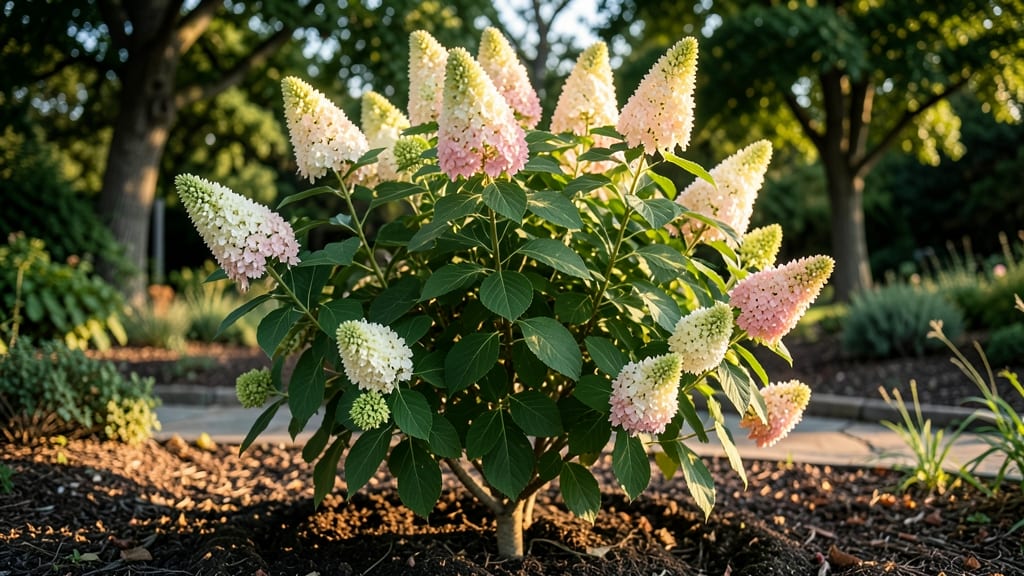
A hydrangea tree how tall do they grow? The answer spans a dramatic range—from 3 feet to towering 25 feet—depending on the variety and the care you provide.
Picture this: a 🌸 hydrangea tree soaring above your patio, its blooms cascading like a natural waterfall—except you’ve got limited space or a strict vision for your yard’s height. The good news?
Some varieties stay compact, while others reach small-tree heights, and knowing the difference is the key to planting with confidence.
For example, Hydrangea paniculata varieties like 'Limelight' can hit 10–15 feet, while H. arborescens 'Annabelle' typically maxes out around 3–5 feet. Pruning, soil quality, and sunlight all play a role, so let’s break down how to pick the perfect size for your space—and how to keep it there.
You’ll discover which dwarf hydrangeas fit cozy gardens, which varieties thrive in full sun, and how to prune for height control without sacrificing those stunning blooms. Ready to plan your dream hydrangea?

Hydrangea tree height by variety: small to towering options
Choosing a hydrangea tree for your landscape means balancing height expectations with your space. Some varieties stay compact enough for small gardens, while others grow into towering focal points.
The key difference lies in the species—Hydrangea paniculata often reaches 10–20 feet, while Hydrangea arborescens typically maxes out around 6 feet. Let’s break down the exact heights you can expect from popular varieties to help you plan.
Before we dive into specifics, remember that pruning habits and growing conditions can influence height. For example, regular pruning can keep a 15-foot variety like 'Limelight' at a more manageable 8–10 feet.
Meanwhile, some dwarf varieties like 'Little Lime' naturally stay under 5 feet without intervention. Understanding these ranges ensures your hydrangea tree fits perfectly in your design.
🌿
If you’re working with a small yard, focus on varieties like 'Little Lime' or 'Endless Summer,' which stay under 5 feet. These are perfect for containers or as accent plants near patios.
For larger spaces, 'Limelight' or 'Grandiflora' will create dramatic vertical interest, especially when planted near walkways or as a backdrop for perennials.
For those in full sun locations, 'Little Lime' and 'Grandiflora' thrive with direct sunlight, while 'Annabelle' and 'Endless Summer' prefer partial shade to protect their blooms from scorching. Always check your local climate—hydrangeas in hot, dry regions may need extra water to reach their full height potential.
Pruning plays a critical role in managing height. Paniculata varieties like 'Limelight' bloom on new wood, so you can prune in late winter to control size.
Meanwhile, macrophylla types like 'Endless Summer' bloom on old wood, so prune immediately after flowering. This timing ensures you don’t accidentally remove next year’s blooms.
🌳
One
How fast do hydrangea trees grow? Growth rates and pruning tips
Hydrangea trees are stunning additions to any landscape, but their growth speed varies dramatically between varieties. On average, most hydrangea trees grow 1 to 3 feet per year, though some fast-growing types like Hydrangea paniculata 'Limelight' can reach 3 to 4 feet annually under ideal conditions.
Understanding their growth patterns helps you plan for pruning and space management from the start.
Seasonal growth also plays a key role. In spring and early summer, hydrangeas experience their fastest growth spurts, especially after pruning. However, growth slows significantly in late summer as the plant prepares for winter dormancy.
This seasonal rhythm is crucial for timing your pruning efforts to encourage healthy blooms while controlling height.
For Hydrangea paniculata varieties, such as 'Limelight' or 'Little Spirit,' pruning in late winter (February-March) encourages robust growth and larger blooms. These types flower on new wood, so removing old stems in early spring stimulates vigorous summer growth.
In contrast, Hydrangea macrophylla varieties like 'Endless Summer' bloom on old wood, so prune immediately after flowering in summer to maintain shape without sacrificing next year's blooms.
To control height, I recommend pruning paniculata types by 1/3 of their height every 2-3 years. For macrophylla varieties, limit pruning to removing dead or crossing branches to avoid stunting flower production. Always use clean, sharp pruners to prevent disease and promote faster healing of cuts.
Soil quality and sunlight also impact growth speed. Hydrangeas thrive in well-draining, acidic soil (pH 5.5-6.2) with partial shade. In full sun, growth accelerates but may require more frequent watering, while too much shade slows growth and reduces flowering.
Amending your soil with compost in early spring gives your hydrangea the nutrients it needs for optimal growth.
With proper care, your hydrangea tree can become a stunning focal point in just a few years. Start with the right variety for your space, prune at the correct time, and provide consistent moisture to watch it grow into a breathtaking landscape feature. 🌿