
Pruning
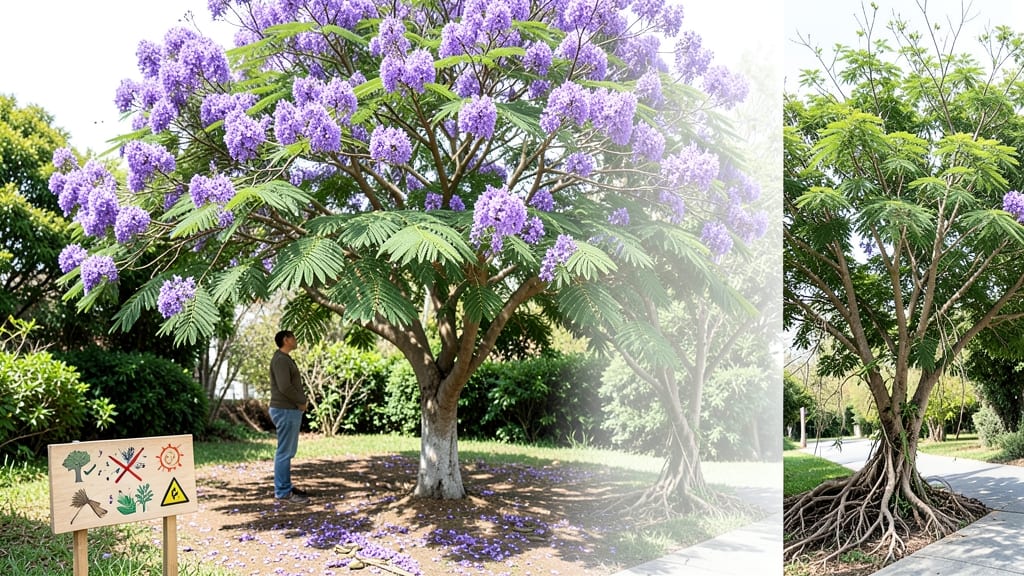
Jacaranda trees offer the pros and cons of vibrant purple blooms and rapid growth, but they demand full sun exposure, well-draining soil, and consistent pruning to manage their sprawling habit. While their drought tolerance and shade benefits make them ideal for warm climates, gardeners must weigh their invasive potential and seed pod mess against these advantages.
The jacaranda tree pros and cons are a standout choice for gardeners in USDA zones 9-11, where their lush lavender flowers transform landscapes from late winter to early spring. 🌸 The rapid growth—up to 3 feet per year—delivers quick shade, making them perfect for patios or parking areas.
However, their aggressive root system and prolific seed production can quickly overwhelm smaller yards, requiring vigilant maintenance. Pruning in late winter or early spring helps control their 20-40 foot height while encouraging denser foliage.
Beyond aesthetics, jacarandas attract hummingbirds and bees, boosting local ecosystems. Their drought resistance also makes them low-maintenance once established, thriving even in poor soil conditions. But these benefits come with trade-offs: fallen seed pods create cleanup work, and their shallow roots can damage sidewalks.
For urban planners, their fast-growing canopy offers shade benefits, though invasive tendencies may limit their suitability in native ecosystems.
💡 In This Article
- Jacaranda Tree Benefits for Gardens and Landscapes
- Challenges of Growing Jacaranda Trees: Pruning and Invasive Risks
Jacaranda tree benefits for gardens and landscapes
The jacaranda's signature lavender-blue flowers aren't just beautiful—they're a magnet for pollinators. Each bloom contains nectar that attracts hummingbirds, bees, and butterflies, creating a buzzing ecosystem.
Studies show these trees can increase local pollinator activity by up to 40% during their 6-8 week flowering season, typically from late winter to early spring. The flowers also release a subtle sweet fragrance that enhances garden ambiance, especially in the evening when temperatures drop below 80°F. 🌸
This tree's rapid growth makes it a landscape game-changer. Jacarandas can grow 3-5 feet per year under ideal conditions, reaching 20-40 feet tall with a 25-35 foot spread. This means they provide quick shade for patios, parking areas, or even entire yards within just 3-5 years of planting.
The dense canopy blocks 70-90% of sunlight, creating cooler microclimates that reduce energy costs for nearby buildings. Their drought resistance comes from deep taproots that access groundwater, making them thrive with only 1-2 inches of water per month once established.
The cultural significance adds another layer. In Australia and parts of South America (their native regions), jacarandas symbolize spring's arrival and are planted along streets to create stunning floral tunnels. Their adaptability to urban environments—tolerating pollution and compacted soils—makes them ideal for city landscapes.
However, this adaptability comes with a caveat: their shallow roots can lift sidewalks over time, requiring soil amendments with sand or gravel during planting to improve drainage and stability. 🌿
For gardeners in arid climates, the jacaranda's benefits extend beyond aesthetics. The tree's ability to survive on minimal water makes it perfect for xeriscaping projects, where water conservation is critical. Its evergreen foliage provides year-round interest, though the dramatic seasonal color change from flowers to green leaves creates visual excitement.
The bark, with its distinctive furrowed texture, adds winter interest when the tree is dormant. This multi-season appeal makes jacarandas one of the most versatile trees for warm-climate gardens.
Consider these key benefits at a glance:
- Pollinator magnet: Attracts hummingbirds, bees, and butterflies during 6-8 week flowering season
- Rapid shade provider: Reaches full height in 5-7 years with proper care
- Drought-tolerant: Requires only 1-2 inches of water/month after establishment
- Urban adaptable: Tolerates pollution and compacted soils better than many native trees
- Multi-season interest: Flowers in spring, green foliage in summer, and textured bark in winter