
Pruning
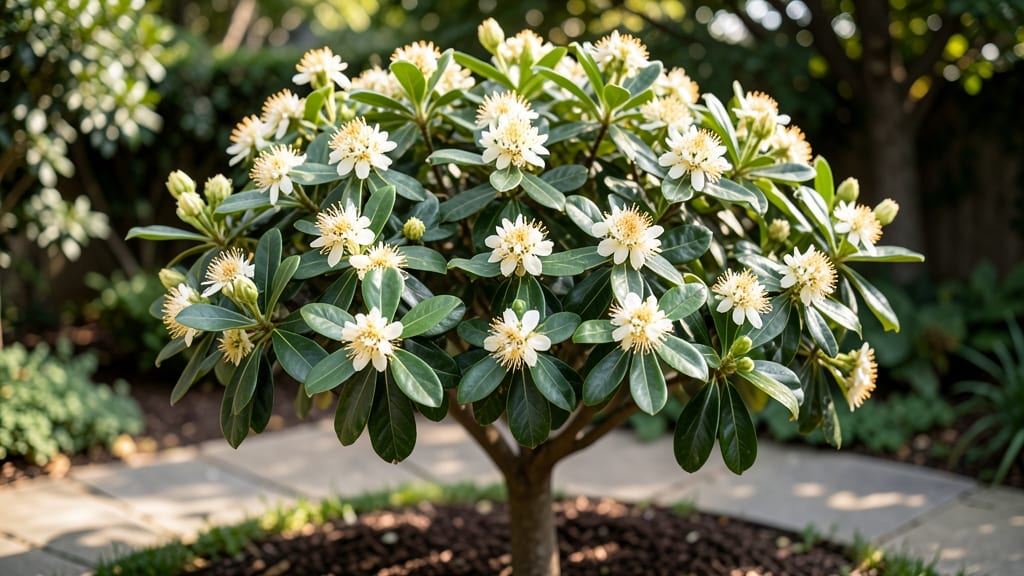
Loquat tree flowers bloom in late winter to early spring, producing fragrant white or pale pink blossoms that signal the start of fruit production. These delicate blooms thrive with proper chilling hours and strategic pruning to ensure yearly abundance.
The timing of these blooms depends heavily on your climate zone, with trees in warmer regions often flowering slightly later. 🌸 In colder areas, the flowers typically appear after 600-800 chilling hours below 45°F, while southern growers may see blooms as early as February.
The scent alone makes them worth cultivating—many gardeners describe it as a sweet, almost citrusy fragrance that fills the air for weeks.
What truly sets loquat flowers apart is their dual role: not only do they provide stunning visual interest, but they also directly impact your fruit harvest. Each blossom cluster can develop into 10-20 fruits, so maximizing flower production means bigger yields later.
This is where proper care comes into play—everything from late-winter pruning to balanced fertilization plays a crucial role in encouraging more abundant blooms each season.
💡 In This Article
- Loquat Flowering Timeline and Climate Requirements
- Pruning and Care Techniques for More Loquat Flowers
Loquat flowering timeline and climate requirements
Loquat trees (Eriobotrya japonica) rely on a specific biological trigger called chilling hours to initiate flowering. These are the cumulative hours below 45°F that the tree experiences during winter dormancy. Most varieties need between 600-800 chilling hours—similar to peach trees—to break dormancy and produce flower buds.
Without adequate chilling, the tree may remain dormant or produce only sparse blooms. This explains why loquats thrive in USDA zones 7-10, where winter temperatures naturally provide these chilling requirements.
The exact timing of blooms varies dramatically by region. In colder climates like Zone 8, flowers typically appear in February-March after sufficient winter chilling, while southern Zone 10 trees may bloom as early as January or even late December when mild winters provide enough chilling.
The blooms themselves last 2-3 weeks, with each cluster containing 15-25 individual flowers that open sequentially. Their fragrance—often described as a mix of jasmine and citrus—peaks during midday when temperatures are between 60-75°F.
Temperature fluctuations during bloom time are equally critical. Flowers are most sensitive to freezes below 28°F, which can damage buds and reduce fruit set. In warmer climates, afternoon shade cloth (providing 30-50% shade) can help protect blooms from heat stress above 90°F.
The tree's native habitat in southeastern China experiences similar mild winters, which is why loquats adapt poorly to regions with extreme cold snaps or prolonged heatwaves during bloom season.
Here's what's happening at the cellular level: Cold exposure triggers hormonal changes in the tree's buds, specifically increasing abscisic acid levels while reducing gibberellins. This shift signals the buds to transition from dormancy to active growth.
The resulting flowers contain both male and female reproductive parts, though they're primarily self-pollinating. 🌸 What's fascinating is how the tree allocates resources—each flower bud requires 3-5 weeks of development before opening, during which the tree prioritizes energy toward creating these delicate structures over new leaf growth.
For gardeners in marginal climates (like Zone 7), extending chilling hours can be achieved through techniques like winter watering (which lowers soil temps) or using artificial shade cloth during summer to reduce heat stress.
The key is maintaining consistent moisture without waterlogging, as soil temperatures above 85°F can inhibit bud formation. In contrast, trees in Zone 10 may experience more sporadic blooming due to inconsistent chilling patterns, requiring careful monitoring of winter lows.
Regional variations extend beyond timing—the color intensity of the flowers also shifts with climate. Northern-grown trees often produce paler pink blooms, while southern trees develop more white or cream-colored flowers with deeper fragrance concentrations.
This adaptation helps the tree conserve energy in warmer climates by reducing pigment production (which requires more metabolic resources). The scent compounds—primarily benzyl acetate and linalool—are most concentrated in the first 10 days of bloom, making early morning harvesting of flowers ideal for culinary or perfumery uses.