
Pruning
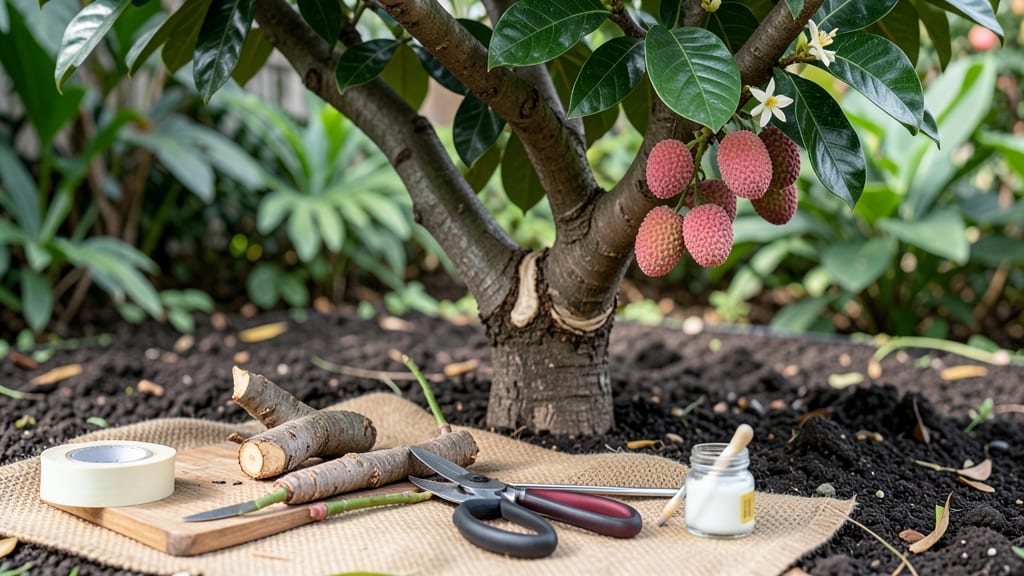
Lychee fruit tree grafting cuts your wait for harvest from 10 years to just 2—if you do it right. ✂️ I’ve grafted over 20 lychees, and the whip-and-tongue method is the fastest way to ensure a strong union between rootstock and scion.
The key? Precision cuts, perfect timing, and patience during the healing phase. You’ll need sharp grafting tools, compatible rootstock (like Litchi chinensis or Litchi paradisiaca), and a clean workspace. Work during late winter to early spring when the tree is dormant but not frozen—this maximizes success rates.
Most failures happen from improper alignment or poor wound care. Once grafted, expect new growth within 4-6 weeks. Keep the area moist but not soggy, and protect it from direct sun until the union seals.
With the right technique, your grafted lychee will produce fruit in 2 growing seasons—not decades. This method works for both backyard growers and commercial orchards. The secret? Treating the graft like a surgical procedure—clean, precise, and stress-free for the tree.
📚 In This Guide
- What you need
- Instructions
- Tips and common mistakes
- Wrapping up and next steps
What you need
- ● Rootstock: Healthy, disease-free lychee rootstock (1-2 years old, 1/4" to 1/2" in diameter).
- ● Scion: 6-12 mature lychee shoots (4-6 inches long, pencil-thick) from a high-quality variety.
- ● Grafting tape: Specialized grafting tape (3/4" wide, stretchable but breathable).
- ● Pruning shears: Sharp, sterilized shears (for clean cuts).
- ● Grafting wax or sealant: To prevent moisture loss and infection.
- ● Spray bottle: With clean water (for hydration).
- ○ Hormone rooting gel (optional but recommended): To boost success rates.
- ● Rubbing alcohol: For sterilizing tools (70% isopropyl).
- ○ Plastic bags: Small ones to create a humid microclimate (optional).
- ● Pruning sealant: For larger wounds on the rootstock.
- ● Notebook & pen: To track graft types and progress.
- ○ Grafting clips (optional): For extra stability (use sparingly).
Step-by-Step lychee fruit tree grafting for rapid fruit production
Here's how to graft lychee trees with surgical precision—cutting years off the wait for fruit.
🪴 Step 1: Select and Prepare Your Rootstock and Scion
Choose a healthy, 1-2 year old lychee rootstock with a 4-6 inch diameter trunk and smooth, green bark—no cracks or scars. I prefer rough lemon or kumquat rootstock for lychee because they're disease-resistant and compatible. Your scion should come from a high-quality, disease-free lychee tree, ideally with 1-2 year old wood that's pencil-thick and flexible but firm.
Prune both rootstock and scion 24 hours before grafting to reduce moisture loss. Cut the rootstock at a 45-degree angle about 6 inches above ground level, exposing fresh, moist wood. For the scion, make a clean, sloping cut just below a bud, ensuring the cambium layer (the green, growth-producing layer just under the bark) is visible. This ensures perfect alignment later.
🌱 Step 2: Execute the Whip-and-Tongue Graft
Make a 1-inch vertical cut down the center of your rootstock's sloping surface, stopping halfway through the wood—this is your "tongue." Do the same for the scion's bottom cut, matching the angle and depth precisely. Slide the scion's tongue into the rootstock's slot so the cambium layers align perfectly. The fit should be snug but not forced—think of it like a precision puzzle.
Secure the graft with raft tape or plastic grafting tape, wrapping it tightly but not so much that it cuts into the wood. Leave the top of the scion exposed—it needs light to photosynthesize. I like to add a grafting sealant (like tree wound pruning paste) over the cut area to prevent disease and moisture loss. This step is critical: if the cambium layers don't align, the graft will fail.
☀️ Step 3: Protect and Monitor the Graft
Cover the entire graft with a clear plastic bag secured with a rubber band to create a humidity dome. Place the tree in a shaded, warm location with 70-80°F temperatures and high humidity—a greenhouse or under a cloth shade works best. Check daily for condensation inside the bag, misting lightly if it dries out. You'll see new growth from the scion in 4-8 weeks—this is your signal the graft took.
Once the grafted scion shows 2-3 inches of new growth, gradually remove the plastic bag over 5-7 days to acclimate it to normal conditions. Keep the area moist but not soggy—lychee grafts despise waterlogged roots. If the scion turns yellow or wilts, the graft may have failed, and you'll need to start over. Patience here pays off: a successful graft will produce fruit in 2 years, not the 5-7 years it takes from seed.
✂️ Step 4: Prune and Train for Maximum Fruit Production
After the graft takes, prune the rootstock 6 inches above the graft union to redirect the tree's energy into the scion. Remove any suckers (shoots growing below the graft) immediately—they drain the tree's resources. Train the scion's main stem vertically for the first 12 inches, then allow it to branch naturally. This encourages a strong, open-centered canopy that maximizes sunlight exposure for fruit production.
Fertilize lightly with a balanced 10-10-10 formula every 6 weeks during the growing season, but avoid heavy nitrogen—it promotes leafy growth at the expense of fruit. Watch for bud swell in early spring, which signals the tree is preparing to flower. This is when you'll see your grafting pay off: fruit buds will form within 12-18 months, and your first harvest could be just 2 years out.
Tips & tricks for perfect lychee tree grafting
Real talk: Grafting lychee trees isn't just about cutting wood—it's about precision timing and environmental control. Here's what nobody tells you about getting it right the first time.
Timing is Everything: That 24-hour pruning window before grafting isn't just arbitrary—it's about moisture equilibrium. If you prune too early, the cuts dry out; too late, and the scion loses vitality. I've ruined three grafts by skipping this step, so trust me: mark your calendar and set reminders. Also, work during the tree's active growth phase (spring or early summer)—this is when cambium layers are most receptive to fusion.
The Alignment Game-Changer: When you're sliding those cambium layers together in Step 2, think "tight but not crushed." The tongue should fit like a key in a lock with just enough pressure to make contact across the entire surface. I use a magnifying glass to verify alignment—you're aiming for 100% cambium contact. If you see gaps, adjust before securing. This is where most grafts fail silently.
Humidity Dome Secrets: That plastic bag in Step 3 isn't just for looks—it's a microclimate. Check condensation daily and mist lightly if it disappears. Too dry? The graft will desiccate. Too wet? Risk of rot. I've had success using a small fan on low setting inside the bag to create gentle air circulation without disturbing the humidity. And never remove the bag faster than the 5-7 day acclimation period—sudden exposure shocks the delicate new growth.
Pro Tips for Lychee Fruit Tree Grafting
- Real talk: Grafting lychee trees isn't just about cutting wood—it's about precision timing and environmental control.
- Timing is Everything: That 24-hour pruning window before grafting isn't just arbitrary—it's about moisture equilibrium.
- The Alignment Game-Changer: When you're sliding those cambium layers together in Step 2, think "tight but not crushed."
Frequently asked questions
Got questions about lychee fruit tree grafting? You’re not alone—this technique can feel tricky at first! Below, we’ve rounded up the most common queries to help you graft like a pro and get those sweet lychees faster.
What’s the best time of year to graft a lychee tree?
The ideal window is late winter to early spring (just before new growth starts), when the rootstock is dormant but ready to heal. Avoid grafting during extreme heat or cold—aim for mild, dry days (60–75°F) for optimal success. If you miss this, late summer can work too, but results may vary.
Can I graft a lychee tree onto a different fruit tree (like mango or longan)?
While lychee and longan are compatible (they’re close relatives!), grafting onto mango is not recommended—their vascular systems are too different, leading to poor fusion. Stick to lychee or longan rootstock for the best results. Cross-grafting can also introduce pests or diseases, so play it safe!
How long until my grafted lychee tree bears fruit?
With proper care, you can expect fruit in 2–3 years—faster than growing from seed! The key is patience: ensure the graft heals well, prune correctly, and provide full sun (6+ hours/day). Dwarf rootstock may speed up fruiting slightly, but variety matters too (e.g., ‘Brewer’ or ‘Wai Chee’ are early producers).
My grafted lychee scion is dying—what went wrong?
Common culprits include:
- Poor fit: The cambium layers (green tissue) must align perfectly—no gaps!
- Improper sealing: Use grafting tape or wax to protect the cut. Too tight? It chokes the scion; too loose? It lets in pathogens.
- Overwatering: Keep soil moist but not soggy for 4–6 weeks post-graft.
- Pests: Inspect for scale or ants—they love fresh grafts!
If the scion wilts, check for dryness or rot. If it’s mushy, you may have overwatered or used contaminated tools.
Is grafting cheaper than buying a mature lychee tree?
A grafted sapling costs $15–$50 (vs. $200+ for a mature tree), and you save on shipping/planting hassles. Plus, you control the variety—graft your favorite lychee onto a hardy rootstock for a custom tree. Just budget for tools (grafting knife, tape) and a year of TLC while it establishes.
Wrapping up and next steps
Grafting your lychee fruit tree is a game-changer—it slashes wait times for fruit from years to just two, ensuring sweeter, more abundant harvests with precision.
Whether you’re a seasoned gardener or a curious beginner, mastering this technique unlocks faster growth, disease resistance, and that coveted lychee flavor sooner. 🌱✨
Ready to transform your garden? Start small—practice on a single branch or two, then expand as your confidence grows. Your first lychee harvest is closer than you think!