
Pests and Diseases
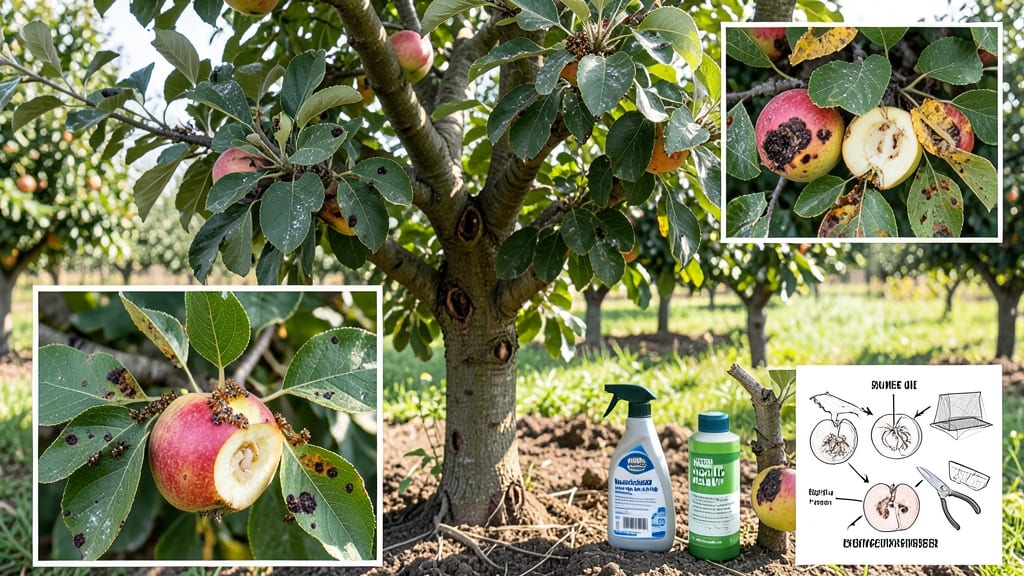
Your apple tree’s leaves are curling, fruit’s spotted, and you’re staring at a disaster—apple tree pests and diseases strike fast, but early action can save your harvest. 🌿 I’ve battled codling moths, fire blight, and aphids, and these organic fixes work when sprays fail.
The key? Spotting signs before they spread.
Most damage starts small: tiny holes in fruit (codling moths), black spots on leaves (apple scab), or oozing cankers (fire blight). I learned the hard way—waiting until summer means losing half your crop. Seasonal checks (spring buds, summer fruit, fall leaves) catch problems early, when organic sprays still work.
You’ll master a 3-step defense: prune infected branches in winter, spray neem oil or copper fungicide at bud break, and wrap trunks to block borers. My trees now produce clean, abundant fruit—no chemicals, just smarter timing. The best part? These fixes work for any apple variety.
No more guessing what’s wrong or scrambling for quick fixes. This guide turns panic into prevention—healthy trees, happy harvests, and zero mystery. Let’s tackle those pests head-on.
Root Causes Behind Tree Troubles
Understanding why apple trees fall victim to pests and diseases helps you take targeted action before problems escalate. These issues rarely happen in isolation—they’re often the result of a mix of environmental stress, poor cultural practices, and opportunistic invaders.
Below, we break down the key triggers behind common apple tree afflictions, with science-backed explanations and actionable insights.
🌡️ Extreme Weather & Temperature Swings Apple trees thrive in USDA Zones 4–8, but sudden temperature shifts—like late spring frosts or scorching summer heat—disrupt their natural defenses.
Cold snaps can damage buds and leaves, while heat stress reduces photosynthesis, leaving trees nutrient-depleted and vulnerable to pests like aphids or diseases such as apple scab (Venturia inaequalis). Why it matters: Weakened trees can’t produce enough phenolic compounds (natural pest repellents), making them an easy target.
💧 Water Woes: Too Much or Too Little
- Overwatering: Soggy soil promotes root rot (caused by fungi like Phytophthora) and attracts sap-sucking pests (e.g., woolly apple aphid).
- Drought Stress: Dry conditions weaken trees, making them susceptible to codling moth (a fruit borer) and powdery mildew (a fungal disease that thrives in dry, dusty air).
Pro tip: Aim for 1–1.5 inches of water per week, and improve drainage with organic mulch (straw or wood chips) to regulate soil moisture.
🍎 Nutrient Deficiencies & Imbalances Lack of nitrogen, potassium, or micronutrients (like zinc or boron) stunts growth and thickens bark—perfect conditions for bacterial canker (Pseudomonas syringae) or apple maggot flies to exploit. Signs of trouble:
- Yellowing leaves (nitrogen deficiency) → attracts aphids.
- Weak wood (low calcium) → splits, inviting fruit rots.
Fix it: Conduct a soil test and amend with compost or organic fertilizers (e.g., fish emulsion for nitrogen).
🌿 Overcrowded or Improper Pruning
- Too many branches: Blocks airflow, creating humid microclimates ideal for fungal diseases like black rot.
- Poor pruning cuts: Jagged edges or leaving stubs invite bacterial infections or borers (e.g., apple tree borer larvae).
Action step: Prune in late winter/early spring, using clean, sharp tools and sealing cuts with pruning paste.
🐜 Opportunistic Feeders Many pests—like apple sawfly larvae or scale insects—don’t attack healthy trees.
Instead, they target: - New growth (tender leaves = easy meals for aphids). - Damaged bark (entry points for apple curculio beetles). Break the cycle: Introduce beneficial insects (ladybugs for aphids, parasitic wasps for codling moths) and disrupt their life cycles with horticultural oil sprays in dormant season.
🍄 Disease Pathogens Spread Easily Fungi and bacteria hitchhike on:
- Windborne spores (e.g., cedar apple rust from nearby junipers).
- Contaminated tools or water (splashing rain spreads apple scab).
- Infested plant debris (last year’s mummified fruit = codling moth overwintering site).
Prevent spread: Sanitize tools with rubbing alcohol, remove fallen fruit, and space trees 20+ feet apart for airflow.
🚫 Ignoring Early Signs Homeowners often dismiss small holes in fruit (codling moth) or speckled leaves (scab) as harmless—until the tree is severely compromised. Rule of thumb: Address issues within 7–10 days of spotting them to prevent exponential spread.
🍯 Overusing Synthetic Chemicals While pesticides kill pests, they can also:
- Disrupt natural predators (e.g., killing bees that pollinate and control pests).
- Create resistant strains (e.g., apple maggot flies developing immunity to spinosad).
Better approach: Rotate organic sprays (neem oil, kaolin clay) and physical barriers (netting for fruit flies).
🌱 Compacted or Poor Soil Clay-heavy or compacted soil restricts root growth, starving the tree of water and nutrients.
Weak roots = increased susceptibility to fire blight (Erwinia amylovora) and root weevils. Solution: Aerate soil with a broadfork and mix in compost to improve structure.
🌳 Shady or Poorly Placed Trees Apple trees need 6–8 hours of sunlight daily. Shade-stressed trees produce smaller, thinner fruit—a magnet for apple maggots and mildew. Fix: Plant in full sun and thin nearby trees/shrubs to reduce competition.
Key Takeaway: Most apple tree problems stem from stress + opportunity. By addressing water, nutrients, airflow, and early pest signs, you can prevent 80% of issues before they spiral. Stay vigilant, and your tree will reward you with healthy growth and bumper crops! 🍏✨
Quick Fixes for Common Apple Tree Troubles
Now that you’ve identified the culprit—whether it’s a hungry pest or a sneaky disease—it’s time to roll up your sleeves and restore your apple tree to its healthy, fruit-bearing glory.
Below, we’ve mapped out practical, organic solutions tailored to each issue, plus prevention tips to keep your tree thriving long-term. Think of this as your DIY orchard first-aid kit!
🍎 Codling Moth: Worms in Your Fruit
Fix: - 🔥 Trap Them Early: Hang pheromone traps (like Isomate-C) in early spring to disrupt mating.
Place them 10–15 feet high and 100+ feet apart for maximum coverage. - 🍳 Organic Sprays: Use kaolin clay (Surround WP) or spinosad (Entrust)—spray every 7–10 days starting when petals fall.
Reapply after rain. - 👨🍳 Physical Barriers: Wrap floating row covers around young trees to block moths from laying eggs. Remove covers when flowers bloom to allow pollination.
💡 Prevention Tip: Prune suction traps (old fruit clusters) in fall and early spring—these are moth hotels! Also, pick up fallen apples and compost them far from your tree.
🐞 Apple Maggots: Grubs Feasting on Roots & Fruit Fix:
- 🥘 Soil Treatment: Apply beneficial nematodes (Heterorhabditis bacteriophora) to the root zone in early summer to kill maggot larvae.
- 🔪 Trap Crops: Plant radishes or carrots nearby—maggots prefer them over apples.
Remove and burn or deep-compost them. - 🌡️ Mulch Smartly: Use straw or wood chips (not grass clippings) to reduce egg-laying sites and improve soil health.
🎯 Pro Tip: Yellow sticky traps can catch adult flies. Place them 6 feet off the ground near the tree.
🐜 Aphids & Scale Insects: Sticky Sap & Weak Growth Fix:
- 💦 Blast Them Off: Spray strong water jets (hose-end nozzle) to dislodge aphids from leaves and stems.
- 🍳 Soap & Oil Spray: Mix 1 tbsp horticultural oil + 1 tsp insecticidal soap per gallon of water.
Spray early morning or late evening to avoid harming bees. - 🐝 Attract Predators: Invite ladybugs, lacewings, and parasitic wasps by planting dill, yarrow, or marigolds nearby.
✨ Prevention Tip: Prune out infested branches in dormant season (winter) to starve them of food.
🍄 Apple Scab: Fuzzy Black Spots on Leaves Fix:
- 🌡️ Copper Fungicide: Use copper sulfate (Bonide Copper Fungicide)—spray before buds swell and every 10–14 days until harvest.
- 🍳 Baking Soda Spray: Mix 1 tbsp baking soda + 1 tsp oil + 1 tsp soap per gallon of water.
Spray weekly (great for organic gardens). - 🌿 Clean Up Debris: Remove all fallen leaves and mummies (infected fruit) and compost them separately (or burn).
💡 Prevention Tip: Space trees 15–20 feet apart for airflow—scab thrives in damp, crowded conditions.
🍒 Fire Blight: Blackened, Oozing Branches
Fix:
- 🔪 Prune & Burn: Cut 6 inches below infected tissue (healthy wood is lighter in color). Burn or bag prunings—do not compost.
- 🥘 Bacterial Spray: Apply copper fungicide or streptomycin (organic option) before blooms open and after pruning.
- 🌡️ Soil Drench: Mix 1 cup milk per gallon of water (lactic acid kills bacteria)—drench soil weekly during outbreaks.
🎯 Pro Tip: Avoid overhead watering—fire blight spreads via water splashes.
🍓 Powdery Mildew: White Dust on Leaves
Fix: - 🍳 Neem Oil Spray: Mix 1 tbsp neem oil + 1 tsp soap per gallon of water.
Spray every 7–10 days until mildew disappears. - 🌿 Improve Airflow: Thin overcrowded branches and mulch with straw (not thick layers of grass). - 🌡️ Resistant Varieties: If mildew is chronic, consider planting ‘Liberty’ or ‘Enterprise’ apples, which are resistant.
✨ Prevention Tip: Water at the base (not leaves) and prune for sunlight—powdery mildew loves shade.
To keep pests and diseases at bay, adopt these habits:
- 📊 Seasonal Checkups:
- Winter: Prune deadwood, apply dormant oil spray (kills overwintering pests).
- Spring: Test soil pH (aim for 6.0–7.0), add compost, and mulch 3–4 inches deep.
- Fall: Rake up all leaf litter, harvest late-season fruit, and plant cover crops (clover) to feed soil.
- 💪 Boost Immunity:
- Foliar feed with seaweed extract (2–3 times/year) for stronger defenses.
- Interplant with herbs like rosemary or thyme—they repel pests naturally.
Final Reminder: Consistency is key! Most fixes require 2–3 applications and regular monitoring. With these steps, your apple tree will bounce back faster—and next season, you’ll be celebrating juicy, pest-free fruit! 🍏🎉
Frequently asked questions about apple tree pests and diseases
How can I tell if my apple tree has codling moths?
Look for tiny holes in the skin of your apples and brown frass (fecal matter) inside them. The larvae tunnel through the fruit, leaving these telltale signs. Check fruit in late summer when they’re most active—if you find infested apples, act fast with organic sprays like kaolin clay.
What’s the best organic treatment for apple scab?
Start with a copper fungicide spray before buds swell in spring, then reapply every 10–14 days until harvest. For a gentler option, mix 1 tbsp baking soda + 1 tsp oil + 1 tsp soap per gallon of water and spray weekly. Always remove fallen leaves and infected fruit to break the disease cycle.
Why does my apple tree keep getting fire blight?
Fire blight thrives in wet, crowded conditions and spreads through water splashes or contaminated pruning tools. Prune infected branches 6 inches below the blackened tissue in dormant season, sterilize tools with rubbing alcohol, and avoid overhead watering. Space trees 15–20 feet apart for better airflow.
Can I save my tree if it’s already heavily infested with pests?
Yes, but act immediately! For severe cases, combine pruning infected branches, horticultural oil sprays (applied in dormant season), and beneficial insects like ladybugs. Monitor closely for 2–3 weeks—if the tree shows signs of recovery (new growth, fewer pests), it can bounce back. Chronic issues may require replacing heavily damaged trees.
How often should I inspect my apple tree for pests and diseases?
Check your tree every 2 weeks during growing season (spring to fall) and monthly in winter. Focus on new leaves, fruit, and bark—early detection is key! Use a 10x magnifying glass to spot tiny eggs or fungal spores. Keep a simple log of what you find to track patterns over time.