
Magnolia Tree Height and Width: Variety-Specific Growth Charts for Perfect Planting

Pruning

Magnolia Tree Height and Width: Variety-Specific Growth Charts for Perfect Planting

Understanding the magnolia tree height and width of your chosen variety is the first step to creating a stunning, balanced garden that thrives for decades.

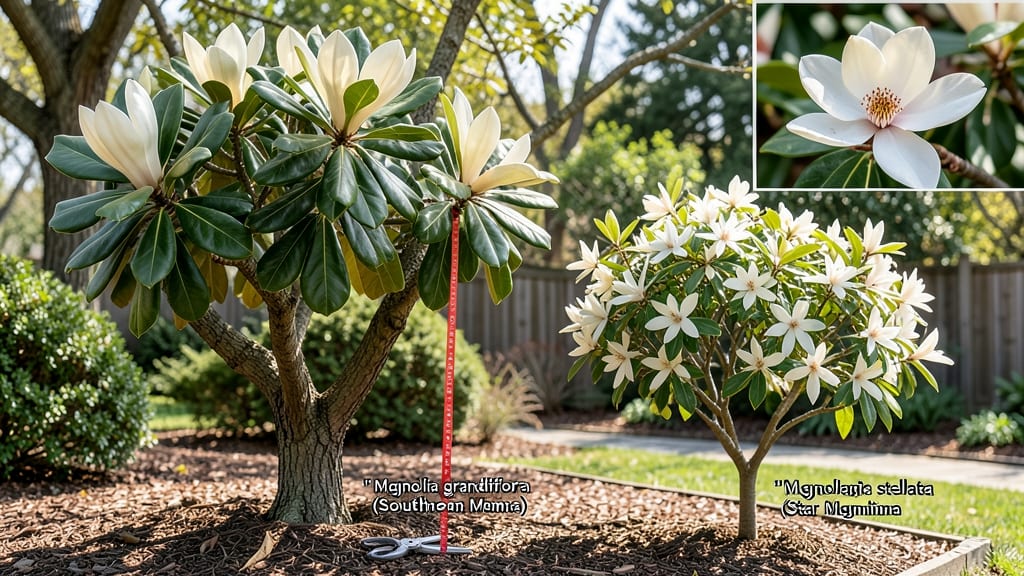
Picture this: a 20-foot magnolia 🌸 towering over your patio, its branches heavy with fragrant blooms—only to realize it needs 15 feet of clearance from your house. That’s why picking the right species matters, whether you’re planting a compact Magnolia stellata or a towering Magnolia grandiflora.

From dwarf varieties that stay under 10 feet to giants reaching 100 feet, each magnolia grows at its own pace. Below, I break down the mature sizes, spacing needs, and growth rates so you can plan your landscape with confidence—and avoid costly mistakes.

You’ll discover which species fit tight urban yards, which thrive in sprawling estates, and how to estimate their future spread before you even dig the first hole. Let’s get started.

Magnolia Tree Height Range
10 ftto120 ft
0 ft 3 ft 6 ft 9 ft 12 ft
🌱 Very Very Tall Tree

Magnolia tree height and width by variety: full growth charts for small to giant species

Choosing the right magnolia tree for your garden starts with understanding their mature height and width. Some varieties stay compact enough for small yards, while others grow into towering specimens that command entire landscapes.

Whether you're planning a shade tree or a spectacular focal point, knowing these dimensions helps you avoid overcrowding or planting regrets.

The magnolia tree height can vary dramatically—from dwarf varieties under 15 feet to giants reaching 100+ feet. Canopy width also plays a crucial role in spacing, as some magnolias spread wider than they grow tall.

Below, I’ve compiled a detailed growth chart for 12 popular varieties, including their annual growth rates and ideal planting scenarios.

Variety Mature Height (ft) Mature Width (ft) Annual Growth (in) Sunlight Needs Best For
Magnolia stellata (Star Magnolia) 15-25 ft 15-20 ft 12-24 in Full sun to partial shade Small yards, containers
Magnolia × soulangeana (Saucer Magnolia) 20-30 ft 20-25 ft 12-18 in Full sun Urban gardens, focal points
Magnolia grandiflora (Southern Magnolia) 60-80 ft 40-60 ft 12-24 in Full sun to partial shade Large estates, shade trees
Magnolia virginiana (Sweetbay Magnolia) 40-60 ft 30-40 ft 12-18 in Partial shade Wetland gardens, privacy screens
Magnolia kobus (Kobus Magnolia) 30-50 ft 25-35 ft 12-20 in Full sun to partial shade Suburban yards, mixed borders
Magnolia 'Little Gem' (Dwarf Southern Magnolia) 20-25 ft 12-15 ft 6-12 in Full sun to partial shade Small spaces, urban planting
Magnolia 'Black Tulip' (Hybrid Magnolia) 20-30 ft 15-20 ft 12-18 in Full sun to partial shade Specimen planting, small gardens
Magnolia 'Jane' (Dwarf Hybrid) 8-12 ft 8-10 ft 6-12 in

How to estimate Magnolia tree spacing based on mature height and canopy width

Proper magnolia tree spacing depends on the variety’s mature height and canopy width. Overcrowding stunts growth, while too much space wastes yard potential. Start by checking your chosen magnolia’s growth chart—this determines how much room it needs to thrive.

For example, a Magnolia grandiflora (southern magnolia) can reach 80-100 feet tall with a 30-40 foot spread, while a Magnolia stellata (star magnolia) stays compact at 15-25 feet tall and 10-15 feet wide. Always account for root spread, which can extend 2-3 times the canopy width.

Next, consider your garden type. Urban yards often limit spacing to 15-20 feet between trees, while suburban lots allow 25-30 feet. Woodland settings may require 40+ feet to mimic natural spacing. For instance, planting a Magnolia × soulangeana (saucer magnolia) in a small urban garden?

Stick to 12-15 feet from structures or other plants. In a spacious backyard, you could space two Magnolia grandiflora trees 50 feet apart for dramatic effect.

Variety Mature Height (ft) Canopy Width (ft) Recommended Spacing (ft) Best For
Magnolia grandiflora 80-100 30-40 50-60 Large yards, privacy screens
Magnolia stellata 15-25 10-15 12-15 Urban gardens, small yards
Magnolia × soulangeana 20-25 15-20 15-20 Suburban yards, specimen planting
Magnolia virginiana 40-60 20-30 30-40 Woodland edges, wet areas

Don’t forget to factor in root spread—magnolias have extensive root systems that can extend beyond the canopy. For example, a Magnolia virginiana with a 20-foot canopy may have roots spreading 40-50 feet. Plant near fences or foundations?

Keep roots 10 feet away to avoid damage. If you’re unsure, dig a test hole to check soil depth and compaction before planting. Always amend heavy or clay soils with organic matter to encourage healthy root growth.

Pruning needs also influence spacing. Standard magnolias (like Magnolia grandiflora) require minimal pruning but benefit from open-center shaping to improve airflow. Dwarf varieties, such as Magnolia 'Black Tulip', need less space but may require annual pruning to maintain shape.

Plan for future pruning by leaving 3-5 feet of clearance above the tree’s mature height for tools or branches. For instance, a 20-foot magnolia should have 25 feet of vertical clearance in your yard.

For urban gardens, consider container planting for smaller varieties like Magnolia kobus or Magnolia loebneri. These stay under 15 feet tall and can be spaced 8-10 feet apart in large pots. In suburban yards, mix magnolias with understory plants like azaleas or ferns to fill gaps.

For woodland settings, mimic nature by planting magnolias 30-50 feet apart with native shrubs and perennials underneath. Always group magnolias with similar sunlight and water needs to simplify care.

Finally, sketch a simple layout before planting. Use string or spray paint to mark <

★★★★★4.7(3 reviews)
Categories Pruning