
Pruning
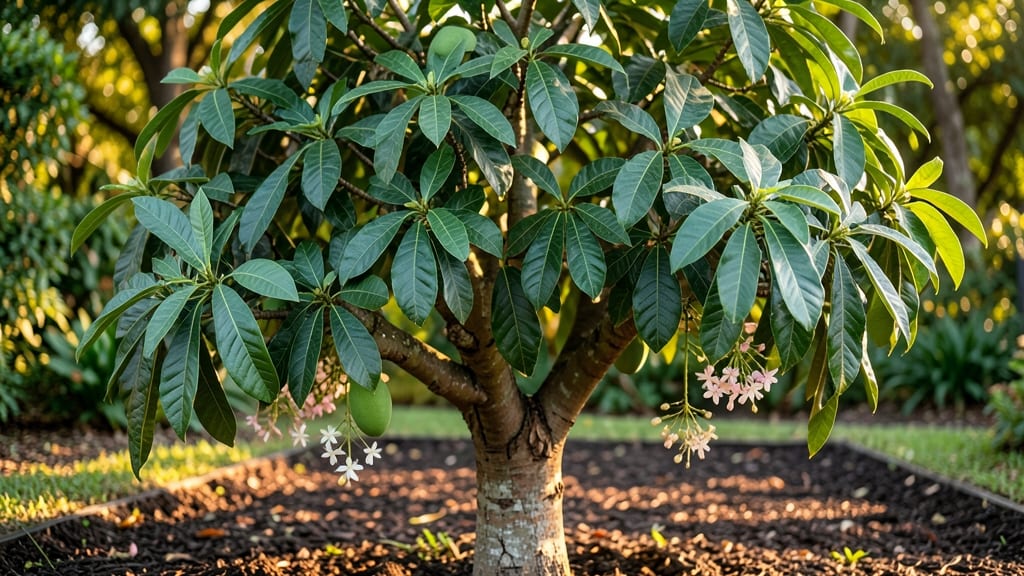
Summer pruning transforms your mango tree from a tangled mess to a fruit-producing powerhouse. 🌿 The key is strategic cuts that balance airflow, sunlight, and energy—without sacrificing next year’s harvest. I’ve turned my once-overgrown tree into a structured, productive beauty by focusing on three simple principles: shape, light, and health.
Start by removing dead or crossing branches first—they steal energy from fruit development. Next, thin out dense growth to let sunlight reach the center, where most flowers (and future fruit) form.
Timing matters: prune after the first harvest wave but before the heat peaks, usually in late June to early July for most regions.
You’ll see the difference immediately: more sunlight on the canopy means better flowering, and improved airflow reduces fungal risks. By winter, your tree will be stronger, with a framework that supports heavier fruit loads and easier maintenance. The secret? Less is more—aggressive pruning stresses mango trees.
Works for both tropical and subtropical climates, though timing shifts slightly (earlier in warm zones). Here’s how to adapt for your specific heat zone—without guessing.
📚 In This Guide
- What you need
- Instructions
- Tips and common mistakes
- Wrapping up and next steps
What you need
- ● Pruning shears: Sharp, bypass-style shears (4–6 inch blades) for clean cuts on small branches.
- ● Loppers: Heavy-duty (8–10 inch blades) for thicker branches (½–1½ inch diameter).
- ● Pruning saw: Curved-tooth saw for branches thicker than 1½ inches.
- ● Disinfectant (70% isopropyl alcohol or bleach solution): 1 part bleach to 9 parts water to sterilize tools between cuts.
- ● Gloves: Heavy-duty, cut-resistant gloves (e.g., mechanics’ gloves) to protect hands.
- ● Safety glasses: To shield eyes from debris.
- ● Ladder (if needed): Sturdy, extendable ladder (20–30 ft) for high branches—never stand on the tree!
- ● Heavy-duty trash bags: 3–5 gallon bags for collecting pruned branches.
- ● Hand pruners: Compact shears for precision trimming of tiny branches.
- ● Pole pruner: Extendable (10–15 ft) for hard-to-reach branches.
- ○ Tree wound dressing: Pruning sealant (optional; controversial but some swear by it for large cuts).
- ● Hose or spray bottle: To rinse tools and clean sap off branches.
- ● Notebook & pen: To sketch a quick map of your tree’s structure before pruning.
Instructions for pruning a mango tree in summer
Here's how to shape your tree for maximum fruit production while keeping it healthy and vigorous.
🪴 Step 1: Assess the Tree Structure and Identify Key Branches
Start by examining your mango tree for branches that need attention. Focus on removing suckers—those vigorous shoots growing from the trunk or main branches—since they drain energy from fruit production. Also look for crossing branches that rub against each other, as these can create wounds where disease enters.
Next, identify weak or diseased branches—they’ll be thinner, discolored, or covered in spots. These should be pruned immediately to prevent them from spreading problems to the rest of the tree. Use a sharp pair of pruning shears to make clean cuts just above a bud or lateral branch, never leaving stubs.
✂️ Step 2: Thin Out Overcrowded Branches for Better Airflow
Mango trees thrive when sunlight and air circulate freely through the canopy. Remove 20-30% of the smallest, least productive branches to open up the center of the tree. This reduces humidity buildup, which can lead to fungal issues like anthracnose.
Focus on branches growing inward or downward, as these block light and air from reaching the interior. Cut these back to a strong outward-facing bud to encourage new growth in the right direction. Avoid over-pruning—too much thinning weakens the tree and reduces fruit set.
🌿 Step 3: Shape the Canopy for Optimal Fruit Production
Summer pruning is ideal for shaping your mango tree into an open-center or vase form, which maximizes sunlight exposure to the fruit. Start by shortening overly long branches by one-third to encourage bushier growth. Make your cuts just above a leaf node or bud at a 45-degree angle to prevent water from pooling.
Pay special attention to the top of the tree—if it’s too dense, the center will stay shaded, reducing fruit quality. Aim to create a balanced, rounded shape with branches spaced 12-18 inches apart. This spacing ensures even ripening and easier harvesting.
💧 Step 4: Clean Up and Apply Protective Measures
After pruning, remove all clippings from the base of the tree to prevent pests and diseases from taking hold. Sterilize your tools with rubbing alcohol between cuts to avoid spreading pathogens. If you notice any sawdust-like residue on the cuts, it’s a sign of excessive moisture—let the wounds dry out for a day before applying pruning sealant (optional for small cuts).
Water the tree deeply after pruning to help it recover, but avoid overwatering, which can stress the tree. Mulch around the base with 2-3 inches of organic mulch to retain moisture and regulate soil temperature. This step is crucial for summer pruning, as the tree will need extra support during hot, dry periods.
☀️ Step 5: Monitor and Adjust for Ongoing Growth
Keep an eye on the tree over the next 4-6 weeks for new growth. If you notice sprouting suckers or overly aggressive branches, prune them back immediately to redirect energy to fruit production. Summer is also a great time to fertilize lightly with a balanced, citrus-friendly fertilizer to support recovery.
Watch for signs of stress, like yellowing leaves or dropped fruit, which may indicate over-pruning or environmental factors like heat stress. Adjust your approach in future pruning sessions based on how the tree responds. With consistent care, your mango tree will reward you with bountiful harvests for years to come.
Tips & tricks for perfect summer mango tree pruning
Summer pruning transforms your mango tree from a tangled mess into a fruit-producing powerhouse. Here's what I've learned after years of trial and error in tropical climates.
Tool Prep Matters: Sterilize your pruning shears with rubbing alcohol before you start—this prevents spreading fungal spores between cuts. I also like to sharpen my blades monthly so they make clean cuts rather than crushing branches. Dull tools create jagged wounds that heal poorly and invite pests. For larger branches, use a pruning saw with a fine-tooth blade to avoid splintering.
Branch Selection Strategy: In Step 2, when thinning branches, prioritize those growing inward or downward—they're the biggest light and airflow thieves. Look for branches thinner than a pencil; these are often the least productive. Remember the 20-30% guideline: removing too much weakens the tree, but keeping too many blocks sunlight from reaching the center where fruit develops.
Cutting Angle Science: The 45-degree angle mentioned in Step 3 isn't just aesthetic—it prevents water pooling on the cut surface. Make your cut just above a bud or lateral branch to encourage new growth in the right direction. For larger branches over 2 inches thick, make a second cut slightly above the first to avoid tearing the bark. This two-step method creates cleaner wounds that heal faster.
Post-Pruning Recovery: After completing Step 4, the deep watering is crucial but timing matters. Water in the early morning so the tree can absorb moisture before afternoon heat evaporates it. The 2-3 inches of organic mulch should extend out to the tree's drip line—not just the trunk—to regulate soil temperature. This summer-specific care prevents transplant shock during the hottest season.
Pro Tips for Mango Tree In Summer
- Summer pruning transforms your mango tree from a tangled mess into a fruit-producing powerhouse. Here's what I've lea...
- Tool Prep Matters: Sterilize your pruning shears with rubbing alcohol before you start—this prevents spreading fungal...
- Branch Selection Strategy: In Step 2, when thinning branches, prioritize those growing inward or downward—they're the...
Frequently asked questions
Got questions about pruning your mango tree in summer?
You’re not alone! Here are answers to the most common concerns—from timing to troubleshooting—to help you keep your tree thriving and fruitful.
When is the exact best time to prune a mango tree in summer?
Prune during the dormant summer months (June–August in most climates) after the fruit harvest but before new growth flushes. Avoid extreme heat—aim for early morning or late afternoon to reduce stress on the tree. Pro tip: If your area has a monsoon season, prune just before rains to encourage healthy regrowth.
Will pruning in summer hurt my mango tree’s fruit production?
Not if done correctly! Summer pruning stimulates fruit production by redirecting energy to new branches. However, avoid heavy pruning—stick to light shaping (removing dead/diseased wood) and selective thinning to maintain airflow. Over-pruning can delay next year’s harvest. Key: Focus on open-center shaping to maximize sunlight exposure.
What tools should I not use when pruning a mango tree?
Avoid dull or rusty tools—they tear bark and invite disease. Skip hand pruners for thick branches (use loppers or a pruning saw for branches >1 inch thick). Also, never use tools contaminated with old sap (clean with rubbing alcohol between cuts). Warning: Disinfect tools with 70% isopropyl alcohol before/after each cut to prevent fungal spread.
Can I prune a young mango tree the same way as a mature one?
No! Young trees (under 5 years) need minimal pruning—focus on removing only dead, crossing, or inward-growing branches. Mature trees (5+ years) benefit from structural pruning to open the canopy. For saplings, prioritize air circulation over aggressive shaping. Rule of thumb: Never remove >25% of foliage in one session for young trees.
What should I do if my mango tree oozes sap after pruning?
Sap oozing is normal but can attract pests. To manage it:
- Apply pruning sealant (like Tanglefoot) to cuts >½ inch thick.
- Keep the area clean and dry to deter ants/beetles.
- Monitor for sooty mold (black fungus) and treat with neem oil if needed.
Wrapping up and next steps
Summer is the perfect time to shape your mango tree’s future—pruning now ensures a healthier, more productive harvest for years to come! 🌿 By following strategic trimming techniques, you’ll encourage stronger branches, better airflow, and those sweet, juicy mangoes you’ve been dreaming of. Don’t wait—grab your pruners and get started!
Ready to take your mango tree to the next level? Start small:
- Review your tree’s structure and prioritize weak or crossing branches.
- Monitor growth over the next few months and adjust as needed.
- Celebrate your green thumb—every cut brings you closer to a bountiful harvest!