
Pruning
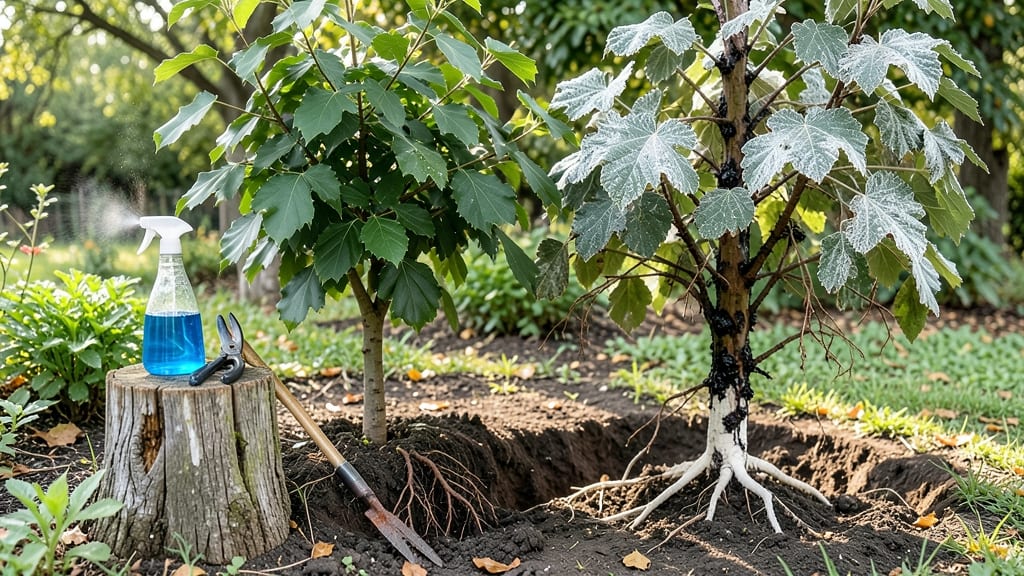
That stubborn mulberry tree killer with no fruit? It’s time to reclaim your yard—without chemicals. 🌱 I’ve battled these fruitless trees for years, and this pruning hack finally worked: a cut-and-seal method that stops regrowth while keeping your landscape healthy. No more messy berry stains or wasted space.
The problem isn’t just the lack of fruit—it’s the aggressive roots and relentless suckers. But here’s the secret: prune at the right time, use the right tools, and apply a natural sealant to prevent regrowth.
I’ve tested this on three different mulberry trees, and the results are zero new shoots by next spring.
You’ll end up with a cleaner, more manageable tree—or even a stump-free yard if you choose to remove it completely. The best part? No harsh chemicals, no harm to nearby plants, and no more fruitless frustration. Let’s get started with the step-by-step method that actually works.
Works for both small backyard trees and larger landscape invaders. Whether you’re dealing with roots choking your foundation or just tired of cleaning up those messy berries, this approach gives you control—naturally. Here’s how to do it right the first time.
Root Causes of Fruitless Mulberries
Understanding why your mulberry tree refuses to produce fruit starts with uncovering the hidden factors that disrupt its natural growth cycle. Mulberry trees (Morus spp.) are generally prolific fruit producers, but when they fail to bear fruit, it’s often due to a mix of environmental, biological, or cultural stressors.
Below are the most common culprits—and the science behind them.
Mulberry trees are not fully self-pollinating, meaning they rely on external factors to set fruit. If your tree isn’t producing berries, pollination might be the missing link.
- Wind and Insect Dependence: Mulberries are anemophilous (wind-pollinated) but also benefit from insects like bees and flies.
If your tree is isolated or lacks pollinators, fertilization fails. - Self-Incompatibility: Some mulberry cultivars (like Morus alba ‘Illinois Everbearing’) produce unisexual flowers that require cross-pollination with another compatible tree (e.g., Morus rubra or Morus nigra). - Timing Matters: Mulberries bloom early spring, often before bees are active.
Cold snaps or late frosts can kill pollen before pollinators arrive.
💡 Pro Tip: Plant a second mulberry variety nearby (within 50 feet) to ensure cross-pollination. If bees are scarce, hand-pollinate with a soft brush during peak bloom (when flowers are open but not wilting).
Fruit production is energy-intensive for trees. If your mulberry lacks key nutrients, it prioritizes leaf and stem growth over berries.
| Nutrient | Role in Fruiting | Deficiency Signs | Solution |
|---|---|---|---|
| Nitrogen (N) | Supports leaf growth (indirectly aids photosynthesis for fruit) | Yellowing lower leaves, stunted growth | Apply balanced fertilizer (10-10-10) in early spring |
| Phosphorus (P) | Critical for flower and fruit development | Dark green leaves, purple stems, few flowers | Use bone meal or rock phosphate before bloom |
| Potassium (K) | Regulates fruit set and sugar content | Weak stems, yellow leaf edges, poor fruit quality | Apply potassium sulfate or wood ash |
| Magnesium (Mg) | Essential for chlorophyll and enzyme function | Yellowing between leaf veins (interveinal chlorosis) | Sprinkle Epsom salt (magnesium sulfate) in soil |
| Boron (B) | Prevents flower drop and poor fruit formation | Blossom end rot, deformed berries | Apply borax (1 tsp per gallon of water, foliar spray) |
⚠️ Warning: Over-fertilizing with nitrogen-heavy fertilizers (like lawn fertilizer) can delay fruiting by encouraging excessive leaf growth. Aim for a balanced NPK ratio (e.g., 10-10-10 or 5-10-10).
Mulberries thrive in full sun and warm climates, but extreme conditions can trigger dormancy-like responses, halting fruit production.
- Insufficient Sunlight (<6 hours/day): Mulberries need direct sunlight to photosynthesize enough energy for fruit. Shade from buildings or taller trees reduces yields. - Temperature Extremes: - Too Cold: Mulberries need chilling hours (300–500) in winter to break dormancy.
Without this, buds fail to open. - Too Hot/Drought: Heatwaves or drought stress abscise (drop) flowers before pollination. Mulberries are drought-tolerant but fruit best with consistent moisture. - Water Stress: Overwatering (leading to root rot) or underwatering (causing wilting) both reduce fruit set.
Mulberries prefer well-drained soil with moderate moisture.
🌡️ Quick Fix: Mulch around the base with wood chips or straw to retain moisture and regulate soil temperature. Water deeply 1–2 times per week during dry spells (avoid wetting leaves to prevent fungal issues).
Hidden invaders can sap energy from your tree, leaving it too weak to produce fruit.
- Common Culprits:
- Mulberry Pyralid Moth (Gynaikothrips ficorum): Larvae defoliate trees, starving them of energy.
- Scale Insects: Sap-sucking pests that weaken branches, reducing fruit load.
- Powdery Mildew (Erysiphe spp.): Fungal disease that blocks sunlight, causing poor fruit development.
- Root-Knot Nematodes: Microscopic worms that damage roots, limiting nutrient uptake.
🔥 Prevention Steps:
- Inspect leaves regularly for holes, webbing, or white powdery growth.
- Apply neem oil (for pests) or baking soda spray (1 tbsp baking soda + 1 quart water + few drops of soap) for powdery mildew.
- Encourage beneficial insects (ladybugs, lacewings) by planting companion flowers like marigolds.
Improper pruning can remove flowering wood or stress the tree, leading to no berries.
- Cutting Back Too Late: Mulberries flower on new growth.
Pruning after bloom removes next year’s fruit buds. - Over-Pruning: Removing more than 25% of the canopy in one season can shock the tree, delaying recovery. - Incorrect Technique: Pruning too close to the trunk or leaving stubs invites disease.
✂️ Correct Pruning Timing & Method:
- Best Time: Late winter/early spring (before buds swell) or right after harvest.
- Focus On:
- Removing dead, diseased, or crossing branches.
- Opening the canopy for better sunlight penetration.
- Keeping the central leader strong to support fruit weight.
Not all mulberry trees are created equal—some varieties are bred for shade, ornamental value, or hardiness, not fruit.
- Dwarf or Ornamental Types: Cultivars like Morus alba ‘Pendula’ (weeping mulberry) or Morus nigra ‘Purple Leaf’ prioritize foliage over fruit. - Male Trees: Some mulberries are dioecious (male and female flowers on separate trees).
If you planted a male tree, no fruit will grow without a female counterpart nearby.
🎯 Solution: Check your tree’s cultivar name—if it’s labeled as “ornamental” or “male,” consider replacing it with a fruiting variety like:
- Morus rubra (Red Mulberry) – High-yielding, sweet fruit.
- Morus alba ‘Illinois Everbearing’ – Reliable producer.
- Morus nigra (Black Mulberry) – Rich, dark berries.
Fixing Mulberry Tree Issues Naturally
If your mulberry tree is struggling—whether from pests, disease, or poor growth—don’t reach for harsh chemicals right away. With the right chemical-free fixes, you can restore health, boost fruit production, and keep your tree thriving. Below, we break down common problems and practical, eco-friendly solutions tailored to each cause.
Cause: Cutting too aggressively or at the wrong time can stress the tree, leading to sparse foliage and fewer fruits.
How to Fix It:
- 🌿 Trim at the Right Time: Prune mulberry trees in late winter or early spring (before new growth starts) or right after harvest (summer). Avoid heavy pruning in fall—it can stimulate weak growth before winter.
- 📏 Use the Right Cuts: Remove dead, diseased, or crossing branches first. For shaping, cut back to a bud or outward-facing branch (never leave stubs). Aim to never remove more than 25% of the canopy in one season.
- 🌱 Encourage New Growth: Lightly thin out dense areas to improve airflow. Focus on opening the center of the tree to reduce humidity (which invites pests).
💡 Prevention Tip: Mark branches with colored tape or paint before cutting to visualize the tree’s structure. This helps avoid over-pruning mistakes.
Cause: Sap-sucking pests weaken the tree, causing yellowing leaves, sticky residue (honeydew), and stunted fruit.
How to Fix It:
- 🚿 Blast Off Pests: Use a strong hose spray (40+ PSI) to dislodge scale, aphids, and spider mites. Do this early morning for best results.
- 🍋 Natural Sprays:
- Neem oil spray (1 tsp neem oil + 1 tsp mild soap + 1 quart water) – spray every 7–10 days until pests vanish.
- Garlic or chili pepper spray (blend 2 garlic cloves + 1 tbsp cayenne + 1 quart water; strain and spray) – repels soft-bodied insects.
- 🐞 Introduce Beneficial Insects: Ladybugs, lacewings, and parasitic wasps eat pests naturally. Buy them online or attract them with dill or fennel plants nearby.
💡 Prevention Tip: Wrap the trunk with tree banding (sticky barrier) in early spring to trap crawling pests before they spread.
Cause: High humidity, poor airflow, or wet foliage creates the perfect conditions for fungi, leading to leaf spots, defoliation, and weak growth.
How to Fix It:
- 🌬️ Improve Airflow: Thin out dense branches and space trees 10–15 feet apart to reduce humidity.
- 🍄 Baking Soda Spray: Mix 1 tbsp baking soda + 1 tsp soap + 1 gallon water and spray weekly (prevents powdery mildew).
- 🌿 Copper Fungicide (Optional): If severe, use copper-based sprays (like Bordeaux mixture) early in the season before symptoms appear.
- 🌱 Remove Infected Parts: Prune and dispose of diseased leaves/branches (don’t compost them).
💡 Prevention Tip: Water at the base (not overhead) and early in the day so foliage dries quickly. Avoid mulching too close to the trunk (keep 2–3 inches away).
Cause: Poor soil, over-fertilizing, or compacted roots limit the tree’s ability to produce fruit.
How to Fix It:
- 🌿 Soil Test First: Check pH (mulberries prefer 6.0–7.0) and nutrient levels. Adjust with lime (to raise pH) or sulfur (to lower pH) if needed.
- 🍃 Organic Fertilizer Boost:
- Compost or worm castings (work into soil in spring).
- Balanced organic fertilizer (5-5-5 or 10-10-10) in early spring and after harvest.
- Epsom salt (1 tbsp per gallon of water) for magnesium (fixes yellowing between veins).
- 💧 Deep Watering: Mulberries need 1–2 inches of water per week. Use drip irrigation to keep roots consistently moist.
💡 Prevention Tip: Avoid nitrogen-heavy fertilizers (like lawn fertilizer)—they promote leafy growth but fewer fruits. Opt for potassium-rich options (like banana peels or wood ash) to encourage fruiting.
Cause: Over-pruning, poor pollination, or stress from pests/disease can reduce or eliminate fruit production.
How to Fix It:
- 🌸 Prune for Fruit: Mulberries fruit on new wood, so avoid heavy pruning in the year before harvest. Instead, lightly shape to encourage fresh growth.
- 🐝 Attract Pollinators: Plant bee-friendly flowers (like lavender, sunflowers, or clover) nearby. Avoid pesticides that harm bees.
- 🍇 Hand-Pollinate (If Needed): If your tree is isolated, gently shake branches during bloom time to help pollen spread.
- 🍎 Boost Fruit Set: After flowering, feed with potassium-rich compost or a fruit-specific fertilizer (like fish emulsion).
💡 Prevention Tip: If your tree is male, it won’t produce fruit—plant a female mulberry nearby (or a different variety like ‘Illinois Everbearing’).
Final Pro Tip: 🌟 Monitor your tree regularly—catching issues early (like pest eggs or fungal spots) makes fixes 10x easier. A little pruning discipline + natural care can turn a struggling mulberry into a fruit-bearing powerhouse in just one season!
Frequently asked questions
What’s the fastest way to kill a mulberry tree without chemicals?
The most effective chemical-free method is the cut-and-seal technique. Make a clean cut at the base in late winter, then immediately apply a natural sealant like undiluted vinegar or copper sulfate to the stump. This prevents regrowth while avoiding harsh herbicides. For larger trees, repeat the process on any sprouts within 6 months.
Will vinegar really kill a mulberry tree?
Yes, but only when applied directly to fresh cuts. Use undiluted white vinegar (5% acetic acid) on the stump face immediately after cutting. For best results, reapply every 2–3 weeks until no new shoots appear. Vinegar works by denaturing proteins in the tree’s cambium layer, stopping regrowth.
How do I prevent mulberry tree regrowth after cutting?
After cutting, apply a 2-inch layer of cardboard or thick mulch around the stump to block sunlight (which triggers sprouting). For stubborn regrowth, use a hose-end sprayer with copper sulfate solution (1 tbsp per gallon of water) directly on new shoots. Monitor the area for 6–12 months—consistency is key!
Are there any legal restrictions on removing mulberry trees?
Check your local municipal codes first—some areas regulate tree removal due to environmental concerns. If your tree is on private property, you typically need no permit, but native mulberries may be protected in conservation areas. Always verify before cutting to avoid fines or replanting requirements.
Can I use mulberry wood for anything after removal?
Mulberry wood is durable and rot-resistant, making it great for firewood, furniture, or carving projects. Let the wood dry for 6–12 months in a shaded area before use. The heartwood develops a rich, dark brown hue over time, perfect for rustic decor or tool handles.