
Diseases
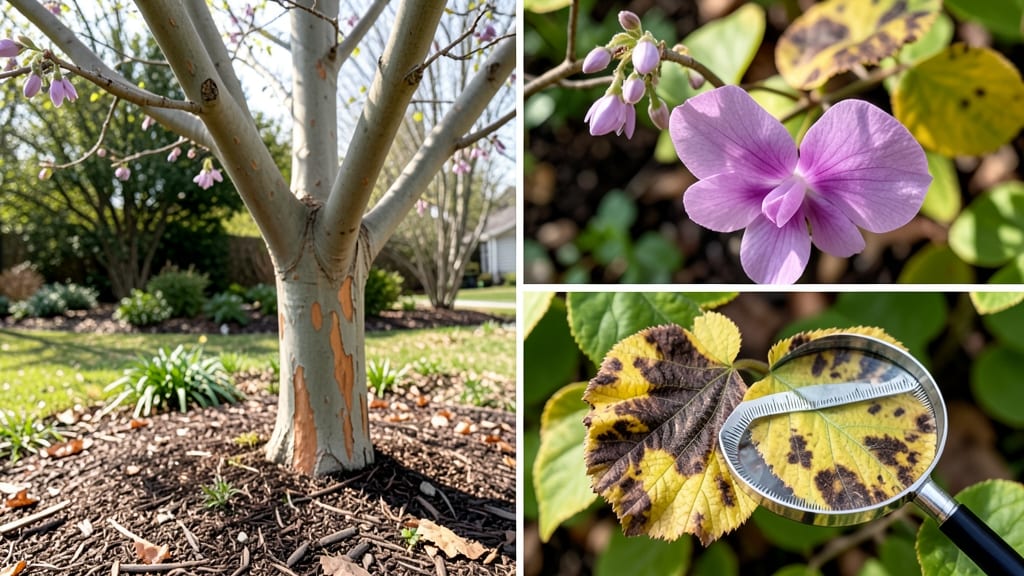
Oklahoma's redbud trees battle leaf spot and powdery mildew harder than most—thanks to our humid summers and sudden spring rains. 🌿 I've seen these diseases turn vibrant pink blooms into sad, spotted messes if you don't catch them early. The good news?
With the right watchful eye, you can save your tree before it's too late. These diseases thrive when leaves stay wet too long, so proper spacing and airflow make all the difference. I've learned that pruning to improve circulation and avoiding overhead watering cuts infection rates by half.
The key is acting fast—once those telltale spots appear, it's time to clean up fallen leaves and treat before the fungus spreads. You'll spot leaf spot as dark brown or black splotches with yellow halos, while powdery mildew looks like white dust on leaves.
Both weaken the tree's ability to photosynthesize, so quick action means healthier blooms next spring. Organic options like neem oil work well, but sometimes a targeted fungicide is the fastest fix. This guide covers everything from prevention to treatment, plus a checklist to diagnose what's really wrong.
Let's get your redbuds back to their showstopping best!
Root Causes Of Tree Stress
Oklahoma’s redbud trees (Cercis canadensis) are stunning in spring with their vibrant pink blooms, but they’re not immune to disease—especially leaf spot and powdery mildew.
Understanding why these issues arise helps you tackle them before they spread. Let’s break down the key factors that create the perfect storm for trouble.
Redbud trees thrive in Oklahoma’s climate, but extreme or inconsistent weather can weaken their defenses. Here’s how environmental stress sets the stage for disease:
- Excess Moisture: Oklahoma’s humid summers and frequent rain create a damp, stagnant atmosphere—ideal for fungal spores like those causing leaf spot. Wet leaves (especially for prolonged periods) trap moisture against the foliage, giving fungi a foothold. Pro tip: Ensure proper drainage in planting beds and avoid overhead watering during peak fungal activity (spring to early summer).
- High Heat & Drought: While redbuds are drought-tolerant, prolonged dry spells stress the tree, reducing its ability to fight off pathogens. Weakened trees are far more susceptible to powdery mildew, which thrives in warm (70–85°F), dry conditions. Actionable fix: Mulch around the base (2–4 inches deep) to retain soil moisture and regulate temperature.
- Low Light Exposure: Redbuds prefer full sun (6+ hours/day), but shade from nearby structures or dense foliage can stunt growth and thicken leaves—making them more vulnerable to mildew. Watch for: Yellowing leaves or slow spring blooms as red flags.
Tight spaces = trapped humidity = fungal paradise. When redbud trees (or other plants) are planted too closely together, airflow is restricted, and leaves stay damp longer. Here’s how it plays out:
- Fungal Spores Spread Easily: Powdery mildew spores can jump from tree to tree in still, humid air. Leaf spot fungi also hitch rides on water droplets or wind, landing on susceptible leaves. Solution: Space redbuds at least 15–20 feet apart to allow air circulation.
- Competition For Nutrients: Overcrowded roots compete for water and nutrients, weakening the tree’s immune response. Signs of stress: Stunted growth, small leaves, or early leaf drop.
- Shaded Canopy: Dense foliage from neighboring trees or shrubs blocks sunlight and increases humidity beneath the canopy. Quick fix: Prune surrounding branches to open up the redbud’s access to light and air.
A redbud tree’s health hinges on balanced nutrition. Too little or too much of certain elements can leave it defenseless against diseases like leaf spot or mildew.
| Deficiency/Excess | Effect on Tree | Disease Risk |
|---|---|---|
| ❌ Nitrogen (N) Deficiency | Yellowing leaves (chlorosis), stunted growth, weak stems | ↑ Leaf spot (weakened leaves can’t resist fungal invasion) |
| ❌ Potassium (K) Deficiency | Brown leaf edges, poor cold hardiness, weak vascular system | ↑ Powdery mildew (reduced disease resistance) |
| ❌ Phosphorus (P) Excess | Delayed flowering, compacted roots, reduced root zone oxygen | ↑ Root rot (indirectly weakens tree, making it prone to foliar diseases) |
| ✅ Balanced Fertilization | Vigorous growth, thick cuticle (natural disease barrier), vibrant blooms | ↓ Disease pressure (healthy trees resist pathogens better) |
💡 Pro Tip: Test your soil (Oklahoma State University Extension offers affordable kits) before fertilizing. Redbuds prefer slightly acidic soil (pH 6.0–7.0). If your soil is alkaline, amend with sulfur or peat moss to prevent nutrient lockout.
Pests don’t just munch on leaves—they create wounds and stress that open the door for fungal infections. Here’s how they contribute:
- Japanese Beetles & Leafminers: These insects chew leaves, creating entry points for leaf spot fungi. Their feeding also weakens the tree’s photosynthetic capacity, reducing its ability to fight disease. Look for: Skeletonized leaves or serpentine mines in foliage.
- Aphids & Scale Insects: These sap-suckers excrete sticky honeydew, which fosters sooty mold—a secondary fungus that blocks sunlight and stresses the tree. Result: Powdery mildew thrives in the shaded, honeydew-coated leaves.
- Boring Insects (e.g., Redbud Borers): Larvae tunnel into branches, disrupting nutrient flow and creating ideal conditions for wood-rotting fungi. Warning sign: Sawdust-like frass at branch bases or oozing sap.
🔥 Action Step: Monitor your redbud for pest activity in early summer. Use neem oil or insecticidal soap for soft-bodied pests, and prune out heavily infested branches to reduce fungal entry points.
Even the hardiest redbud can fall prey to disease if planted or pruned incorrectly. Here’s how human error fuels problems:
- Improper Planting Depth: Burying the root flare (the swollen area where roots meet the trunk) too deep suffocates roots, leading to poor nutrient uptake and stress. Fix: Plant so the flare is just above soil level.
- Wounding During Pruning: Jagged cuts or over-pruning expose the tree to pathogens. Do this instead: Use sharp, sterilized tools and make cuts at a 45° angle just outside the branch collar.
- Ignoring Dead Wood: Dead or dying branches harbor fungi and pests. Left unchecked, they spread to healthy tissue. Rule of thumb: Remove any branches with any signs of disease or dieback.
✨ Prevention Tip: Prune redbuds in late winter to early spring (before new growth) to minimize stress and avoid encouraging fungal growth during wet seasons.
Quick Fixes for Redbud Tree Ailments
When your Oklahoma redbud tree shows signs of stress—whether it’s unsightly leaf spots, fuzzy white powder, or wilting branches—acting fast can make all the difference. Below, we’ve broken down practical, step-by-step solutions for the most common diseases, including leaf spot, powdery mildew, and fungal infections, tailored to Oklahoma’s climate.
Plus, we’ll share prevention tips to keep your tree thriving long-term.
Leaf spot is a pesky but treatable issue. If you spot dark, irregular patches on leaves (often with yellow halos), follow these steps:
🔥 Step 1: Prune Infected Areas
- 👨🍳 Remove and dispose of severely damaged leaves and branches.
- ✂️ Use sterilized pruners (wipe with rubbing alcohol) to avoid spreading spores.
- 🗑️ Bag and trash infected debris—do not compost it.
🌿 Step 2: Improve Airflow & Light
- 🌬️ Thin out dense branches to allow sunlight and air to circulate.
- 🌞 Avoid overcrowding—redbuds need space to breathe!
💊 Step 3: Apply Fungicide (If Needed)
- 🛡️ Use a copper-based or neem oil fungicide (like Bonide Copper Fungicide).
- 🌧️ Apply in the evening to prevent leaf burn from UV exposure.
- ⏰ Reapply every 7–10 days during wet seasons (spring/fall in Oklahoma).
💡 Prevention Tips for Leaf Spot
- 🌡️ Water at the base (avoid overhead spraying).
- ✨ Mulch properly (2–3 inches) to keep soil moist but not soggy.
- 🎯 Clean up fallen leaves regularly—fungus loves damp debris!
That white, powdery coating on leaves? It’s powdery mildew, and while it’s unsightly, it’s easy to control with the right approach.
🍳 Step 1: Isolate the Tree (If Severe)
- 🚫 Move infected branches away from healthy ones to prevent spread.
- 🌿 Avoid pruning during wet weather—spores spread easily in moisture.
🧼 Step 2: Clean Leaves Thoroughly
- 💦 Spray leaves with a baking soda solution (1 tsp baking soda + 1 quart water + a drop of dish soap).
- 🌧️ Apply in the morning so leaves dry quickly.
- 🧽 For stubborn cases, use potassium bicarbonate fungicide (follow label instructions).
🛡️ Step 3: Boost Tree Health
- 💪 Fertilize lightly with a balanced, slow-release fertilizer (like 10-10-10) in early spring.
- 🌱 Ensure proper drainage—powdery mildew thrives in humid, stagnant conditions.
🔥 Prevention Tips for Powdery Mildew
- 🌡️ Water early in the day so foliage dries fast.
- 🌿 Space trees properly (redbuds need 6–10 feet between them).
- ✨ Plant resistant varieties (if replanting, consider ‘Cherokee Brave’ redbud—it’s mildew-resistant!).
No matter the issue, strong trees fight diseases better. Here’s how to keep your redbud in top shape:
| Do This | Avoid This |
|---|---|
| 🌿 Mulch with wood chips (keeps soil healthy) | 🚫 Over-mulch (can suffocate roots) |
| 💧 Water deeply but infrequently (1–2 inches/week) | 🚫 Overhead watering (encourages fungus) |
| 🍃 Prune in late winter/early spring (before new growth) | 🚫 Prune during wet seasons (spreads disease) |
| 🔍 Inspect leaves monthly (catch issues early!) | 🚫 Ignoring early signs (diseases worsen fast) |
If your tree:
- 🌿 Loses more than 30% of its leaves despite treatment.
- 🪵 Shows signs of bark rot or oozing sap (could be a deeper issue).
- 🐛 Has persistent pest infestations (like scale or borers).
A certified arborist can assess the damage and recommend targeted treatments (like systemic fungicides).
Remember: Oklahoma’s humid springs and hot summers create perfect conditions for fungal growth. Act fast, stay consistent, and your redbud will bounce back beautifully!** 🌸💚
Frequently asked questions
What are the first signs of leaf spot on my Oklahoma redbud?
Watch for small, dark brown or black spots with yellow halos appearing on the upper leaves first. These spots may grow larger and develop gray centers as the disease progresses. Check the undersides of leaves too—fungal spores often start there. Early detection is key to preventing spread.
Can I use household items to treat powdery mildew on my redbud?
Yes! Mix 1 teaspoon baking soda with 1 quart water and add a drop of dish soap for better adhesion. Spray this solution on the leaves in the morning when humidity is lower. For severe cases, repeat every 7-10 days. This organic approach works well for mild infections.
Why does my redbud get diseases more often in Oklahoma's spring?
Oklahoma's spring combines warm temperatures with frequent rain showers—perfect conditions for fungal spores to germinate and infect leaves. The sudden shift from winter dormancy to active growth also weakens the tree's natural defenses temporarily. Proper spacing and avoiding overhead watering can reduce this seasonal risk.
How do I know if my redbud's problem is a disease or just nutrient deficiency?
Diseases like leaf spot show distinct spots with halos, while powdery mildew appears as white dust. Nutrient deficiencies cause uniform discoloration (yellowing between veins for nitrogen deficiency, brown edges for potassium deficiency) without distinct spots. Test your soil to confirm—Oklahoma's alkaline soils often lack essential nutrients.
When is the best time to prune my diseased redbud tree?
Prune during late winter to early spring (before new growth begins) to minimize stress and prevent fungal spread. If you must prune during the growing season, do so on dry days and sterilize your tools between cuts. Remove only the most infected branches to avoid weakening the tree further.