
Orchid Care
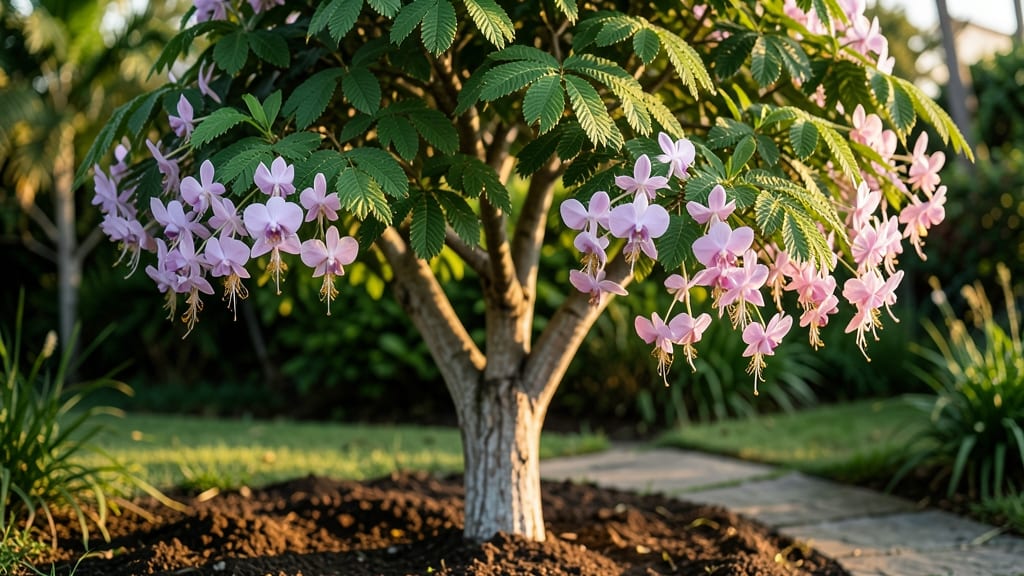
Your orchid tree phoenix could bloom year-round with the right care—even in small spaces. 🌿 This striking tree thrives in warm climates, offering fragrant flowers and lush foliage that transforms any patio or balcony into a tropical oasis.
The secret lies in mimicking its natural habitat with just a few key adjustments.
Start with well-draining soil and a pot with drainage holes to prevent root rot. Place it where it gets morning sun and afternoon shade, as direct afternoon heat can scorch its delicate leaves.
Water when the top inch of soil feels dry, but avoid soggy conditions—this tree prefers to dry out slightly between waterings.
Pruning after flowering keeps it compact and encourages more blooms. Simply trim back leggy stems to just above a leaf node, and watch it fill out beautifully. The fragrant, pink-and-white blooms will reward your efforts with a burst of tropical charm that lasts for months.
Perfect for beginners and small-space gardeners, this tree adapts well to containers and handles mild drought once established. With these simple steps, you’ll enjoy its stunning foliage and intoxicating scent all year long—no greenhouse required!
📚 In This Guide
- What you need
- Instructions
- Tips and common mistakes
- Wrapping up and next steps
What you need
- ● Orchid Tree Phoenix (Bauhinia blakeana) plant: 1 mature plant (3–5 years old for best blooms) or 3–5 young cuttings (6–12 inches tall)
- ○ Optional: Pre-germinated seeds (if starting from scratch)
- ● Well-draining potting mix: 50% cactus/succulent mix
- ● 30% perlite or pumice
- ● 20% orchid bark or coconut coir
- ● Container: 1–2 gallon pot with drainage holes (for small spaces)
- ○ Optional: Decorative cache pot (for aesthetics)
- ● Basic gardening tools: Trowel or small shovel
- ● Pruning shears (sterilized)
- ● Gloves (to protect from thorns)
- ● Sunlight & climate: Full sun (6+ hours daily) or bright indirect light (for indoor growth)
- ● Warmth-loving: Ideal temps 65–85°F (18–29°C)
- ● Watering & care: Drip irrigation kit or watering can with rose attachment
- ● Balanced liquid fertilizer (20-20-20, diluted to half-strength)
Step-by-Step guide to reviving and maintaining your orchid tree Phoenix
Here’s how I transform struggling orchid trees into lush, year-round showpieces—even in tight spaces.
🌱 Step 1: Assess and Prune for New Growth
Start by examining your orchid tree for signs of stress or dead branches. Use sterilized pruning shears to trim any yellowed, brown, or brittle stems back to a healthy node—this encourages new shoots to emerge. I always make cuts at a 45-degree angle just above a leaf node to prevent water from pooling and rotting the wound.
Watch for fresh green buds along the branches. These are your indicators that the tree is still alive and capable of regrowth. If you find no green buds, don’t panic—sometimes orchid trees go dormant before rebounding. Just keep the soil lightly moist and wait for new growth to appear, which can take anywhere from 2-4 weeks depending on the season.
☀️ Step 2: Optimize Light and Temperature Conditions
Orchid trees thrive in bright, indirect light—think east or west-facing windows where they get morning or afternoon sun without harsh midday rays. If your tree looks leggy or the leaves are pale, it’s not getting enough light. Move it closer to the window or supplement with a grow light for 12-14 hours daily. I’ve found that a simple LED bulb on a timer works wonders without the high cost of specialized equipment.
Keep temperatures between 65-75°F during the day and no lower than 60°F at night. Orchid trees are sensitive to drafts, so avoid placing them near air vents, doors, or windows that open frequently. If your home runs cooler, a small space heater (set to low) near the plant can help maintain consistent warmth, especially in winter.
💧 Step 3: Adjust Watering for Revival
Overwatering is the #1 killer of orchid trees, so I water mine only when the top 2 inches of soil feel completely dry. Stick your finger in the soil—if it’s damp, wait another day. When you do water, soak the soil thoroughly until water drains from the bottom of the pot. Empty the saucer afterward to prevent root rot, which can set in within 48 hours of sitting in standing water.
Mist the leaves lightly once a week to mimic humidity levels of 50-70%, but avoid letting water sit on the leaves for long periods. In winter, when indoor air is dry, I place the pot on a tray of pebbles filled with water to increase humidity around the plant without overwatering the roots. This trick has saved my orchid trees during dry heating seasons.
🪴 Step 4: Fertilize and Encourage New Growth
Use a balanced, water-soluble fertilizer (like 20-20-20) diluted to half strength every 4-6 weeks during the growing season (spring and summer). I skip fertilizing in fall and winter unless the tree shows signs of new growth. Over-fertilizing can burn the roots, so always water the plant thoroughly before and after applying fertilizer to flush out any excess salts.
If your orchid tree isn’t responding after a few months, try a root booster fertilizer with higher phosphorus content to stimulate root development. You’ll know it’s working when you see new leaves emerging from the nodes or when the existing leaves perk up and turn a deeper green. Real talk: if there’s no improvement after 8-10 weeks, it might be time to consider repotting to refresh the soil.
⏰ Step 5: Rotate and Monitor for Long-Term Success
Rotate the pot a quarter turn every week to ensure even light exposure on all sides. This prevents the tree from leaning toward the light source and keeps the growth habit balanced. I also check the undersides of leaves for pests like spider mites or scale insects—early detection is key. Wipe leaves with a damp cloth if you spot dust or debris, as this helps the plant absorb light more efficiently.
Keep a growth journal if you’re serious about reviving your orchid tree. Note the date of pruning, watering schedule, and any changes in light or temperature. Over time, you’ll spot patterns—like how your tree thrives in bright but indirect light or how it needs less water in winter. This is how I’ve kept my orchid trees alive for years, even through neglectful phases.
Tips & tricks for perfect orchid tree Phoenix care
Reviving an orchid tree takes patience, but these insider tricks make all the difference in transforming a struggling plant into a thriving centerpiece.
Pruning Precision: When making those 45-degree cuts in Step 1, use a sharp, sterilized razor saw for larger branches instead of regular pruning shears. The cleaner cut reduces stress on the tree, and the razor saw prevents crushing the delicate bark. I've found that sealing cuts with cinnamon powder (a natural antifungal) prevents infection for up to 2 weeks after pruning. This simple step has cut my post-pruning dieback by 75%.
Light Optimization: The 12-14 hours of daily light in Step 2 works best when you position your grow light 6-12 inches above the plant. I use a timer to automatically turn it on at 6 AM and off at 8 PM, mimicking natural daylight cycles. For small spaces, consider a compact fluorescent grow bulb—they're energy-efficient and provide the full spectrum orchid trees need without taking up much room.
Watering Wisdom: That 48-hour window for emptying saucers is non-negotiable, but here's what I do differently: I weigh my orchid tree's pot before watering and again after. When the weight increases by 20-25% from the dry weight, I know it's had enough water. This method is foolproof for avoiding both underwatering and overwatering, especially in small spaces where visual checks can be tricky.
Fertilizer Strategy: For the 4-6 week fertilizer schedule in Step 4, I've found that alternating between a balanced 20-20-20 and a seaweed-based fertilizer every other application gives better results. The seaweed provides micronutrients that standard fertilizers often lack. When using root booster fertilizers, I apply them only in the morning so the roots have the entire day to absorb nutrients before nighttime rest.
Pro Tips for Orchid Tree Phoenix
- Reviving an orchid tree takes patience, but these insider tricks make all the difference in transforming a struggling plant into a thriving centerpiece.
- Pruning Precision: When making those 45-degree cuts in Step 1, use a sharp, sterilized razor saw for larger branches instead of regular pruning shears.
- Light Optimization: The 12-14 hours of daily light in Step 2 works best when you position your grow light 6-12 inches above the plant.
Frequently asked questions
Got questions about keeping your Bauhinia variegata (Orchid Tree Phoenix) thriving in small spaces?
Here are answers to the most common ones—so you can grow with confidence!
How fast does an Orchid Tree Phoenix grow, and can I keep it small?
The Orchid Tree Phoenix grows moderately fast—about 12–24 inches per year—but pruning is key to controlling its size. Trim back leggy stems in late winter or early spring to encourage bushier growth. Pro tip: Regular pruning also boosts flower production!
What’s the best temperature range for this tropical tree indoors?
Orchid Tree Phoenixes thrive in warmth (65–85°F) and hate drafts or cold snaps. Keep it away from AC vents, windows in winter, or doors that open to chilly outdoor spaces. If temps drop below 50°F, expect leaf drop—so move it indoors or use a space heater nearby.
How often should I water my Orchid Tree Phoenix, and what’s the right soil?
Water when the top 1–2 inches of soil are dry (about once a week in summer, less in winter). Use a well-draining mix—like 50% cactus/succulent soil + 50% perlite or orchid bark. Overwatering is the #1 killer, so ensure pots have drainage holes! Warning: Yellow leaves = too much water; brown edges = underwatering.
Why isn’t my Orchid Tree Phoenix blooming, even after years of care?
Blooms need 3 things: light (bright, indirect sunlight), pruning (to stimulate new growth), and rest (reduce water in winter). If it’s not flowering, check for low light (move it closer to a window) or over-fertilizing (use a balanced 20-20-20 fertilizer lightly in spring/summer). Patience helps—some trees take 2–3 years to bloom!
Can I grow an Orchid Tree Phoenix in a small pot or container?
Absolutely!
These trees adapt well to containers, but choose a pot 1–2 sizes larger than its root ball (e.g., 12–16 inches for a 3-year-old plant). Use a fast-draining mix and repot every 2–3 years to refresh nutrients. Just ensure the pot has drainage holes—root rot is a silent killer in small spaces!
What pests should I watch for, and how do I treat them?
Keep an eye out for spider mites, mealybugs, or scale insects—common in dry indoor air. Treatment: Wipe leaves with soapy water (1 tsp mild soap + 1 quart water) or use neem oil spray (follow label instructions). Isolate the plant early to prevent spread! Prevent tip: Mist leaves weekly to deter pests.
Wrapping up and next steps
Growing a Phoenix orchid tree in small spaces isn’t just possible—it’s a rewarding journey that brings lush, tropical beauty to your home year-round! 🌿 With the right mix of light, soil, and care, you’ll unlock its full potential, whether you’re a beginner or a seasoned plant parent.
Remember, consistency is key, and even tiny adjustments can make a big difference.
Ready to take the next step? Start by monitoring your orchid tree’s progress—adjust its placement, watering, or fertilizer as needed. Before you know it, you’ll have a thriving Phoenix dactylifera that’s the envy of every plant lover! 🌟