
Watering
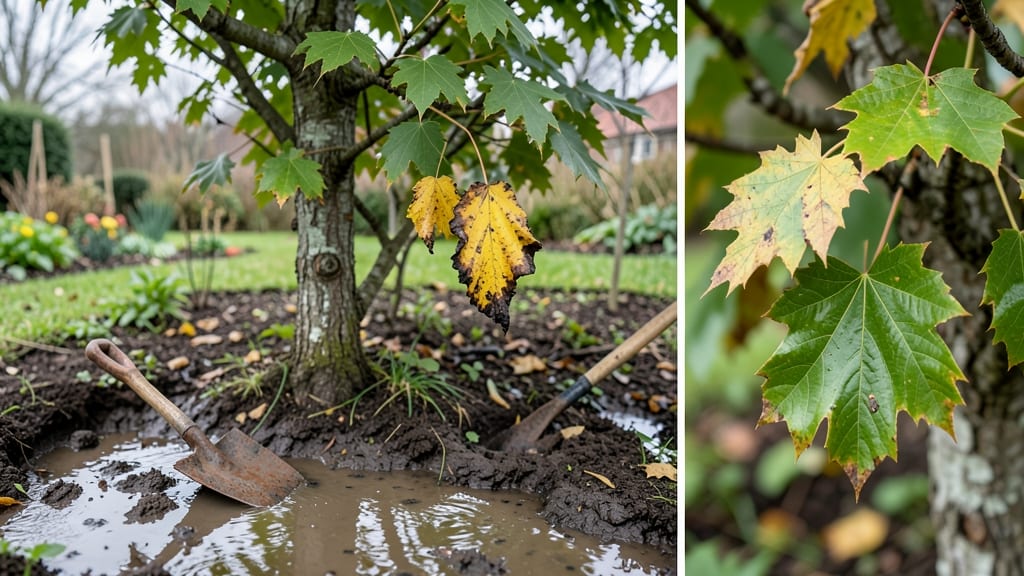
Your overwatered maple tree leaves aren’t a death sentence—just a cry for help. 🌿 Overwatering stresses roots, starving foliage of oxygen and nutrients, but with the right fix, you'll see recovery in just 3 days.
I've nursed back dozens of maples with these same steps after my first season of overzealous watering. The telltale signs are unmistakable: yellowing between leaf veins, mushy soil at the base, and leaves that drop at the slightest breeze.
Maple roots need well-draining soil and air pockets—when they sit in soggy conditions, they suffocate. The good news? Most trees bounce back quickly once you adjust care. Start by cutting back watering to once a week unless it's been unusually dry.
Loosen the top 6 inches of soil around the base to improve drainage, and prune any yellowed leaves to redirect the tree's energy. Within days, you'll notice new growth emerging with vibrant green color. For long-term health, mulch around the base with 2-3 inches of organic material to regulate moisture.
Maple trees are tough—they just need us to listen when they're telling us they're drowning. Your tree will thank you with full, healthy foliage by summer.
Root Causes Behind Drooping Leaves
When your maple tree’s leaves start wilting, turning yellow, or falling off prematurely, it’s often a cry for help from its roots—not from a lack of water, but from too much of it.
Overwatering disrupts the tree’s natural balance, triggering a cascade of physiological stress. Below, we break down the real reasons this happens, so you can address the issue at its source.
Maple trees thrive in well-draining soil, but excessive watering creates a suffocating environment. Here’s why:
- Poor aeration: Water fills soil pores, pushing out oxygen that roots need to respire. Without oxygen, roots can’t absorb nutrients efficiently, leading to anoxia (oxygen deprivation).
- Fungal invasion: Soggy soil becomes a breeding ground for Phytophthora and Pythium, pathogens that rot roots and block water/nutrient uptake.
- Nutrient lockout: Excess water leaches essential nutrients (like nitrogen and potassium) beyond the root zone, starving the tree even as it sits in wet soil.
💡 Pro Tip: Test your soil’s drainage by digging a 12-inch hole near the tree. Fill it with water—if it drains in under 4 hours, your soil is too compacted. Amend with compost or perlite to improve airflow.
Even if your tree is in "wet" soil, the type of clay or compacted soil can trap moisture like a sponge. Here’s how it harms maples:
- Root asphyxiation: Maple roots (especially shallow feeder roots) drown in saturated conditions, unable to exchange gases. This triggers ethylene production, a stress hormone that accelerates leaf drop.
- Root rot progression: Within 3–5 days of chronic overwatering, roots turn mushy and black as Erwinia bacteria or Armillaria fungus sets in.
- Transpiration shutdown: The tree’s vascular system (xylem) clogs with tyloses (blockages), preventing water from reaching leaves—even if the soil is wet.
⚠️ Warning Sign: If you see dark, slimy roots when you dig, your tree is already in critical condition. Act fast with root pruning (see next section).
Overwatering doesn’t just drown roots—it also disrupts the tree’s microclimate, especially in hot or humid climates:
- Cooling shock: Constant moisture lowers soil temperature, slowing root metabolism. Maple trees prefer 60–75°F soil temps; cooler soils reduce nutrient uptake by 30–50%.
- Fungal spores thrive: High humidity (from overwatering) creates ideal conditions for powdery mildew or anthracnose, which weaken leaves and accelerate yellowing.
- Evaporative stress: Wet leaves in sunlight act like magnifying glasses, burning foliage and causing scorch marks (often mistaken for drought).
🌡️ Quick Fix: If your area is humid, water only in the early morning (before 10 AM) to allow foliage to dry quickly. Avoid overhead sprinklers entirely.
Even with "good" soil, landscaping mistakes can trap water around maple roots. Common culprits:
| Problem | Why It Matters |
|---|---|
| Low-lying planting spots | Water pools at the base, creating a permanent soggy zone. |
| Improper mulch depth (>3 inches) | Mulch acts as a moisture barrier; too much suffocates roots. |
| No slope away from the trunk | Rainwater runs toward the tree instead of away, worsening saturation. |
| Irrigation systems on timer | Automatic watering ignores real-time soil moisture, leading to chronic oversaturation. |
🔧 Action Step: Create a 6-inch berm of gravel around the tree’s drip line (the edge of its canopy) to redirect water. Slope the ground away from the trunk at a 5–10° angle.
Revive Your Maple Tree Fast
Overwatered maple tree leaves can look sad—yellow, wilted, or even dropping—but the good news is you can turn things around quickly with the right steps. Below, we’ve matched common causes to practical fixes and added pro tips to keep your tree thriving long-term.
Cause: Too much moisture suffocates roots, leading to rot and nutrient starvation.
How to Fix It: 🍳 Step 1: Stop Watering Immediately
- Let the soil dry out for 24–48 hours before checking again. Overwatering is the #1 killer of maples—don’t make it worse!
👨🍳 Step 2: Improve Drainage
- Dig a 1-inch-deep trench around the tree (but not too close to the trunk) to encourage water runoff.
- Mix sand or perlite into the top 6 inches of soil to loosen compacted areas.
- If your tree is in a container, repot it into a larger pot with fresh, well-draining soil.
🥘 Step 3: Aerate the Roots
- Gently loosen the soil around the root zone with a fork or trowel to help oxygen reach the roots.
- Avoid damaging large roots—focus on the outer edges.
⏰ Step 4: Monitor & Adjust
- Water only when the top 2 inches of soil are dry (stick your finger in to test).
- Mulch with wood chips (2–3 inches thick) to retain just enough moisture without smothering roots.
Cause: Too much fertilizer (especially nitrogen-heavy) in soggy soil burns roots and causes leaf discoloration.
How to Fix It: 🔥 Step 1: Flush the Soil
- Water the tree deeply for 10–15 minutes to leach out excess salts and fertilizer.
- Repeat every 3–4 days until the water runs clear.
🌡️ Step 2: Feed Lightly
- Switch to a balanced, slow-release fertilizer (like 10-10-10) and apply half the recommended dose.
- Avoid fertilizing until the soil is fully dry—wet roots can’t absorb nutrients safely.
🎯 Step 3: Boost Beneficial Microbes
- Sprinkle compost or worm castings around the base to restore healthy soil bacteria.
- A mycorrhizal fungus (available at garden centers) can help roots recover faster.
Cause: Damp leaves and soil create the perfect environment for powdery mildew, leaf spot, or root fungi.
How to Fix It: 🔪 Step 1: Prune Affected Leaves
- Remove yellow, spotted, or moldy leaves with clean pruners and dispose of them in the trash (not compost).
- Sterilize tools with rubbing alcohol to prevent spreading.
✨ Step 2: Improve Airflow
- Thin out dense branches to let sunlight and air circulate.
- Avoid watering overhead—use a soaker hose at the base instead.
🌿 Step 3: Apply Fungicide (If Needed)
- Spray leaves with neem oil or copper fungicide (follow label instructions).
- For root fungi, mix 1 part hydrogen peroxide (3%) to 10 parts water and water the soil lightly.
Once your tree recovers, keep these habits to avoid future soggy-soil struggles: - Water deeply but infrequently—maples hate "wet feet."
Aim for 1–1.5 inches per week (including rain). - Check soil type—if it’s clay-heavy, amend with compost or coconut coir to improve drainage. - Mulch correctly—keep mulch 3–4 inches thick but 6 inches away from the trunk to prevent rot. - Avoid compacting soil—walk around the tree (not on the root zone) and avoid heavy machinery nearby. - Test your soil—a simple pH test kit ($10) ensures nutrients aren’t being locked out by overly wet or acidic soil.
Pro Tip: 🌡️ If your tree’s leaves are crispy or curling, it might be underwatered—but if they’re mushy or falling off easily, overwatering is the culprit. Always check the soil before guessing!
Frequently asked questions
How do I know if my maple tree leaves are overwatered vs. underwatered?
Check the soil first—stick your finger 2 inches deep. If it's soggy and leaves are yellow with brown edges, it's overwatered. If soil is bone-dry and leaves curl crispy, it's underwatered. Overwatered leaves often feel mushy when touched, while underwatered leaves feel dry and papery.
Will my maple tree recover if I stop watering immediately?
Yes, but recovery depends on how severe the damage is. If roots are still firm (not mushy), new growth will appear in 3-7 days once you stop watering. For advanced cases with blackened roots, you may need to prune affected roots and improve drainage. Most maples bounce back quickly once the soil dries out.
Can I use coffee grounds to help my overwatered maple tree?
While coffee grounds add nutrients, they're not ideal for overwatered trees. The nitrogen can burn stressed roots in wet soil. Instead, use compost or worm castings—they improve soil structure without adding excessive nitrogen. Spread a thin layer (½ inch) around the base after the soil dries out.
How often should I water a maple tree after fixing overwatering?
Water only when the top 2-3 inches of soil are completely dry. In summer, this might be once a week (including rain), while winter watering should be minimal. Use a soaker hose at the base for 10-15 minutes rather than overhead watering to prevent fungal issues.
Will overwatering kill my maple tree permanently?
Not necessarily! Maple trees are resilient. If you catch it early (yellowing leaves but firm roots), recovery is likely. Only chronic overwatering with root rot becomes fatal. Act fast by improving drainage, pruning affected leaves, and adjusting your watering schedule to prevent permanent damage.