
Watering
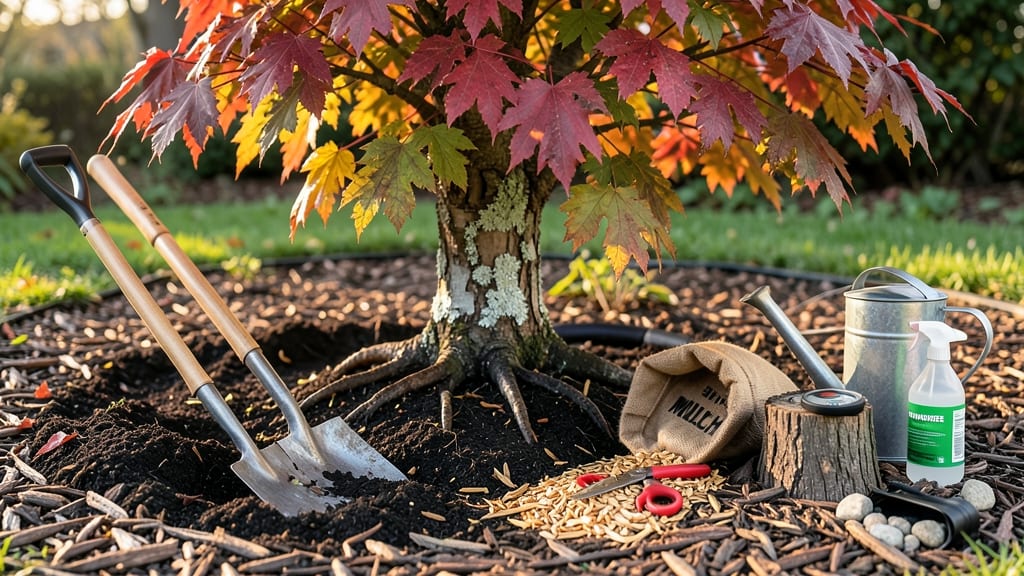
Your tree’s roots are drowning—but overwatered tree recovery is absolutely fixable. 🌳 I’ve nursed back more overwatered trees than I’d like to admit, and the secret isn’t complicated: drainage, patience, and knowing when to step back.
The first sign is usually yellow leaves or a foul smell at the base, but the good news is roots can recover with the right care.
Most people assume overwatered trees are beyond saving, but the truth is simpler: roots need air as much as water. We’re talking about adjusting your watering schedule, maybe adding perlite or sand to compact soil, and pruning any branches that look mushy or blackened.
Even heavy clay soil can be amended—it just takes a little elbow grease and the right tools.
Within 4-6 weeks, you’ll see new green growth pushing through, and the tree’s trunk will firm up again. The key is consistency: check soil moisture before watering (stick your finger in—if it’s damp past 2 inches, wait), and avoid mulch piles that smother the base.
Your tree might need a little TLC, but it’ll bounce back stronger than ever.
Works for maples, oaks, fruit trees—even container-grown specimens. The same principles apply, whether you’re dealing with a backyard giant or a potted bonsai. Let’s get those roots breathing again.
Root Causes Of Overwatering
When your tree starts showing signs of distress—yellowing leaves, wilting branches, or a soggy soil smell—it’s often a cry for help from its roots. Overwatering disrupts the delicate balance trees need to thrive, and understanding why it happens is the first step to fixing it.
Here’s a breakdown of the most common culprits, backed by science and actionable insights.
Trees hate "wet feet," and poor drainage is the #1 reason roots drown. When soil doesn’t allow excess water to escape—whether due to compacted clay, a lack of organic matter, or an improperly sloped landscape—water pools around the roots.
This creates an oxygen-deprived environment, suffocating the roots and preventing them from absorbing nutrients.
- Scientific breakdown: Roots rely on aeration (air pockets in soil) for respiration. When soil stays saturated, beneficial microbes that help roots process water and nutrients die off, while harmful anaerobic bacteria thrive, releasing toxic compounds like hydrogen sulfide.
- Actionable fix: Test your soil’s drainage by digging a 12-inch hole, filling it with water, and timing how long it takes to drain. If it’s slower than 4 hours, amend the soil with perlite, sand, or compost to improve porosity.
Even well-meaning gardeners can fall into the trap of watering on a strict schedule rather than checking soil moisture. Factors like rainfall, humidity, and tree species (e.g., oaks vs. willows) dictate how often a tree truly needs water. Overwatering in this case is often a timing and volume miscalculation.
- Scientific breakdown: Trees absorb water through osmosis, but their roots can only process so much at once. Excess water forces roots to "shut down" temporarily, leading to root rot (caused by fungi like Phytophthora). Over time, this weakens the tree’s structural integrity.
- Actionable fix: Use the "finger test": Stick your index finger 2–3 inches into the soil. If it’s damp, wait. If it’s dry, water deeply but infrequently—aim for 1–1.5 inches per week (including rainfall).
Mulch isn’t just for looks—it’s a critical barrier that regulates soil temperature, retains moisture, and prevents water from evaporating too quickly. But too much, or the wrong type, can traps moisture against the trunk, creating a soggy band that suffocates roots.
- Scientific breakdown: Organic mulch (like wood chips) breaks down over time, adding nutrients—but if piled too high (over 4 inches), it can smother roots and block oxygen. Inorganic mulch (like rocks) reflects heat, which can dry out soil near the surface while keeping deeper layers damp.
- Actionable fix: Apply mulch in a 3-inch layer, keeping it 6 inches away from the trunk to prevent rot. Use cypress or cedar mulch (resistant to compaction) and refresh it annually.
Automatic sprinklers, drip systems, or even hose attachments can accidentally overwater if not calibrated correctly. Misaligned sprinkler heads, clogged emitters, or timers set for daily cycles (instead of interval-based watering) turn your yard into a swamp.
- Scientific breakdown: Frequent light watering encourages shallow root growth, making trees dependent on surface moisture. This weakens their ability to reach deeper water reserves during droughts. Overhead sprinklers also waste 30–50% of water through evaporation.
- Actionable fix: Audit your system: Adjust sprinklers to water at the base (not the canopy), set timers for early morning (reduces evaporation), and use soil moisture sensors to automate shutdowns when soil is damp.
💡 Pro Tip: If your tree is already struggling, stop watering immediately and let the soil dry out. Roots can recover faster in well-aerated conditions than in perpetual sogginess!
Revive Your Tree Step by Step
Overwatering can feel like a death sentence for your tree, but with the right approach, recovery is absolutely possible. The key is to act quickly, address the root cause, and give your tree the care it needs to bounce back.
Below, we’ve broken down practical, actionable solutions tailored to the most common signs of overwatering—so you can turn things around before it’s too late.
Problem: Excessive moisture suffocates roots, cutting off oxygen and inviting rot. Fix:
- Cut off all water—no more hoses, sprinklers, or rainwater collection near the base.
- Check soil moisture by sticking your finger 2–3 inches deep. If it’s damp, wait at least 3–5 days before reassessing.
- Use a moisture meter (if available) for accuracy—roots need well-drained soil, not a swamp.
Pro Tip: 💡 If your tree is in a pot, move it to a shaded, well-ventilated spot and let the topsoil dry out completely before watering again.
Problem: Compacted or clay-heavy soil traps water, preventing roots from breathing. Fix:
- Aerate the soil around the base (but avoid damaging roots). Use a garden fork to loosen the top 6–12 inches.
- Add organic matter like compost, coconut coir, or perlite to improve drainage. Mix it into the top 4–6 inches of soil.
- Raise the tree’s base (if in a pot or low-lying area) by adding a layer of gravel or broken pottery at the bottom before repotting.
⚠️ Warning: Never use fresh mulch directly against the trunk—keep it 6+ inches away to prevent rot.
Problem: Yellowing, wilting, or mushy leaves signal stress, but over-pruning weakens the tree further. Fix:
- Remove only the worst offenders—focus on brown, crispy, or moldy leaves (use clean, sharp pruners).
- Avoid heavy pruning unless the tree is severely declining. Instead, trim no more than 20–30% of the foliage at once.
- Disinfect tools with rubbing alcohol to prevent spreading disease.
Pro Tip: 🌡️ If leaves are yellow but still firm, they may recover with better drainage—hold off on pruning until you see new growth.
Problem: Overwatering is a habit, not a one-time mistake. Fix:
- Water deeply but infrequently. Aim for 1–2 long soakings per week (depending on climate) rather than daily light sprinkles.
- Water at the base only—avoid wetting leaves to reduce fungal risks.
- Use a drip irrigation system or soaker hose for slow, controlled release.
📊 Watering Schedule Cheat Sheet:
| Tree Type | Watering Frequency | Depth per Session |
|---|---|---|
| Newly planted | 2–3x/week | 6–12 inches deep |
| Mature (drought-tolerant) | 1x/week | 8–12 inches deep |
| Potted trees | Every 3–5 days | Until water drains |
Problem: If roots are mushy, black, or smell foul, rot has set in. Fix: - Gently inspect roots (if possible) by digging carefully near the base.
Healthy roots are firm and white/brown; rotten roots are slimy and dark. - Trim affected roots with sterilized shears, then replant in fresh, dry soil. - Apply a fungicide (like copper-based or neem oil) if rot is widespread.
✨ Prevention Tip: Plant trees in raised beds or slopes if your yard has poor drainage—gravity helps water flow away!
- Mild cases: 2–4 weeks (with adjusted care).
- Severe rot/damage: 2–6 months (may require professional help).
- Signs of progress: New leaves, firmer soil, and reduced wilting.
🎯 Final Reminder: Patience is key—trees heal slower than annuals, but with the right care, they’ll thrive again! If in doubt, consult a local arborist for species-specific advice.
Need a quick checklist? [Download our Overwatered Tree Recovery Guide (link placeholder)] for step-by-step visuals!
Frequently asked questions
How do I know if my tree is overwatered vs. underwatered?
Check the soil first—stick your finger 2-3 inches deep. If it's damp, you're likely overwatering (look for yellow leaves, wilting, or foul smells). If it's bone-dry, you're underwatering (leaves will be crispy and brown). Another clue: overwatered trees often have mushrooms growing at the base from excess moisture.
Can I save a tree with root rot from overwatering?
Yes, but it requires immediate action! First, stop all watering and let the soil dry completely. Then gently remove affected roots (they'll be black and mushy), replant in fresh, well-draining soil with perlite or sand, and apply a copper-based fungicide. Recovery takes 2-6 months—be patient and avoid watering until new growth appears.
What's the best way to fix compacted clay soil around my tree?
Break up the clay with a garden fork to create air pockets, then mix in organic matter like compost or coconut coir. For severe cases, consider installing French drains around the base to redirect excess water. Mulch with cypress chips (not too close to the trunk) to help regulate moisture over time. This improves drainage while preventing future soggy conditions.
How often should I water my tree after recovery?
Once recovered, water deeply but infrequently—1-2 times per week (adjust for climate). Aim for 1-1.5 inches of water per session, delivered at the base (not the leaves). Use a moisture meter to guide you: water only when the top 2-3 inches of soil are dry. Mature trees often need less frequent watering than young ones!
Will my tree ever fully recover from overwatering?
Most trees can recover with proper care, though severe cases may take 6 months or longer. Look for signs of progress: new green leaves, firmer soil, and reduced wilting. Some species (like willows or maples) bounce back faster than others. The key is consistency—keep soil well-drained, avoid overwatering habits, and give it time. Patience pays off!