
Companion Plants
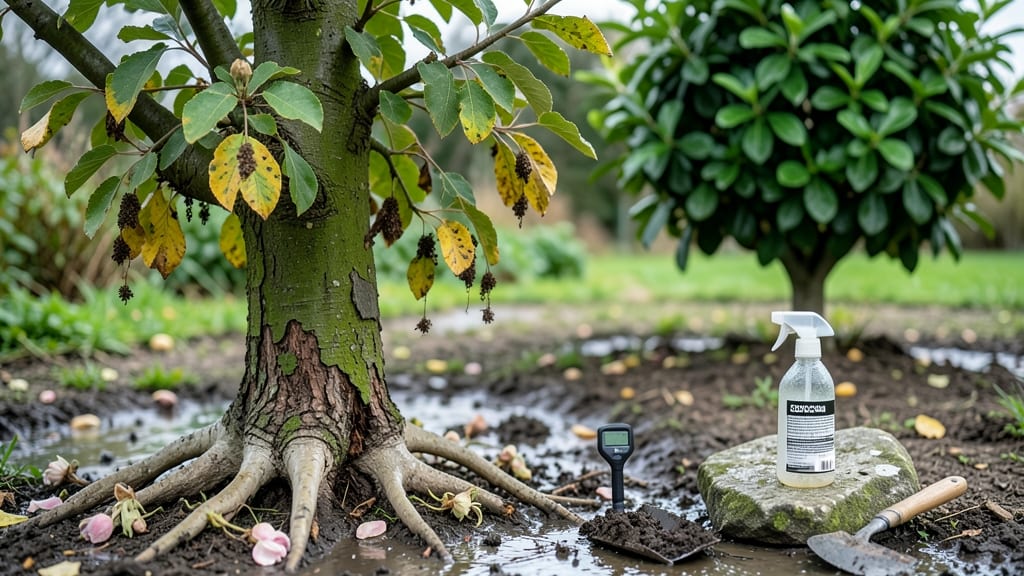
Will an overwatered tree recover? It depends—early intervention can save it, but prolonged waterlogging causes root rot and permanent damage. Watch for drooping leaves, yellowing foliage, or foul-smelling soil, as these indicate stress. You may still revive it by adjusting watering and pruning damaged branches, provided the roots haven't fully deteriorated.
Overwatering creates a suffocating environment for roots, cutting off oxygen and inviting fungal infections. 🌱 When soil stays soggy for weeks, the tree's ability to absorb nutrients plummets, leading to wilting even when thirsty.
Some hardy species like oaks or maples can bounce back if you catch the problem early, but delicate varieties may never recover. The key is acting fast—reduce watering immediately, improve drainage, and prune dead branches to help the tree redirect energy to surviving roots.
I’ve seen firsthand how quickly a tree can turn around when given proper care. Last summer, a neighbor’s weeping willow looked doomed after weeks of heavy rain, but by aerating the soil and cutting back the most damaged branches, it regained its vibrant green within a month.
The lesson? Don’t wait for obvious signs—check soil moisture regularly, especially in containers or heavy clay soils where water pools easily.
💡 In This Article
- How Overwatering Damages Tree Roots and What Happens Next
- Step-by-Step Recovery Plan for Overwatered Trees
How overwatering damages tree roots and What happens next
When soil stays too wet for extended periods, roots suffocate because water displaces oxygen in the tiny air pockets between soil particles. This creates anaerobic conditions, where roots can't respire properly—like trying to breathe through a wet towel.
Within 2-3 days of constant moisture, root cells begin starving for oxygen, triggering a cascade of stress responses. The tree's natural defense system floods affected areas with ethylene gas, which accelerates leaf drop as the plant prioritizes survival over growth.
Beyond oxygen deprivation, prolonged dampness turns soil into a breeding ground for Phytophthora and Pythium fungi, which rot roots at an alarming rate.
These pathogens thrive in waterlogged conditions, spreading through root tissues like a silent infection. 🌱 What makes this dangerous is that symptoms (yellowing leaves, stunted growth) often appear weeks after the damage begins—by then, up to 50% of the root system may already be compromised.
Species like willows or poplars show resilience with 1-2 weeks of recovery time, while delicate varieties such as magnolias can decline in just 5-7 days of overwatering.
The timeline of decline depends on two critical factors: soil type and tree species. Clay soils hold moisture for days longer than sandy loams, accelerating rot.
Meanwhile, deep-rooted trees (like oaks) can access moisture from lower soil layers, giving them a fighting chance, while shallow-rooted varieties (like fruit trees) suffer immediate stress.
The moment roots die, the tree loses its anchor and nutrient pipeline—this is when irreversible decline begins, often marked by blackened, mushy roots and a foul, sour smell.
Here’s what’s happening at the cellular level: Root hairs (the tiny, hair-like extensions that absorb water) collapse within 48 hours of suffocation. Without these, the tree can't uptake nutrients even if soil moisture improves.
The damage spreads upward through the vascular system, causing vascular discoloration (brown streaks in stems) that’s a telltale sign of advanced rot. 💫 What most gardeners miss is that even if leaves look healthy, the roots may already be dying—this is why digging a small test hole (6 inches deep) can reveal the truth before it’s too late.
Species resilience varies wildly: native oaks can recover from 3-4 weeks of overwatering if roots remain intact, while tropical varieties like avocado trees may show permanent damage in just 10 days.
The key difference lies in their root structure—taproots (like those in maples) can seek deeper moisture, while fibrous roots (common in fruit trees) are more vulnerable to waterlogging. Understanding your tree’s native growing conditions helps predict recovery chances.
One often-overlooked factor is seasonal timing. Overwatering in summer is more damaging than in spring because high temperatures accelerate fungal growth. Conversely, winter overwatering can be less harmful if the ground freezes periodically, breaking up compacted soil.
The science shows that trees stressed in summer may take up to 2 years to fully recover, while those affected in cooler months often bounce back within 6-12 months with proper care.
To test root health, gently scrape away soil from a few roots—healthy ones should be white or tan with a firm texture. If they’re dark, slimy, or crumbly, recovery is unlikely. The good news?
Many trees can revive if you act within 2-3 weeks of the first signs of stress. The sooner you intervene, the better the chance of saving both roots and foliage.